


- Latest news▼
-
23:22, September 7 How Can a Fly’s Brain Help Us Understand Human Behavior?

-
21:18, September 7 How the Pursuit of Perfect Sleep Can Keep You Awake

-
08:37, September 7 Weight-Loss Drug May Affect Aging: Scientists Discover an Unexpected Effect of Semaglutide

-
20:53, September 5 npj Science of Food: A Spoonful of Vegetable Oil Before a Carb-Rich Meal May Blunt Blood Sugar Spikes

-
13:26, September 5 In the U.S., Prescriptions for Obesity Drugs for Children Under 12 Increased 310-Fold in Seven Years

-
23:20, September 4 TCTV: New Drug Doubles Survival in Lung Cancer

-
11:10, September 4 SB: The Rule of Drinking Eight Glasses of Water a Day Has No Scientific Basis

-
08:46, September 4 JID: Popular Weight-Loss Drugs May Increase the Risk of Male Pattern Hair Loss by 7%

-
22:46, September 3 At-Home Urine Test Could Detect Most Bladder Cancer Cases, Study Finds

-
20:38, September 3 Alcohol-Related Cancer Deaths Double in the U.S. as the Number of Such Deaths Rises Over 33 Years

-
18:29, September 3 An Unexpected Paradox: Both Very Low and Very High Testosterone Levels May Be Equally Dangerous for the Heart

-
16:11, September 3 The Independent: Aging Is the Main Risk Factor for Cancer

-
14:13, September 3 CC: Age-Related Changes in Memory May Begin as Early as 50

-
08:34, September 3 Scientists Find Who May Benefit More from Coffee in Terms of Parkinson’s Disease Risk

-
23:37, September 2 LDE: Popular Diabetes Drugs Linked to Risk of a Dangerous Complication in Certain Patients

All materials
The Lancet: Global heat could lead to millions of premature deaths by 2050
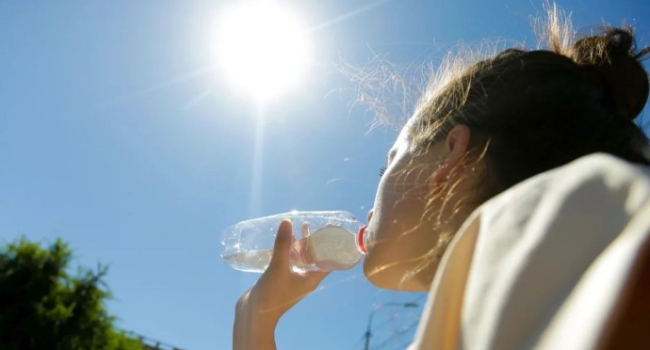
A new modeling study published in The Lancet suggests that physical inactivity could increase by up to 1.75 percentage points, particularly in tropical low- and middle-income countries. This may result in an additional 0.47–0.70 million deaths annually by 2050 under high greenhouse gas emission scenarios.
Physical inactivity is already a major contributor to cardiometabolic diseases, accounting for about 5% of adult deaths. It is associated with $54 billion in healthcare costs and an additional $14 billion in productivity losses.
Currently, around one-third of the global population does not meet the World Health Organization’s physical activity recommendations. As temperatures rise, physical exertion places greater strain on the cardiovascular system, while extreme weather and worsening air quality further limit safe activity.
The model showed that when the average annual temperature exceeds 27.8°C, physical inactivity rises more sharply, with the greatest impact on women and older adults. Low- and middle-income countries are expected to be the most affected, with inactivity increasing by up to 1.85 percentage points. The most vulnerable regions include Central America, the Caribbean, eastern Sahel, and equatorial Southeast Asia.
Global productivity losses could reach $2.4–3.68 billion, while additional deaths linked to inactivity may account for up to 7–11% of all such deaths recorded in 2022. The greatest economic and health burden is expected in low- and middle-income countries, where people often have to work during the hottest hours and have limited access to air-conditioned environments, particularly women.
The authors emphasize the urgent need for action, including improving urban infrastructure to cool cities, creating shaded and reflective surfaces, ensuring access to affordable climate-controlled sports facilities, and implementing educational programs on safe physical activity in hot conditions.
The study has limitations: physical activity data were based on surveys and did not account for seasonal and age-related variations, types of activity, urbanization, migration, or extreme weather events, which may affect the accuracy of the projections.
Follow NEWS.am Medicine on Facebook and Twitter





- Most read
month
week
day
- An Unexpected Paradox: Both Very Low and Very High Testosterone Levels May Be Equally Dangerous for the Heart 998
- Alcohol-Related Cancer Deaths Double in the U.S. as the Number of Such Deaths Rises Over 33 Years 915
- The Independent: Aging Is the Main Risk Factor for Cancer 899
- At-Home Urine Test Could Detect Most Bladder Cancer Cases, Study Finds 875
- CC: Age-Related Changes in Memory May Begin as Early as 50 855
- JID: Popular Weight-Loss Drugs May Increase the Risk of Male Pattern Hair Loss by 7% 168
- npj Science of Food: A Spoonful of Vegetable Oil Before a Carb-Rich Meal May Blunt Blood Sugar Spikes 167
- How the Pursuit of Perfect Sleep Can Keep You Awake 166
- Weight-Loss Drug May Affect Aging: Scientists Discover an Unexpected Effect of Semaglutide 163
- SB: The Rule of Drinking Eight Glasses of Water a Day Has No Scientific Basis 163
- TCTV: New Drug Doubles Survival in Lung Cancer 163
- In the U.S., Prescriptions for Obesity Drugs for Children Under 12 Increased 310-Fold in Seven Years 161
- How Can a Fly’s Brain Help Us Understand Human Behavior? 155
- Find us on Facebook
- Poll