


- Latest news▼
-
22:27, August 27 World’s First Patient Undergoes Live AI-Assisted Brain Surgery

-
20:39, August 27 ERJ Open Research: Frequent Use of Rescue Inhalers Linked to Increased Risk of Heart Disease

-
18:25, August 27 When Parents Live to 100: How Their Children Differ From Others

-
16:36, August 27 More Than Two Hours of Scrolling May Be a Warning Sign: Social Media Linked to Depression

-
14:40, August 27 Scientists Develop 3D Model of Human Brain Tissue to Study Alzheimer’s Disease
-
12:45, August 27 Study: The Amount of Nutrients Matters More Than Their Type for Intestinal Cell Turnover

-
10:44, August 27 Scientists Develop a New Model to Predict the Risk of Tooth Decay in Children

-
08:27, August 27 Calories Aren’t All the Same: Study Highlights the Benefits of the Mediterranean Diet

-
23:32, August 26 Scientists “Resurrect” 160-Million-Year-Old Proteins in Search for New Weapons Against Antibiotic-Resistant Bacteria

-
21:37, August 26 Nature Communications: “Genetic Junk” Helps Chromosomes Find Their Correct Partners

-
17:26, August 26 “Molecular Switch” Helps Breast Cancer Spread: Scientists Identify a Way to Turn It Off

-
15:39, August 26 A Hundred Years Is Not a Prescription: Scientists Explain Why a Healthy Lifestyle Does Not Guarantee a Long Life

-
13:21, August 26 Scientists Reveal How Social Isolation May Increase the Risk of Alcohol Use

-
10:45, August 26 Even Low Levels of Traffic Noise Can Diminish the Stress-Relieving Benefits of Birdsong

-
08:47, August 26 Biomolecules: Mulberries May Alter the Composition of the Gut Microbiota

All materials
Seafood Virus Linked to Chronic Eye Disease in Humans
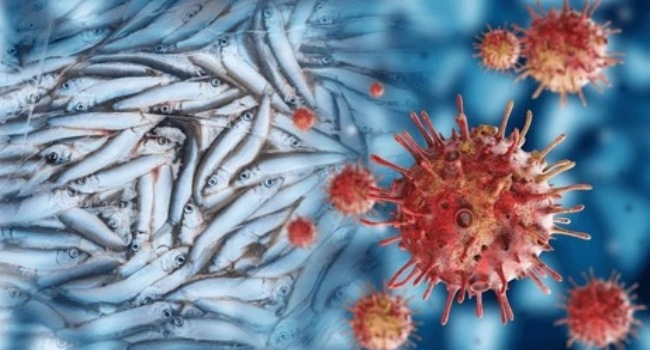
A virus that usually infects marine animals, such as shrimp and fish, has been found to cause chronic eye disease in humans, according to a study published in *Nature Microbiology*. In recent years, cases of persistent ocular hypertension viral anterior uveitis (POH-VAU) in China have been rising without a clear explanation. This condition is marked by severely elevated eye pressure and inflammation.
Researchers suspected covert mortality nodavirus (CMNV) because patients consistently tested negative for common eye viruses like herpes or shingles. Previous studies had detected unknown virus particles in eye tissue that resembled CMNV in size and shape.
To investigate, scientists recruited 70 patients diagnosed with POH-VAU between January 2022 and April 2025. Using electron microscopy, they observed virus particles about 25 nanometers in size in eye tissue removed during surgery. No similar particles were found in healthy controls. A gold-labeled antibody specific to CMNV confirmed the virus’s identity, and genetic sequencing showed a 98.96% match with the virus found in aquatic animals.
Patient interviews revealed that nearly three-quarters had either handled raw seafood without gloves or consumed raw aquatic animals. Cell culture experiments and infection of mice with CMNV produced the same eye disease symptoms, confirming the virus’s role in causing POH-VAU.
This is the first study linking a virus from aquatic animals to a specific human eye disease. A global survey showed CMNV in 49 species, including crabs and mollusks, across Asia, Africa, Europe, Antarctica, and the Americas, indicating the potential for wider risk.
Follow NEWS.am Medicine on Facebook and Twitter





- Most read
month
week
day
- High-dose vitamin D linked to better cognitive function in adults at risk of dementia 692
- Rather than eating less, burn more: Scientists identify a new approach to treating obesity 634
- Three Minutes of Sprinting Trigger a Molecular Response That 90 Minutes of Moderate Exercise Do Not 618
- COVID-19 may enhance the breathing response after awakening during sleep 617
- Scientists identify drug combination that could slow the growth of treatment-resistant prostate cancer 575
- WHO and Africa CDC Welcome Allocation of Ebola Vaccine to DRC 572
- New Experimental Treatment Burns Fat While Preserving Muscle in Obesity and Diabetes Study 501
- Two Unknown Ancestors Discovered in the Human Genome 485
- The Lancet: Robots place knee implants more precisely, but do not speed up recovery 484
- JAMA: Zinc reduced infections by nearly 40% in young children with sickle cell disease 482
- Nature Medicine: Depression May Impair the Brain’s Ability to Adapt to New Experiences 435
- Innovative Spray Developed to Treat Rhinitis Caused by Overuse of Nasal Decongestants 435
- Scientists Discover a New Property of Viruses 430
- Over 90% Accuracy: FDA Clears New Blood Test for Early Alzheimer’s Detection 427
- Late Diagnosis and Limited Access to Care Fuel Gynecologic Cancer Deaths in Low- and Middle-Income Countries 413
- Find us on Facebook
- Poll