


- Latest news▼
-
23:22, September 7 How Can a Fly’s Brain Help Us Understand Human Behavior?

-
21:18, September 7 How the Pursuit of Perfect Sleep Can Keep You Awake

-
08:37, September 7 Weight-Loss Drug May Affect Aging: Scientists Discover an Unexpected Effect of Semaglutide

-
20:53, September 5 npj Science of Food: A Spoonful of Vegetable Oil Before a Carb-Rich Meal May Blunt Blood Sugar Spikes

-
13:26, September 5 In the U.S., Prescriptions for Obesity Drugs for Children Under 12 Increased 310-Fold in Seven Years

-
23:20, September 4 TCTV: New Drug Doubles Survival in Lung Cancer

-
11:10, September 4 SB: The Rule of Drinking Eight Glasses of Water a Day Has No Scientific Basis

-
08:46, September 4 JID: Popular Weight-Loss Drugs May Increase the Risk of Male Pattern Hair Loss by 7%

-
22:46, September 3 At-Home Urine Test Could Detect Most Bladder Cancer Cases, Study Finds

-
20:38, September 3 Alcohol-Related Cancer Deaths Double in the U.S. as the Number of Such Deaths Rises Over 33 Years

-
18:29, September 3 An Unexpected Paradox: Both Very Low and Very High Testosterone Levels May Be Equally Dangerous for the Heart

-
16:11, September 3 The Independent: Aging Is the Main Risk Factor for Cancer

-
14:13, September 3 CC: Age-Related Changes in Memory May Begin as Early as 50

-
08:34, September 3 Scientists Find Who May Benefit More from Coffee in Terms of Parkinson’s Disease Risk

-
23:37, September 2 LDE: Popular Diabetes Drugs Linked to Risk of a Dangerous Complication in Certain Patients

All materials
Motor Abnormalities May Help Predict Multiple Mental Health Disorders, Study Finds
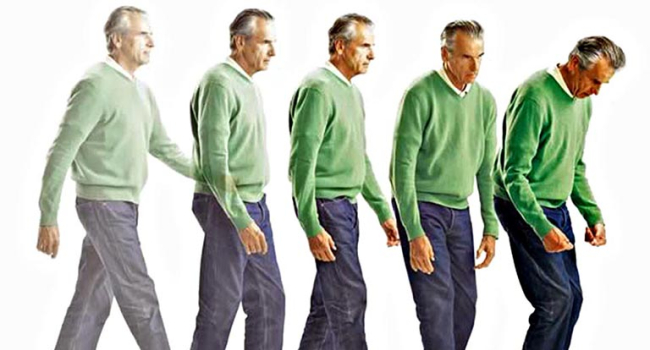
Motor abnormalities—including poor coordination, slowed movements, involuntary motions, and developmental motor delays—may serve as early indicators of a wide range of mental health disorders, according to a new study published in Clinical Psychological Science.
Researchers from Northwestern University examined how motor symptoms relate to different forms of psychopathology using the Hierarchical Taxonomy of Psychopathology (HiToP), a framework that classifies mental health conditions as overlapping dimensions rather than isolated disorders.
Although motor abnormalities have long been associated with illnesses such as psychosis, schizophrenia, depression, bipolar disorder, ADHD, and autism spectrum disorder, scientists have not fully understood whether these symptoms signal a general vulnerability to mental illness or are linked to specific psychiatric conditions.
To investigate this question, researchers analyzed data from nearly 3,500 adults who had no previously reported psychiatric diagnoses. Participants completed questionnaires assessing symptoms of depression, anxiety, psychosis-like experiences, dissociation, mania, and substance use, along with self-reported motor characteristics, including coordination difficulties, involuntary movements, developmental delays, and physical activity.
The analysis found that more detailed symptom models provided a better explanation of the relationship between motor function and mental health than models treating mental illness as a single broad condition. The findings suggest that motor abnormalities are associated both with overall psychological distress and with specific psychiatric disorders.
Overall motor dysfunction, impaired coordination, and dyskinesia—characterized by sudden, involuntary movements—were linked to higher levels of distress, dissociation, fear, and other psychological symptoms. Physical activity showed a more complex pattern, being associated with higher levels of mania and substance use while correlating with lower levels of emotional withdrawal, fear, and distress.
Lead author Jessica Fattal said the results support both existing theories: motor abnormalities appear to reflect a broad vulnerability to mental illness while also helping distinguish particular disorders, especially psychosis and depression.
The researchers believe the findings highlight the importance of routinely evaluating motor function as part of mental health assessment. Because motor symptoms are relatively easy to observe and measure, they may offer clinicians an additional tool for identifying people at increased risk of psychiatric disorders and improving early intervention strategies.
The authors emphasize that further research is needed to clarify how motor abnormalities develop over time and how they can be integrated into clinical practice to improve diagnosis and treatment across multiple psychiatric conditions.
Follow NEWS.am Medicine on Facebook and Twitter





- Most read
month
week
day
- An Unexpected Paradox: Both Very Low and Very High Testosterone Levels May Be Equally Dangerous for the Heart 960
- Alcohol-Related Cancer Deaths Double in the U.S. as the Number of Such Deaths Rises Over 33 Years 881
- The Independent: Aging Is the Main Risk Factor for Cancer 862
- CC: Age-Related Changes in Memory May Begin as Early as 50 848
- At-Home Urine Test Could Detect Most Bladder Cancer Cases, Study Finds 841
- Scientists Find Who May Benefit More from Coffee in Terms of Parkinson’s Disease Risk 715
- SB: The Rule of Drinking Eight Glasses of Water a Day Has No Scientific Basis 87
- JID: Popular Weight-Loss Drugs May Increase the Risk of Male Pattern Hair Loss by 7% 85
- npj Science of Food: A Spoonful of Vegetable Oil Before a Carb-Rich Meal May Blunt Blood Sugar Spikes 81
- Weight-Loss Drug May Affect Aging: Scientists Discover an Unexpected Effect of Semaglutide 81
- In the U.S., Prescriptions for Obesity Drugs for Children Under 12 Increased 310-Fold in Seven Years 80
- TCTV: New Drug Doubles Survival in Lung Cancer 80
- How the Pursuit of Perfect Sleep Can Keep You Awake 79
- How Can a Fly’s Brain Help Us Understand Human Behavior? 72
- Find us on Facebook
- Poll