


- Latest news▼
-
23:22, September 7 How Can a Fly’s Brain Help Us Understand Human Behavior?
-
21:18, September 7 How the Pursuit of Perfect Sleep Can Keep You Awake

-
08:37, September 7 Weight-Loss Drug May Affect Aging: Scientists Discover an Unexpected Effect of Semaglutide

-
20:53, September 5 npj Science of Food: A Spoonful of Vegetable Oil Before a Carb-Rich Meal May Blunt Blood Sugar Spikes

-
13:26, September 5 In the U.S., Prescriptions for Obesity Drugs for Children Under 12 Increased 310-Fold in Seven Years

-
23:20, September 4 TCTV: New Drug Doubles Survival in Lung Cancer

-
11:10, September 4 SB: The Rule of Drinking Eight Glasses of Water a Day Has No Scientific Basis

-
08:46, September 4 JID: Popular Weight-Loss Drugs May Increase the Risk of Male Pattern Hair Loss by 7%

-
22:46, September 3 At-Home Urine Test Could Detect Most Bladder Cancer Cases, Study Finds

-
20:38, September 3 Alcohol-Related Cancer Deaths Double in the U.S. as the Number of Such Deaths Rises Over 33 Years

-
18:29, September 3 An Unexpected Paradox: Both Very Low and Very High Testosterone Levels May Be Equally Dangerous for the Heart

-
16:11, September 3 The Independent: Aging Is the Main Risk Factor for Cancer

-
14:13, September 3 CC: Age-Related Changes in Memory May Begin as Early as 50

-
08:34, September 3 Scientists Find Who May Benefit More from Coffee in Terms of Parkinson’s Disease Risk

-
23:37, September 2 LDE: Popular Diabetes Drugs Linked to Risk of a Dangerous Complication in Certain Patients

All materials
Newly identified parasite may be contributing to seabird deaths along the U.S. Gulf Coast
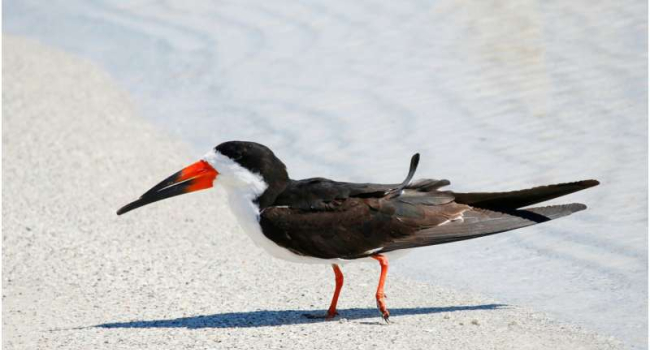
Researchers have identified a previously unknown parasite in black skimmer chicks that died in nesting colonies along the U.S. Gulf Coast, a discovery that could help explain the long-term decline of the species. The findings were published in PLOS One.
The investigation began after more than 160 black skimmer chicks died in Texas breeding colonies during the summers of 2022 and 2023. Scientists from Texas A&M University, working with the Gulf Coast Bird Observatory, analyzed tissue samples to determine the cause of the unexplained mortality.
Using genetic analysis, the team identified a parasite belonging to the Eimeria group, which commonly infects the digestive systems of both wild and domestic animals. The researchers discovered two previously undescribed forms of the parasite—one affecting the kidneys and cloaca, and another found in the small intestine.
Although the scientists cannot yet conclude that the parasite directly caused the birds' deaths, the discovery adds an important clue to understanding the health threats facing black skimmers.
The researchers found that infected chicks had small white lesions on their kidneys. Genetic testing confirmed the presence of Eimeria, but the parasite did not match any previously described species.
According to the research team, finding an unknown parasite is not unusual, as many parasitic species have yet to be discovered and formally classified. They believe the parasite is likely transmitted in a manner similar to other Eimeria species, with birds becoming infected after ingesting parasite eggs, known as oocysts, in contaminated food or water. Young birds with immature immune systems are thought to be particularly vulnerable.
The scientists emphasize that the parasite is unlikely to be the sole cause of the chick mortality. Environmental changes may also be playing a significant role.
Along the Gulf Coast, sediment dredged from shipping channels has been used to create artificial islands that now serve as nesting sites for seabirds. While these habitats provide safe breeding areas, they may also increase bird density, making it easier for infectious diseases to spread. Unlike the temporary natural habitats birds once used, these artificial islands are more permanent and may allow parasites to persist in the soil for longer periods.
Researchers also point to possible exposure to environmental pollutants. Heavy metals and other contaminants can accumulate in fish consumed by black skimmers, potentially weakening their health and making them more susceptible to disease.
The authors believe the deaths are likely the result of multiple interacting factors, including parasitic infection, habitat changes and environmental contamination, rather than a single cause. They say long-term monitoring and additional research will be essential to determine the relative contribution of each factor and develop effective conservation strategies.
Follow NEWS.am Medicine on Facebook and Twitter





- Most read
month
week
day
- An Unexpected Paradox: Both Very Low and Very High Testosterone Levels May Be Equally Dangerous for the Heart 1002
- Alcohol-Related Cancer Deaths Double in the U.S. as the Number of Such Deaths Rises Over 33 Years 918
- The Independent: Aging Is the Main Risk Factor for Cancer 903
- At-Home Urine Test Could Detect Most Bladder Cancer Cases, Study Finds 878
- CC: Age-Related Changes in Memory May Begin as Early as 50 856
- JID: Popular Weight-Loss Drugs May Increase the Risk of Male Pattern Hair Loss by 7% 173
- npj Science of Food: A Spoonful of Vegetable Oil Before a Carb-Rich Meal May Blunt Blood Sugar Spikes 172
- How the Pursuit of Perfect Sleep Can Keep You Awake 171
- SB: The Rule of Drinking Eight Glasses of Water a Day Has No Scientific Basis 170
- Weight-Loss Drug May Affect Aging: Scientists Discover an Unexpected Effect of Semaglutide 168
- TCTV: New Drug Doubles Survival in Lung Cancer 167
- In the U.S., Prescriptions for Obesity Drugs for Children Under 12 Increased 310-Fold in Seven Years 167
- How Can a Fly’s Brain Help Us Understand Human Behavior? 158
- Find us on Facebook
- Poll