


- Latest news▼
-
15:23, October 21 Tea May Benefit Heart Health — but Drinking It Scalding Hot Could Be Risky

-
13:25, October 21 Why Some People Avoid Alzheimer’s Despite Carrying a High-Risk Gene

-
10:47, October 20 SciRep: Walking More Than 8,000 Steps a Day Is Linked to Better Attention

-
08:32, October 20 Nature: AI Links Brown Fat to Heart, Vascular, and Mental Health

-
18:51, October 19 Oxytocin May Make Childhood Memories More Negative in People with Relationship Anxiety
-
16:48, October 19 Polyphenols in coffee and fruit linked to lower risk of telomere shortening

-
14:50, October 19 Anesthesiology: Noise-Canceling Headphones Reduce the Risk of Nausea After Anesthesia

-
12:44, October 19 PLOS: Yogurt and Canned Beans May Help Reduce the Risk of Colorectal Cancer

-
10:39, October 19 AJOG: Birth Weight Is Linked to Later Performance in Math and Reading

-
08:41, October 19 Postoperative Monitoring Apps Reduced Hospital Readmissions by 15%

-
23:12, October 18 Noise-Canceling Headphones Reduced the Risk of Nausea After Gynecological Surgery by 32%

-
18:17, October 18 HealthDay: Strength Training After 60 Helps Strengthen Bones and Maintain Brain Health

-
12:43, October 18 Scientists Unveil Scanner That Captures Whole-Body Images in Just 60 Seconds

-
22:17, October 17 eClinicalMedicine: Drug-Coated Balloons Could Offer an Alternative to Permanent Stents in Heart Treatment

-
18:31, October 17 Scientists Discover How Hot Peppers Could Help Develop Safer Painkillers

All materials
Scientists create first AI-designed viruses to target drug-resistant superbugs
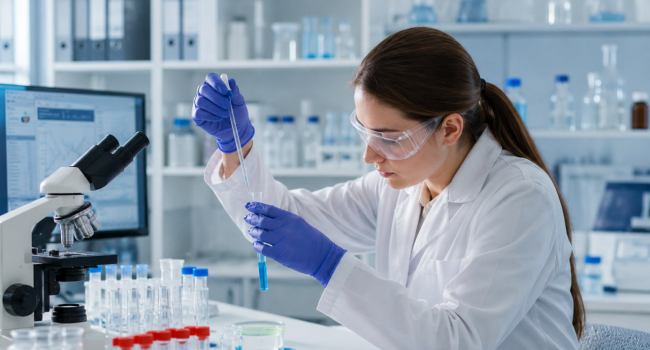
Scientists are using a new type of generative artificial intelligence to design specialized viruses that target and destroy harmful bacteria. The breakthrough could pave the way for a new generation of treatments capable of combating drug-resistant “superbugs.”
Using the AI model Evo 2, which can generate novel DNA sequences, scientists from Stanford University developed a series of viruses known as bacteriophages — microorganisms capable of destroying bacteria.
In laboratory tests, a mixture of 16 highly effective viruses designed with the help of Evo 2 rapidly destroyed E. coli bacteria that had already developed resistance to naturally occurring phages, Euronews reports.
E. coli is a group of bacteria that can cause intestinal infections and is becoming increasingly resistant to available antibiotics.
Antibiotic resistance is growing worldwide, largely due to the inappropriate and excessive use of these drugs. This drives bacteria to develop survival mechanisms that can render existing medicines ineffective.
“If bacteria develop resistance to one phage, the treatment is over,” said Brian Hie, a chemical engineer at Stanford University and co-author of the study.
“But if a mixture contains several genetically distinct phages, it will be much more difficult for bacteria to develop resistance to the entire cocktail.”
The researchers say the technology could eventually be used against other dangerous bacteria, including those that cause tuberculosis and common healthcare-associated infections such as MRSA (methicillin-resistant Staphylococcus aureus).
The researchers have made the Evo 2 AI model openly and freely available, raising concerns about its potential misuse.
The authors acknowledge that releasing the tool publicly has sparked discussions about safety. One major concern is that malicious actors could use modified versions of the technology to create dangerous biological agents.
“As the authors themselves point out, this raises serious regulatory and safety questions,” said Simon Clark, an associate professor of cellular microbiology at the University of Reading in the UK, who was not involved in the study.
“Although research of this kind is normally strictly controlled, it is somewhat reassuring that these scientists have taken additional precautions and incorporated important safeguards. But there is no guarantee that every other scientist who decides to pursue similar work will be equally cautious,” he added.
According to Clark, natural pathogens currently pose a much greater threat than AI-designed ones because they are easier to access and produce than entirely new agents created from scratch.
The authors say one advantage of AI-designed biology over natural evolution is that safety mechanisms can be incorporated directly into the design process.
Follow NEWS.am Medicine on Facebook and Twitter

- Video




- Event calendar
- Archive
- Most read
month
week
day
- Cardiologists Urge Inclusion of Physical Exercise in Heart Disease Prevention 520
- Stem Cell Reports: Nicotine Exposure During Pregnancy Permanently Weakens Offspring’s Immune Systems 501
- Frontiers: Poor Sleep May Increase the Risk of Breast Cancer by 30% 499
- Nature: Researchers Link Faster Wound Healing to Female Sex Hormones 464
- BJN: Asparagus extract helps improve sleep and reduce anxiety 420
- Science Corporation Implants Vision-Restoring Chip in First Patient With Stargardt Disease 402
- Scientists Discover a Longevity Gene That Extends Lifespan by 14% 279
- RPTH: One to Two Cups of Coffee a Day Linked to a 51% Lower Risk of Recurrent Venous Thromboembolism 228
- Cardiologists Urge Inclusion of Physical Exercise in Heart Disease Prevention 222
- Smartphone Habits Can Detect Stress With Up to 76% Accuracy, Scientists Find 206
- A Simple Way to Blunt Blood Sugar Spikes After Meals 198
- JACH: Eating Breakfast May Improve Psychological Flexibility 196
- WHO: Lead Poisoning Claims More Than 3.5 Million Lives Every Year 189
- Why It Can Sometimes Be Impossible to Stop Laughing: Neuroscientists Identify Two Mechanisms Behind Laughter 170
- Why Some People Avoid Alzheimer’s Despite Carrying a High-Risk Gene 166
- Find us on Facebook
- Poll