


- Latest news▼
-
23:22, September 7 How Can a Fly’s Brain Help Us Understand Human Behavior?

-
21:18, September 7 How the Pursuit of Perfect Sleep Can Keep You Awake

-
08:37, September 7 Weight-Loss Drug May Affect Aging: Scientists Discover an Unexpected Effect of Semaglutide

-
20:53, September 5 npj Science of Food: A Spoonful of Vegetable Oil Before a Carb-Rich Meal May Blunt Blood Sugar Spikes

-
13:26, September 5 In the U.S., Prescriptions for Obesity Drugs for Children Under 12 Increased 310-Fold in Seven Years

-
23:20, September 4 TCTV: New Drug Doubles Survival in Lung Cancer

-
11:10, September 4 SB: The Rule of Drinking Eight Glasses of Water a Day Has No Scientific Basis

-
08:46, September 4 JID: Popular Weight-Loss Drugs May Increase the Risk of Male Pattern Hair Loss by 7%

-
22:46, September 3 At-Home Urine Test Could Detect Most Bladder Cancer Cases, Study Finds

-
20:38, September 3 Alcohol-Related Cancer Deaths Double in the U.S. as the Number of Such Deaths Rises Over 33 Years

-
18:29, September 3 An Unexpected Paradox: Both Very Low and Very High Testosterone Levels May Be Equally Dangerous for the Heart

-
16:11, September 3 The Independent: Aging Is the Main Risk Factor for Cancer

-
14:13, September 3 CC: Age-Related Changes in Memory May Begin as Early as 50

-
08:34, September 3 Scientists Find Who May Benefit More from Coffee in Terms of Parkinson’s Disease Risk

-
23:37, September 2 LDE: Popular Diabetes Drugs Linked to Risk of a Dangerous Complication in Certain Patients

All materials
How Can a Fly’s Brain Help Us Understand Human Behavior?
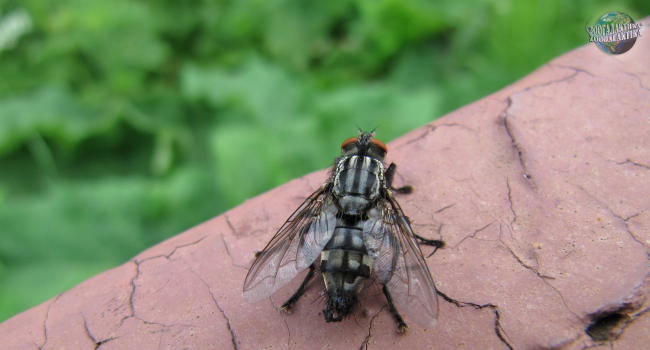
Researchers have mapped all 124 million connections between every nerve cell in the brain of a male fruit fly. By comparing this map with that of a female fly’s brain, scientists identified differences in neural connections that they believe underlie differences in male behavior, including aggression, courtship, and the production of courtship songs.
The research team is clear that this study will not explain differences between men and women, because human behavior is far more complex. However, the findings could help scientists better understand human behavior and conditions such as autism and schizophrenia, in which genetic differences affect neural connections in the brain.
Professor Gregory Jefferis of the Medical Research Council Laboratory of Molecular Biology in Cambridge, who led the study, told the BBC that the breakthrough represents “a really important new direction in neuroscience,” comparing it to the invention of the telescope, which expanded our understanding of the universe.
“There is this amazing system inside our heads that allows us to do incredible things, like play a sonata or solve a scientific problem. This discovery could help us understand how these amazing systems work,” he said.
A fly’s brain is as remarkable as it is tiny. It is roughly the size of a pinhead, yet in many ways it is more efficient than a supercomputer and can outsmart even highly sophisticated artificial intelligence.
Dr. Jefferis’s team and its collaborators painstakingly analyzed every nerve cell, neural connection, and synaptic junction in the brain of a male fruit fly (Drosophila). They assembled all the data into a three-dimensional map. Two years ago, the same team created a map of the female fly’s brain as part of their ultimate goal: to compare the two brains and take a major step forward in neuroscience.
The study found that approximately 95% of brain cells are the same in male and female flies. However, according to Dr. Isabella Beckett, a co-author of the paper published this week in the journal Cell, the remaining 5% are enough to produce dramatically different behaviors.
“We expected to find differences, and we did. We’re thrilled with the results,” she said.
At first glance, the brains of male and female flies look identical from the outside. But a detailed examination of their neural connections revealed subtle differences that can lead to significant behavioral changes.
For example, during courtship, a male follows a female as she moves. Researchers identified the brain circuits associated with this behavior and found key differences in their structure. Males have additional elements that enhance the activity of the visual system.
An even more significant difference was found in circuits associated with aggression. Males are more likely to engage in fights, and therefore have considerably more neural connections associated with this behavior than females.
Finally, there is the circuit responsible for the “courtship song.”
Male flies court females by producing sounds. They have a unique neural circuit that allows them to generate these sounds. According to study co-author Dr. Philipp Schlegel of the Medical Research Council Laboratory of Molecular Biology, this circuit must be precisely balanced, otherwise the consequences for the unfortunate male can be disastrous.
“Courtship also involves the male dancing in front of the female and singing to her,” he explained. “The sound is produced by vibrating the wings, which allows the male to create a very specific song. If the female likes it, she will let him approach. If she doesn’t, or simply isn’t receptive to courtship at that moment, she will chase him away, sometimes even by kicking him in the ‘face’ with her leg.”
These three differences in the neural circuits of male and female flies are controlled by two key genes. Scientists have known about these genes and their links to each type of behavior for years. What they had never been able to see, however, was the intermediate mechanism. Now, for the first time, they can see the actual neural circuitry shaped by these genes.
The primary goal of the study was not to identify differences between male and female flies, let alone to find neurological explanations for presumed behavioral differences between men and women.
According to Beckett, comparing two brains that have relatively small differences in their neural wiring but are associated with known and significant behavioral differences allows scientists to clearly identify the principles underlying changes in brain circuitry that determine behavior.
“You have just one independent variable — sex — and then you can see what the difference is. That’s every scientist’s dream,” she says.
These differences allow scientists to take a major step toward answering one of the most important questions in biology: how genes influence behavior.
Scientists have known for decades that genes affect behavior, but in practice they have had little understanding of exactly how this happens. According to Dr. Jefferis, the answer lies in how genes shape neural connections in the brain and how those connections influence behavior.
“Comparing the fly brain gives us a good insight into this,” he told the BBC. “Humans have behavioral traits that seem to have a strong genetic basis. For example, in schizophrenia — or there are many gene variants associated with autism and autism spectrum disorders that we still don’t fully understand.”
He adds that these findings could also potentially be used to improve artificial intelligence and make computer systems more efficient.
“To create AI that is as efficient as our brains, we will probably need more biological inspiration. And an important source of that inspiration is likely to be real biological wiring diagrams,” Jefferis says. “There are people who are incorporating fly brains into artificial networks and trying to understand whether they can help train and control artificial systems.”
Follow NEWS.am Medicine on Facebook and Twitter





- Most read
month
week
day
- An Unexpected Paradox: Both Very Low and Very High Testosterone Levels May Be Equally Dangerous for the Heart 950
- Alcohol-Related Cancer Deaths Double in the U.S. as the Number of Such Deaths Rises Over 33 Years 872
- The Independent: Aging Is the Main Risk Factor for Cancer 852
- CC: Age-Related Changes in Memory May Begin as Early as 50 847
- LDE: Popular Diabetes Drugs Linked to Risk of a Dangerous Complication in Certain Patients 845
- At-Home Urine Test Could Detect Most Bladder Cancer Cases, Study Finds 832
- Scientists Find Who May Benefit More from Coffee in Terms of Parkinson’s Disease Risk 715
- SB: The Rule of Drinking Eight Glasses of Water a Day Has No Scientific Basis 52
- TCTV: New Drug Doubles Survival in Lung Cancer 49
- Weight-Loss Drug May Affect Aging: Scientists Discover an Unexpected Effect of Semaglutide 48
- JID: Popular Weight-Loss Drugs May Increase the Risk of Male Pattern Hair Loss by 7% 47
- npj Science of Food: A Spoonful of Vegetable Oil Before a Carb-Rich Meal May Blunt Blood Sugar Spikes 46
- In the U.S., Prescriptions for Obesity Drugs for Children Under 12 Increased 310-Fold in Seven Years 42
- How the Pursuit of Perfect Sleep Can Keep You Awake 42
- How Can a Fly’s Brain Help Us Understand Human Behavior? 38
- Find us on Facebook
- Poll