


- Latest news▼
-
14:30, September 23 Brain scans suggest long COVID may damage dopamine neurons

-
12:32, September 23 Flu Vaccination Has Started in Armenia: Foreign Nationals Can Also Get Vaccinated Free of Charge

-
10:37, September 23 Scientists Create a Battery That Can Be Swallowed: It Powers a Medical Device and Then Dissolves

-
08:35, September 23 Bone glue tested in a human for the first time: Material gradually replaced by new tissue

-
22:32, September 22 After 30 Years of Research, First Drug Developed for Rare Progressive Brain Disease
-
20:46, September 22 Stopping GLP-1 drugs may quickly reduce their heart-protective benefits
-
16:11, September 22 BMJ: Brisk Walking and Jogging Most Effective for Strengthening Bones

-
14:09, September 22 Springer Nature: Scientists show that boys and girls perceive the world differently from the first hours of life

-
12:07, September 22 F&F: Green oat extract may protect eyes from dryness caused by sleep deprivation

-
22:46, September 21 Scientists Develop a New Way to Turn Stem Cells into Heart Cells

-
20:39, September 21 Who Should Receive a Transplant Organ? AI Responses Differ from Doctors’ Opinions

-
18:44, September 21 PoPS: Scientists Uncover a Brain Development Mechanism That Changes How We View Aging

-
16:37, September 21 JCI: Loss of the Y Chromosome in Men May Be an Early Sign of Cancer
-
14:26, September 21 A&D: Residents of Two Amazonian Indigenous Communities Showed Unusually Low Rates of Dementia
-
12:21, September 21 JAMA: High Salivary Cortisol Levels Are Associated With Memory Decline
All materials
Brain scans suggest long COVID may damage dopamine neurons
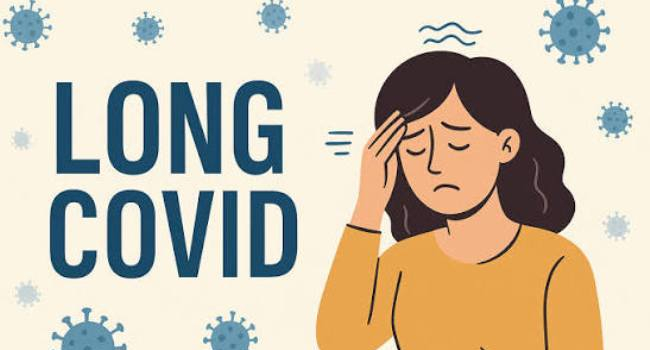
Brain imaging has provided new evidence that long COVID may be associated with damage to dopamine-releasing neurons, potentially helping explain persistent symptoms such as fatigue, loss of motivation, slowed movement and memory problems.
The study, led by researchers at the Centre for Addiction and Mental Health (CAMH), found significantly lower levels of a marker of dopamine neuron health in people with long COVID. The findings, published in eBioMedicine, could open new avenues for understanding and treating the condition.
Long COVID is estimated to affect around 5% of the global population. Symptoms can persist for at least three months after the initial infection and may include severe fatigue, brain fog, memory difficulties and low mood. Despite its prevalence, there are currently no evidence-based treatments specifically targeting the underlying biological mechanisms of the condition.
For the new study, researchers used positron emission tomography (PET) scans to examine a biological marker associated with the health and integrity of dopamine neurons. They compared brain scans from people with long COVID with those from healthy participants.
The researchers found substantially lower levels of the marker throughout the major regions of the striatum in people with long COVID. The striatum plays an important role in motivation, movement and cognitive processes. Reduced levels of the marker indicate a lower density of dopamine nerve terminals.
The researchers also found that the location and extent of these changes were associated with different symptoms. Lower levels in the ventral striatum were linked to a greater loss of motivation. Reduced levels in the dorsal putamen were associated with slower movement, while changes in the caudate putamen were linked to memory difficulties.
"Our findings provide compelling evidence that long COVID involves the loss of dopamine-releasing neurons," said senior author Jeffrey Meyer, a senior scientist at CAMH's Brain Health Imaging Centre and Canada Research Chair.
Previous research by the same team had found unusually high levels of inflammation in the brains of people with long COVID, particularly in areas containing large numbers of dopamine-releasing neurons.
The researchers believe the two sets of findings may be connected. Brain inflammation is known to be capable of damaging dopamine neurons, and the new study found reduced levels of a dopamine neuron marker in the same regions where inflammation had previously been detected.
Together, the findings point to a possible link between persistent brain inflammation and damage to the dopamine system in people with long COVID.
The researchers say the discovery could also change the direction of future treatment research. While many studies have focused on inflammation and immune-system changes, relatively few clinical trials have directly targeted dopamine neurons.
Meyer suggested that medications capable of enhancing dopamine function, including dopamine precursors and drugs that inhibit dopamine metabolism, could potentially be investigated as treatments for long COVID.
The team plans to launch a clinical trial within the next few months to test whether modifying dopamine activity can improve symptoms such as fatigue, memory problems and reduced motivation.
The planned trial will be conducted in collaboration with University Health Network. The study was supported by the Canadian Institutes of Health Research.
Follow NEWS.am Medicine on Facebook and Twitter





- Most read
month
week
day
- Study: Steps reduce the risk of early death, but walking speed also matters 730
- NBC News: U.S. surgeons successfully separate conjoined twin girls joined at the head 648
- Study: Light pollution during nighttime sleep negatively affects the human heart 609
- Air Pollution May Increase the Risk of Suicidal Thoughts and Suicide 573
- Annals of Behavioral Medicine: One Partner’s Poor Sleep May Worsen the Other Partner’s Diet 554
- The Lancet: Wildfire smoke may be more harmful than pollution from urban traffic 543
- Frontiers in Physiology: Chocolate aroma helped increase exercise volume 526
- PM: Reading for Pleasure Linked to Better Mental Health and Lower Risk of Dementia 498
- DNA changes shape after injury: scientists identify a mechanism essential for tissue regeneration 491
- Florida Records One of the Largest Dengue Outbreaks in Decades: One Person Has Died 439
- First measles deaths in 35 years reported in the U.S. 420
- From China to Armenia: Historic Cross-Continental Telesurgery Performed at Slavmed Medical Center 416
- What Happens to the Body After a Cup of Coffee: Seven Unexpected Effects 416
- A&D: Residents of Two Amazonian Indigenous Communities Showed Unusually Low Rates of Dementia 401
- Weight-loss medications may be dangerous for people with eating disorders: experts propose new recommendations 389
- Find us on Facebook
- Poll