


- Latest news▼
-
18:30, September 29 Pomegranate compound may improve heart function by up to 80% in study

-
21:22, September 28 More than 1,500 cases of West Nile virus infection recorded in Europe
-
19:32, September 28 İHA: Turkish patient has tube inserted into left ear instead of right during surgery

-
15:10, September 28 Cell: Effects of Alzheimer’s risk gene APOE4 on the brain may be reversible

-
13:13, September 28 Translational Psychiatry: “Fluctuating” brain signals linked to excess weight

-
11:08, September 28 Nature: Mutant sperm precursor cells multiply at the expense of healthy cells
-
08:41, September 28 Scientists develop test that detects brain tumors in two hours instead of eight weeks
-
22:43, September 27 Green tea compound may protect brain cells from damage associated with Alzheimer’s disease

-
17:36, September 27 Thorax: New inhaled drug improves blood flow in the lungs and exercise capacity in patients with pulmonary hypertension

-
13:04, September 27 Risk of severe complications reaches 55% within 10 years after type 2 diabetes diagnosis, study finds

-
20:15, September 26 Nearly two-thirds of people with migraine experience poor sleep quality

-
17:39, September 26 Neurology: Stroke incidence among young adults in the US nearly doubled over 30 years
-
15:47, September 26 Scientists develop device to obtain live cells from suspicious tissue for early cancer detection
-
13:34, September 26 Virtual forest walk and classical music accelerated blood pressure reduction in emergency patients

-
11:05, September 26 Armenian pediatric oncologist Gevorg Tamamyan has been nominated by Botswana for the position of WHO Director-General

All materials
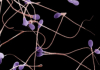
Nature: Mutant sperm precursor cells multiply at the expense of healthy cells
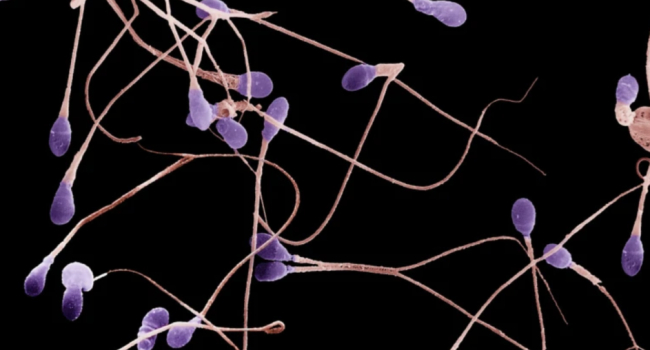
Scientists have found evidence of a real “battle for survival” inside the male testes: mutant precursor cells that give rise to sperm can multiply at the expense of healthy cells, and the proportion of potentially harmful mutations increases with age. The study was published in the journal Nature.
Researchers from the Wellcome Sanger Institute analyzed more than 35,000 mutations and identified 40 genes that give cells a reproductive advantage, 31 of which had not previously been identified. Of concern, 27 of the newly identified genes are associated with inherited disorders, while 16 are linked to cancer. Mutations previously observed in children with developmental disorders were found in sperm 66 times more often than would be expected by chance.
The process is known as positive selection: some mutations cause cells to divide more actively, allowing them to gradually outcompete normal cells. As a result, the proportion of sperm carrying disease-causing mutations roughly doubles with age, from around 2% at age 30 to as much as 4.5% by age 70. Positive selection itself increases the prevalence of harmful mutations by another two- to threefold compared with what would be expected from the simple accumulation of genetic errors.
This helps explain why the risk of certain genetic disorders in children increases with paternal age. However, the authors emphasize that the presence of a mutation in a sperm cell does not necessarily mean that a child will develop a disease. Natural biological “filters” and selection at later stages also come into play. Nevertheless, the study provides a detailed demonstration that male germ cells are an arena of ongoing evolutionary competition.
Paternal age has long been associated with a modestly increased risk of autism, schizophrenia, and a number of rare syndromes in children, with the accumulation of mutations in sperm considered a major contributing factor. The new study shows that the process involves not only the accumulation of genetic errors but also their active selection.
The findings are not necessarily a cause for concern but rather provide insight into the underlying biology: the absolute risks for an individual family remain small.
It should be noted that the study was originally published in 2025.
Follow NEWS.am Medicine on Facebook and Twitter



- Most read
month
week
day
- Experimental RNA therapy may help prevent muscle loss during GLP-1 weight loss 944
- Armenian pediatric oncologist Gevorg Tamamyan has been nominated by Botswana for the position of WHO Director-General 811
- Study links overcrowding in emergency departments to hundreds of deaths each week 768
- Scientists develop device to obtain live cells from suspicious tissue for early cancer detection 764
- Breath test may help distinguish cancerous lung nodules from benign ones, study finds 753
- Introduction of solid foods triggers early functional changes in the infant gut microbiome 743
- Magnetic bacteria extend worms’ lifespan by more than 43%, study finds 740
- Chronic pain after cesarean delivery can affect women for years, study finds 710
- GLP-1 Drugs Linked to Nutritional Deficiencies in Nearly 1 in 6 Children 647
- Lund University receives $19.4 million NIH grant to develop Alzheimer’s blood test 641
- Could Earth’s magnetic field affect the aging process? 636
- Virtual forest walk and classical music accelerated blood pressure reduction in emergency patients 635
- Study: Loneliness and social isolation may cost up to six years of healthy life 617
- AI from Spain improves dermatological diagnosis 563
- NEG: 71% of People with Pulmonary Nodules Are Non-Smokers 519
- Find us on Facebook
- Poll