


- Latest news▼
-
15:53, November 2 LRH Americas: Diet and Exercise Program Achieves Diabetes Remission in 54% of Patients

-
13:48, November 2 Nature: 1,260 Genetic Variants Have the Greatest Influence on Human Personality

-
11:50, November 2 Nature Cell Biology: METTL13 Enzyme Helps Cancer Tumors Grow

-
08:47, November 2 New Blood Purification Technology Could Improve Treatment of Severe Poisoning

-
22:48, November 1 48 New Genetic Regions Linked to Alzheimer's Disease Risk Identified

-
20:36, November 1 How Does the Herpes Virus Spread Between Skin Cells?

-
18:29, November 1 Scientists Test Ultrasound to Treat Hallucinations in People with Schizophrenia

-
16:43, November 1 Ebola Death Toll in Congo Exceeds 5,000

-
14:51, November 1 Journal of Dermatology: Psoriasis Linked to Increased Risk of Cataracts and Eye Surgery
-
12:37, November 1 Scientists Develop 10-Biomarker Blood Test to Assess Health and Predict Aging

-
10:32, November 1 IJFSN: Peels and Seeds of Some Fruits and Vegetables Contain Up to Five Times More Fiber Than the Flesh

-
08:44, November 1 Scientists Find Way to Boost Immune Cells’ Ability to Kill Cancer
-
22:54, October 31 Vegans Found to Have Less Diverse Gut Microbiomes Than Omnivores

-
20:36, October 31 IJP: Music Reduces Cortisol Levels More Than Twice as Much as Pink Noise

-
18:43, October 31 Cancer Causes & Control: Nearly Half of Americans with a History of Cancer Continue to Drink Alcohol

All materials
How Does the Herpes Virus Spread Between Skin Cells?
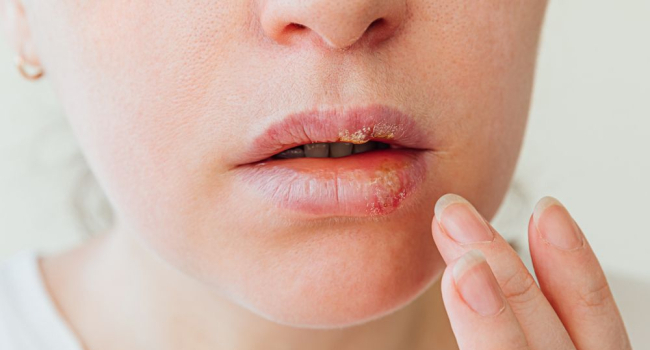
Scientists from the Max Delbrück Center for Molecular Medicine and the University Medical Center Hamburg-Eppendorf have traced how herpes simplex virus type 1 (HSV-1) spreads between skin cells. The study, published in the journal Science Advances, has revealed differences in how various cells respond to infection and identified mechanisms that may influence its spread.
For the experiment, the researchers used three-dimensional human skin organoids containing hair follicles and nerve-like cells. Unlike conventional cell cultures, this model makes it possible to study interactions between different cell types within a structure that closely resembles actual human skin.
The findings showed that the virus does not spread uniformly. During the early stages of infection, substantial amounts of the virus were detected in fibroblasts, the connective tissue cells of the dermis. Some epidermal and hair follicle cells contained less virus, even when neighboring cells were infected. The virus reached hair follicles and sensory neurons at later stages, suggesting that these cells may have some ability to resist infection.
Using spatial analysis of gene activity, the scientists also found that infected cells trigger different defensive responses. In particular, genes associated with the immune response to infection were activated, along with signaling molecules from the TNF family, which are involved in regulating immune processes.
The researchers hope that further experiments will help clarify how the body controls the virus before it enters the nervous system and why some cells are better at restricting infection than others.
HSV-1 typically causes cold sores on the lips and face. However, after the initial infection, it can remain dormant in the body, including in sensory nerve cells. In rare cases, the virus can cause a dangerous inflammation of the brain. Scientists are also investigating a possible link between HSV-1 and Alzheimer's disease, although the nature of this association and the virus's role in the development of the disease have not yet been established.
Follow NEWS.am Medicine on Facebook and Twitter

- Video




- Event calendar
- Archive
- Most read
month
week
day
- Getting Enough Sleep Is Becoming Increasingly Difficult in the Modern World 511
- Testosterone Does Not Guarantee Good Health: What a 15-Year Study of Men Revealed 511
- Alzheimer’s & Dementia: Just a Few Days of Extreme Heat a Year May Be Linked to Dementia Risk 497
- Armenia Outranks Azerbaijan and Georgia in Health Care Index 494
- Frontiers: A Diverse Diet May Reduce the Risk of Peptic Ulcers in Older Adults 492
- French Researchers Explore Why Women’s Body Temperature Fluctuates More Than Men’s 475
- ABC News: Surgeon Removes Patient’s Prostate Tumor While 55 Kilometers Away 471
- Winter or Summer Time: Which Is Better for Your Health? 459
- The Telegraph: Carnivore Diets and Ice Baths Do Not Extend Lifespan 440
- Scientists Discover a Way to Reverse Heart Tissue Scarring Associated with Atrial Fibrillation 438
- Parenting Across Cultures: Physical Punishment Linked to Greater Anxiety and Aggression in Children, Study Finds 438
- Glioblastoma Forces Brain Cells to Help It Grow: Study Reveals a New Mechanism 431
- Science Advances: People with Dementia Had an Older “Speech Age” 428
- Cancer Causes & Control: Nearly Half of Americans with a History of Cancer Continue to Drink Alcohol 421
- Japan Performs World's First Stem Cell Transplant in a Patient with Parkinson's Disease 418
- Find us on Facebook
- Poll