make preferable
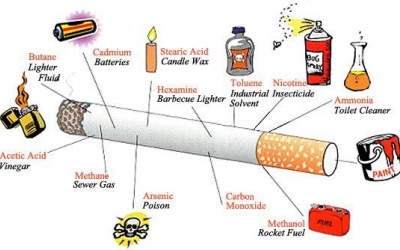
Many new smokers may not realize how quickly their new habit can lead to heart disease, stroke, diabetes, lung diseases, and certain types of cancer. If you’re looking for an explanation as to why cigarette smoke results in more than 480,000 deaths each year in the United States, look no further than its ingredients. The average cigarette contains upward of 600 different ingredients on top of over 7,000 chemicals produced by cigarette smoke, The Medical Daily reported.
“One of the issues with cigarettes is that they have hundreds of added ingredients, not just what is naturally in the tobacco plant,” environmental health scientist with Mount Sinai School of Medicine, Dr. Luz Claudio told Medical Daily in an email. “What complicates this even more is that when these chemicals burn, they form other chemicals that may have additional effects on health.”
While tobacco companies like R.J. Reynolds insist that a lot of the ingredients found in cigarettes are also found in Food and Drug Administration-approved foods and beverages, a few of these ingredients are also found in products that you would never think to put in your body otherwise. Take for example arsenic, an inorganic substance found in wood preservatives and rat poison.
Some of cigarettes' harmful ingredients and chemicals are more familiar, such as carbon monoxide, which can be found in car exhaust fumes, and nicotine, also found in insecticides. There’s also formaldehyde, a cancer-causing ingredient of embalming fluid. Approximately 70 of the chemicals and ingredients found in a cigarette are considered carcinogenic, meaning they have the potential to cause cancer. Almost all of these ingredients can lead to death in some way or another.
“Cigarette smoke can affect the flow of oxygen within our bodies in two ways,” pulmonologist specializing in pulmonary rehab with City of Hope, Dr. Brian Tiep told Medical Daily. “First, carbon monoxide grabs on to the hemoglobin molecule, which prevents the transport of oxygen through red blood cells. Secondly, cyanide hinders tissue’s ability to take up and utilize oxygen. Tissue cannot function without this steady flow of oxygen.”
According to the American Cancer Society, cigarette smoke accounts for at least 30 percent of all cancer-related deaths in the U.S. This includes 87 percent of lung cancer deaths among men and 70 percent of among women. Cigarette smoke can also lead to certain lung diseases including emphysema, bronchitis, and chronic airway obstruction.