make preferable
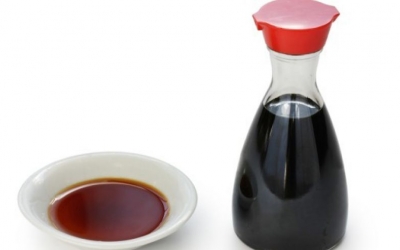
Yamasa's scientists have made a discovery involving a molecule related to flavor enhancers contained in soy sauce—and HIV Fox News reports.
Vocativ reports that Yamasa in 1988 established a division of food scientists who were tasked with carrying out research on how the immune system responds to a variety of chemicals in food; in 2001, they announced a big find: that the molecule, EFdA, could possibly be used in treatment of HIV.
That's because EFdA, along with eight HIV drugs on the market, belongs to a family of compounds that help prevent HIV replication, explains the University of Missouri, whose virologists researched Yamasa's findings and this week confirmed them. But the issue with some of those drugs—the researchers single out the commonly used Tenofovir—is that patients develop resistance to them and then need to step up to a more powerful drug.
But as Missouri researcher Stefan Sarafianos found, EFdA "is less likely to cause resistance" because it's activated more readily and doesn't break down in the liver and kidneys as rapidly as similar drugs. His lab has discovered it "works 10 times better than on wild-type HIV that hasn’t become Tenofovir resistant" and it works even better—70 times better—on HIV that has grown resistant to Tenofovir. Sarafianos has teamed up with Merck to test potential new drugs.