make preferable
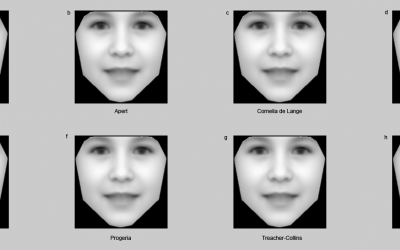
Doctors can now diagnose rare genetic disorders in children using family photographs, eLife reports. Newly developed facial-recognition software allows a computer to scour family snaps for facial features characteristic of conditions such as Down's syndrome.
The computer software, developed at the Universities of Edinburgh and Oxford, employs a form of "artificial intelligence" to learn what aspects of a person's face are linked to particular conditions.
It builds a description of the structure of the face by identifying corners of eyes, the nose, the mouth and other features and compares the results with a database of remembered features.
Between 30% and 40% of rare genetic disorders are thought to involve changes in the shape of the face and skull.
The technology could be particularly helpful in places where there is no access to clinical genetics at all.
Alastair Kent, director of the charity Genetic Alliance UK, said the technology would fill a gap in the medical profession and help families receive a quick diagnosis.
"Clinicians skilled in the use of facial features to support diagnosis are few and far between," he said.