make preferable
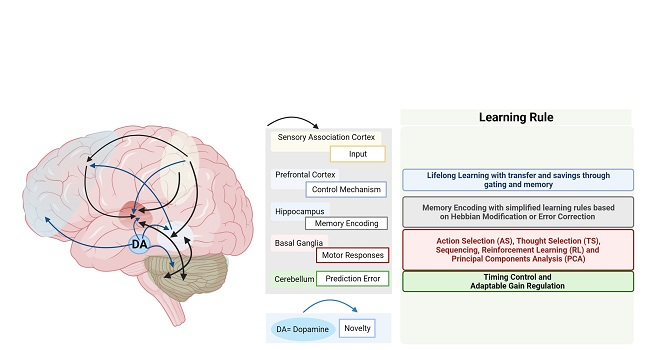
Neurobiologists from South Africa, Australia and the University of Bremen Jacobs have proposed a computer model that distributes creative processes across neural networks in the brain.
Depending on the type of creative activity, these networks may be arranged differently. The results of the study were recently published in the journal Neuroscience & Biobehavioral Reviews.
Creativity is understood as the creation of new, useful and unexpected solutions. Researchers argue that related cognitive processes, such as the ability to abstract, improvise or divergent thinking, involve different areas of the brain that are interconnected. These areas include the cerebellum, hippocampus, prefrontal cortex and basal ganglia.
Scientists have concluded that different areas are activated depending on the type of creativity. The similarities and differences between these types of creativity and their neural circuits are described by the model using algorithms. Dopamine plays an important role as a critical modulator for the control and optimization of creative neural pathways.
With this proposed neural network model, scientists are providing, for the first time, a unified framework for seemingly three different forms of creativity.
The more we know about these mechanisms, the more specifically we can promote creativity and perhaps contribute as promising interventions for people with relevant brain disorders.