
 make preferable
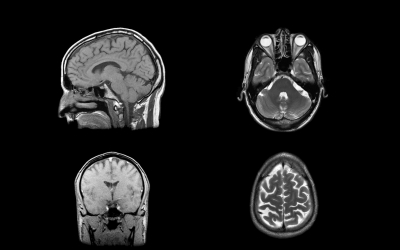
The Nobel Prize for physiology or medicine was given Monday morning to three scientists who've uncovered the "inner GPS" in our brains that helps us find our way through the world around us, identifying where we are, where we've been and how to get back there again. From the Nobel committee's poetic announcement:
The discoveries of John O'Keefe, May‐Britt Moser and Edvard Moser have solved a problem that has occupied philosophers and scientists for centuries – how does the brain create a map of the space surrounding us and how can we navigate our way through a complex environment?
The answers have some direct implications for how we understand diseases like Alzheimer's that rob people of their spatial memory. But they also have some fascinating implications for perfectly healthy people, too, and for the way we design spaces — from individual buildings to neighborhoods and whole transportation networks — that we move through daily. While the first story is clearly the province of scientists and doctors, the second is very much of interest to urban planners, architects and cartographers, Washington Post ensures.
For them, the evolving science of your "inner GPS" could help create places that aren't so confusing — or help us understand why so many of the places we've already built (medical complexes, train stations, downtown Atlanta) are.
First, a very quick sketch of what the newest Nobel laureates have taught us about our brains (and the brains of rats): Back in 1971, O'Keefe discovered nerve cells in rats that activated each time the animals passed by a particular location in a room. When the rats were in one corner, certain cells in their brains activated; when they were in a different part of the room, other cells lit up. O'Keefe called these "place cells," and research since his initial discovery suggests that humans have them, too. They help us construct mental maps of space, recognizing the difference between one street corner and the next, between your cubicle and your coworker's. The Mosers (they're married) much more recently added to this the discovery of "grid cells" that, along with place cells, allow us to determine our position in the world and to navigate through it.
All of this inner navigational work happens without any conscious effort on our part. And yet actual navigation is a real-world challenge most of us wrestle with every day. When you're wandering through a hospital, how do you find the right doctor's office? When you're walking through an unfamiliar city, how do you find your way back to your hotel? In a world where so many of us now use literal GPS systems — with smartphones or in-car navigation screens — are we outsourcing our mental maps to machines? As Sarah Goodyear has explained, for instance, children who are driven everywhere (instead of walking) often don't know where they're going.
In the world of architecture, there's now research underway to determine if all this new neuroscience could help design hospitals where people are less likely to get lost. In many cities, local governments are now deploying the science (and art) of "wayfinding," creating street signs and cues that might more intuitively help people find their way through baffling environments (and toward, say, the train station or nearest public bathroom).
Scientists are also learning a lot about the external cues — sights, smells and sounds around us — that influence all this internal mapping in our brains. Perhaps this might ultimately tell us something about which kinds of environments aid or tax our brains more: chaotic cities or quiet suburbs, visually stimulating neighborhoods, or cookie-cutter subdivisions?





