
 make preferable
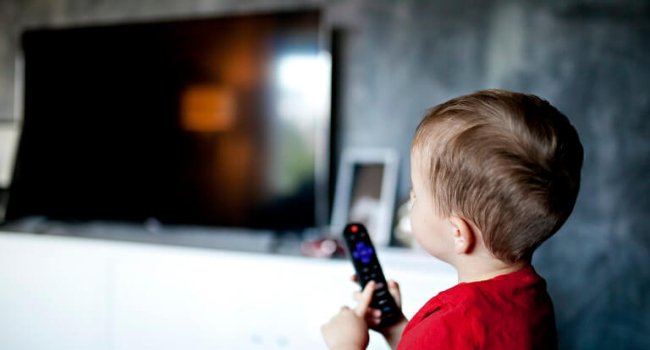
What effect do screens have on children’s developing brains, especially critical language skills? To understand this, scientists in Estonia surveyed the parents of more than 400 children about their screen use, their children’s screen use, and their children’s language skills, frontiers reports.
They found that parents who use screens a lot also have children who use screens a lot, and that children’s higher screen time is associated with poorer language skills.
The results of the study were published in the journal in Frontiers in Developmental Psychology.
As part of the study, researchers surveyed a representative sample of Estonian families, including 421 children aged between 2.5 and 4 years old. The survey asked parents to estimate how long each member of the family would spend using different screen devices for different purposes on a typical weekend day. It also asked how much of this time would be spent using a screen as a family, for example watching a film together. Finally, parents were asked to fill out a questionnaire evaluating their children’s language ability.
The researchers sorted both children and adults into three screen use groups—high, low, and moderate. They then analyzed this data to see if there was a link between parental screen use and children’s screen use.
They found that parents and children generally belonged to the same groups: parents who used screens a lot had children who also used screens a lot.
Controlling for age, they looked at the language development of these children, and found that children who used screens less scored higher for both grammar and vocabulary.
No form of screen use had a positive effect on children’s language skills.





