make preferable
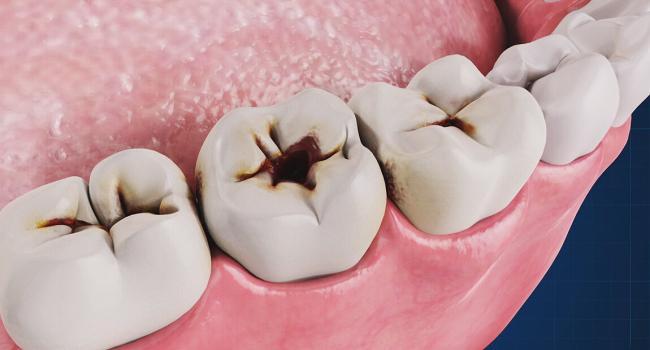
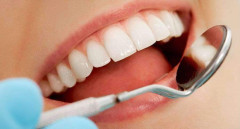
Researchers at the the University of Hong Kong, Chinese Academy of Sciences, Qingdao Stomatological Hospital, and Qingdao Women and Children’s Hospital have developed the world’s first artificial intelligence (AI) system capable of predicting early childhood tooth caries risk for individual teeth based on microbial characteristics, achieving an accuracy rate of over 90%. This study was published in Cell Host & Microbe.
The researchers analyzed the dental plaque microbiome of 89 preschoolers by examining more than 2,500 teeth. It turned out that in a healthy oral cavity, the front and back teeth are inhabited by different bacteria. But in the case of caries, this balance is disturbed: microorganisms characteristic of incisor teeth appear on the grooves, and this becomes the first warning signal.
The Spatial-MiC system was created based on these data. It analyzes the composition of microbes and is able to detect the risk of caries two months before the first signs appear. The prediction accuracy is 93%.
Current preventive measures do not take into account that different teeth have different degrees of vulnerability. The new method, however, enables to protect areas where the risk is particularly high and avoid unnecessary interventions.
“These findings fundamentally change how we understand tooth decay,” said Professor Shi Huang, head of the research team. “We’ve moved from seeing cavities as inevitable to being able to predict and prevent them at the microbial level, tooth by tooth.”
The developers plan to adapt the technology for widespread use. According to Dr. Fang Yang, it will help reduce the number of visits to the dentist, reduce children’s fear of treatment, and prevent complications such as pulpitis or tooth loss.