make preferable
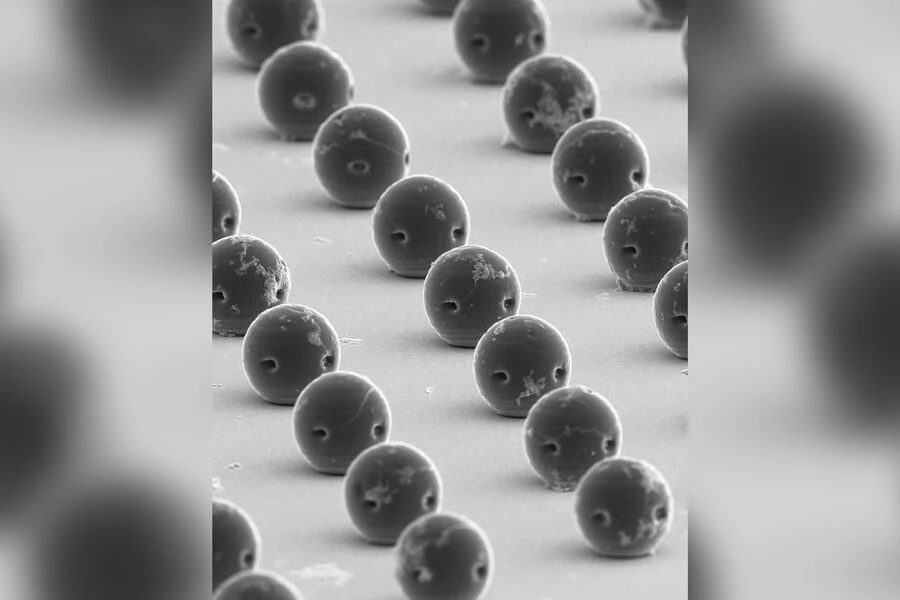
Japanese scientists have created tiny self-assembling particles that deliver CRISPR “genetic scissors” directly to tumors. Developed at the Institute of Science Tokyo, the technology protects the gene-editing tool from breaking down in the body and releases it inside cancer cells. The results were published in the scientific journal ACS Applied Materials & Interfaces.
CRISPR-Cas9 technology can precisely alter specific regions of the genome, making it a promising weapon against cancer. But delivering these “scissors” to a tumor is no easy task: they break down quickly in the blood and struggle to reach the target cells. The scientists packaged Cas9 together with guide RNA into a protective ribonucleoprotein complex (RNP), but this too proved fragile.
The team then assembled a nanoparticle from three components: the Cas9 complex, tannic acid (a naturally occurring plant compound), and a special polymer. The acid forms the core, while the polymer creates a protective shell around it. The particle, about 30 nanometers in diameter (thousands of times thinner than a human hair), remains intact in the bloodstream. Inside a cell, in a more acidic environment, the shell breaks down and releases the “scissors.”
“Our approach combines simple aqueous self-precipitation with protection of the fragile RNP cargo during circulation, improved tumor accumulation, and pH-dependent intracellular release from endosomes,” explained Associate Professor Yuto Honda, a member of the research team.
In mice with tumors, the particles circulated in the blood longer and accumulated in tumors more effectively than “naked” Cas9 complexes. In tumor tissue, the editing rate for the target gene reached 37.2%, compared with 1.5% for free complexes. Particles targeting the PLK1 and KRAS genes also markedly suppressed or slowed tumor growth in mice.
“Achieving substantial genome editing in tumor tissue after systemic administration is an important step toward realizing the potential of CRISPR cancer therapy,” Honda noted.
The scientists stress that further research is needed to assess the platform’s safety and effectiveness in more clinically relevant models.