make preferable
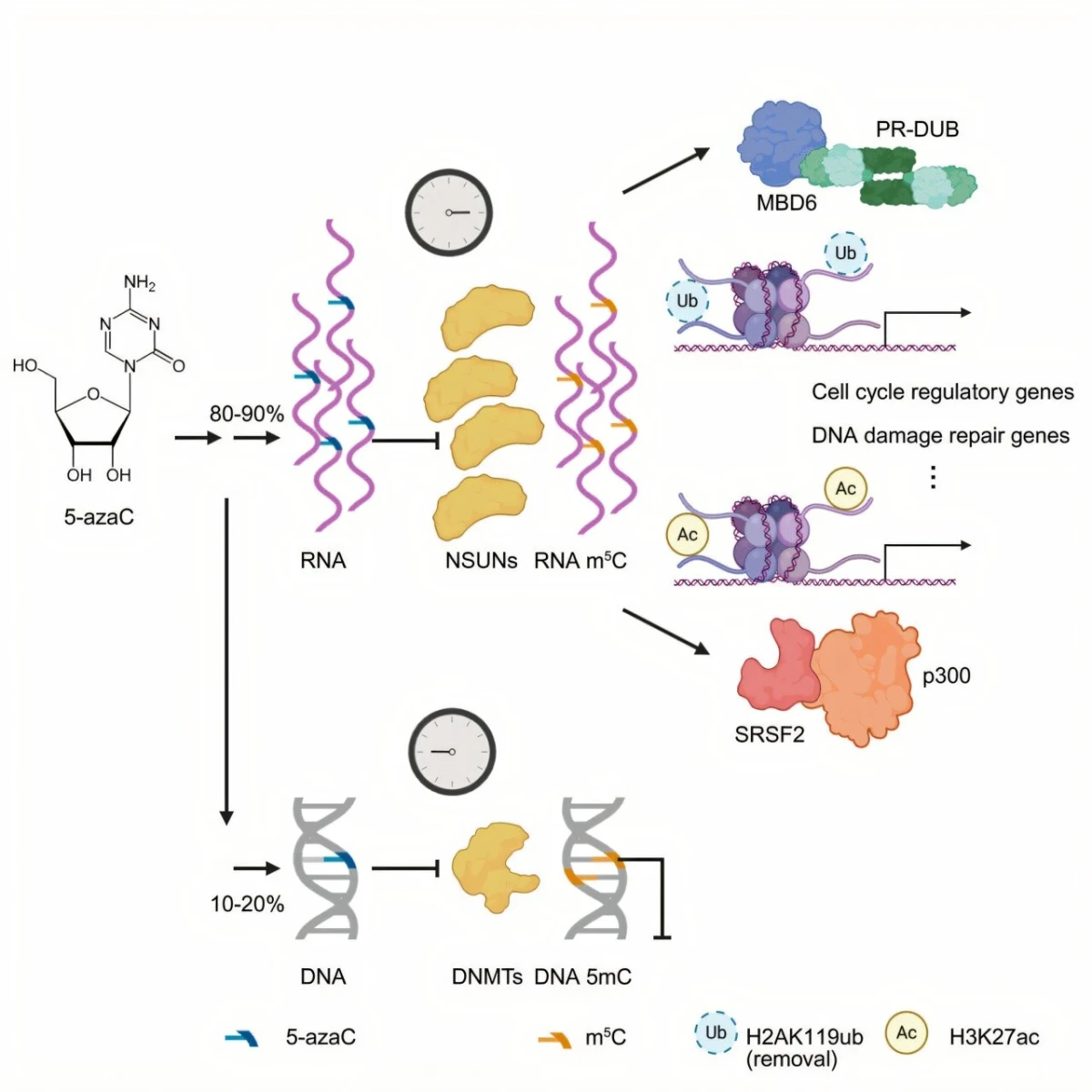
Scientists have discovered that the anticancer drug azacitidine, used to treat certain types of blood cancer, acts primarily through RNA rather than DNA, as previously thought. The discovery could help explain the drug's effectiveness, identify more precise targets for new medicines, and predict which patients will benefit from treatment. The study's findings were published in the journal Molecular Cell.
Azacitidine has been used for more than 20 years to treat high-risk myelodysplastic syndromes and acute myeloid leukemia. The drug was thought to remove chemical tags from DNA that block the activity of certain genes, allowing those genes to switch back on. However, treatment helps only about one-third to one-half of patients, and there is still no reliable way to predict its effectiveness.
Researchers from the University of Chicago and the University of Texas Health Science Center at San Antonio examined the first few hours after the drug was administered. Using high-precision mass spectrometry, they found that within just eight hours, the number of methyl tags on RNA associated with chromatin—the complex of DNA and proteins in the cell nucleus—fell sharply. Meanwhile, no noticeable changes in DNA methylation occurred during the first 24 hours.
The scientists established that azacitidine interacts with the enzyme NSUN2, which places these chemical tags on RNA. This suppresses the activity of genes that cancer cells need to divide and repair damaged DNA. The leukemia cells stop multiplying and die.
This also explains the differences between azacitidine and the structurally similar drug decitabine, which acts primarily on DNA. During the first day of treatment, decitabine had almost no effect on cancer cell survival, whereas azacitidine rapidly triggered cell death.
Additional experiments confirmed the role of NSUN2: when the researchers used genetic methods to suppress production of this enzyme, cancer cells showed the same disruptions as those treated with azacitidine.
The discovery could also help improve combination therapy. Azacitidine is used alongside venetoclax, a drug that triggers cancer cell death. In addition, leukemia cells with mutations in the TET2 or IKZF1 genes proved particularly sensitive to disruptions in RNA methylation. If these results are confirmed in patients, the corresponding genetic markers could help predict treatment response.
The scientists next plan to develop drugs that selectively block NSUN2. This could make it possible to target tumor cells more precisely and reduce the risk of resistance to therapy.