make preferable

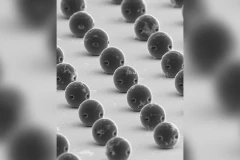
Nanoparticles of polystyrene, a material used in food packaging among other applications, promoted intestinal tumor development in mice in a laboratory study. The effect was accompanied by changes in the gut microbiota. The study by scientists at Central South University in China was published in the journal Molecular Cancer.
The researchers compared groups of mice in a colorectal cancer model. Some of the animals were also given polystyrene particles about 50 nanometers in diameter. The authors labeled the particles to track where they accumulated. The most pronounced accumulation was found in the colon. The particles were visible in lysosomes—cellular structures that break down and recycle various substances.
Mice given nanoplastics developed more tumors. They also showed damage to the microvilli on the surface of intestinal cells and a decline in the abundance of Faecalibaculum rodentium bacteria. These bacteria produce propionic acid, which helped curb processes associated with tumor development in the experiment. The authors linked the shortage of propionic acid to a weakened immune response against tumors. The study thus connected observations of the particles themselves with changes in the gut microbiota.
The doses used in the experiment were higher than typical human exposure levels. The study points to a specific mechanism that remains to be tested at other exposure levels: the particles may influence tumor development through gut bacteria, their metabolic products, and the immune response.