
 make preferable
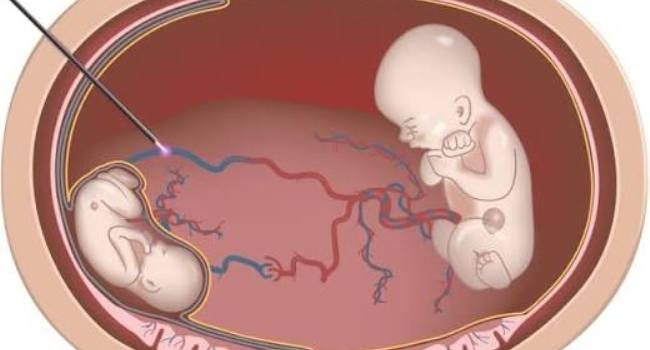
A new medical study has demonstrated that a non-invasive procedure using high-intensity focused ultrasound (HIFU) may offer a safer way to treat twin-to-twin transfusion syndrome (TTTS), a rare but serious complication affecting identical twin pregnancies.
The early-stage clinical trial, involving patients from the UK and Europe and funded by the Medical Research Council (MRC), is considered the first human study evaluating this ultrasound-based approach for early-onset TTTS. The research was led by scientists and clinicians from Imperial College London and Imperial College Healthcare NHS Trust.
TTTS affects around 10–15% of identical twin pregnancies where babies share a placenta, accounting for approximately 300–400 pregnancies annually in the UK. The condition occurs when blood circulation between the twins becomes unbalanced, causing one baby to receive too much blood while the other receives too little.
Without treatment, TTTS can seriously harm both babies and may lead to organ failure or the loss of one or both twins in severe cases.
The current standard treatment involves inserting a fetoscope into the womb and using laser surgery to block abnormal blood vessel connections on the placenta. Although effective in many cases, the procedure requires an incision and carries risks, including damage to the amniotic sac.
The new technique uses Doppler ultrasound to identify tiny blood vessels connecting the twins’ circulatory systems. Doctors then direct high-energy sound waves from outside the mother’s body to precisely heat and close these vessels, helping restore balanced blood flow between the babies.
The feasibility study involved 10 women between 12 and 17 weeks of pregnancy. Researchers found that the treatment successfully blocked blood flow in 90% of the targeted placental vessels. No adverse effects were observed in the mothers or unborn twins, and 18 of the 20 babies involved in the pregnancies remained healthy two weeks after treatment.
"This is very promising research, confirming for the first time that this non-invasive procedure can be used safely in twin-twin transfusion syndrome," said Professor Christoph Lees, head of fetal medicine at Imperial College Healthcare NHS Trust and professor of obstetrics at Imperial College London.
"That’s really encouraging, because at present we are only able to treat this condition by using a more invasive method which has its own risks," he added.
Researchers stressed that the study was designed to evaluate safety rather than prove the treatment’s effectiveness. Some women still required additional procedures, including laser treatment, and some babies did not survive.
Professor Lees and his team plan to conduct a larger clinical trial involving 50 to 100 women to determine whether HIFU can successfully treat TTTS and whether it could become a less risky alternative to existing treatments.
Dr Adam Babbs, Associate Director of Translational Research at UKRI MRC, said the findings provide important proof that HIFU could become a future option for earlier intervention.
"Twin-to-twin transfusion syndrome is a life-threatening condition with very limited treatment options early in pregnancy," he said. "This study provides important proof of concept that high intensity focused ultrasound (HIFU) could offer a non-invasive way to intervene earlier, with the potential to improve outcomes for affected babies."





