make preferable
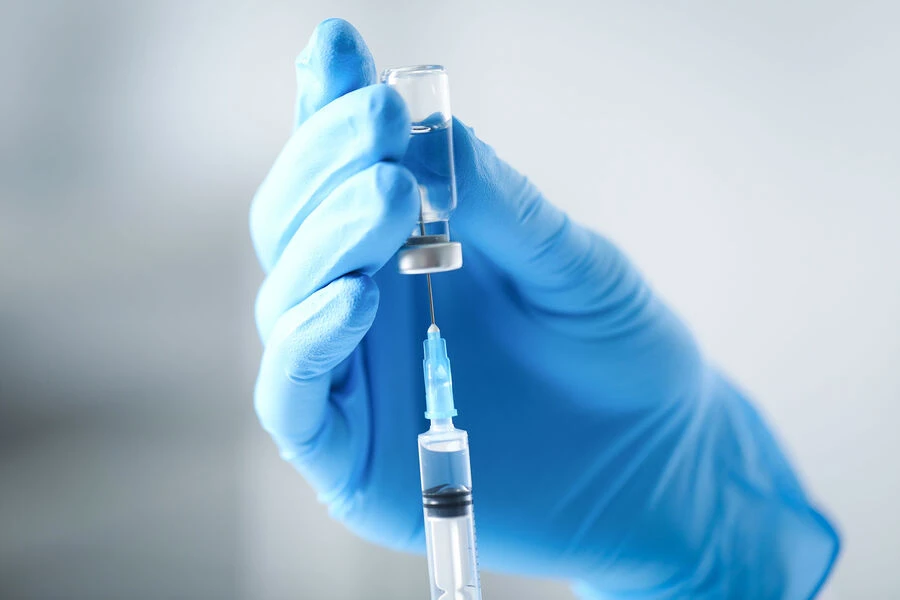
Researchers at the Technical University of Denmark (DTU) have developed a vaccine capable of protecting against several related food allergens simultaneously. The study's findings were published in the scientific journal Nature Communications.
More than 220 million people worldwide suffer from food allergies: the immune system perceives a harmless protein in food as a threat, which in the worst cases can be life-threatening. The only treatment involves administering increasing doses of an allergen over several years, but because of the complexity and discomfort involved, many people prefer simply to avoid the offending foods.
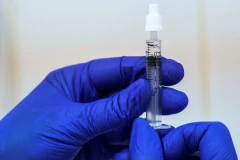
The DTU vaccine offers an alternative: it contains a synthetic allergen shared by several related allergens, such as those found in peaches and certain nuts.
It uses an mRNA vaccine delivery approach similar to those used during the COVID-19 pandemic.
“We use mRNA as a Trojan horse: instead of giving patients the actual allergen to build tolerance to it, we give the body instructions on how to handle the allergen properly while avoiding an allergic reaction,” explained Esperanza Rivera de Torre, an associate professor at DTU Bioengineering.
The vaccine's effects were tested in both healthy and allergic mice. After the first dose, healthy mice produced large amounts of protective antibodies. After three doses given at three-week intervals, they were exposed to a range of allergens targeted by the vaccine: the antibody response was strong and broad. Protective antibody levels also increased in allergic mice, with almost no side effects, although the vaccine did not provide complete protection against anaphylaxis at the challenge doses used. Laboratory experiments using blood from patients with allergies showed that antibodies from vaccinated mice could reduce allergic reactions in human samples.
The work remains a proof of concept. The researchers are now refining the lipid vesicles used for delivery, planning studies in a larger group of mice to determine dosing frequency and dose levels, and developing an allergen to protect against another group of foods, such as apples, carrots and hazelnuts. The main goal is to gather data to obtain approval for human trials of the vaccine.