
 make preferable
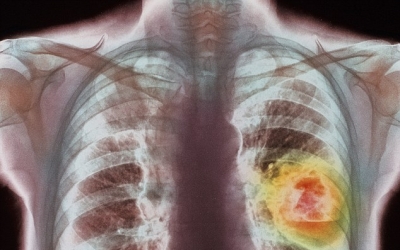
Oxygen in the air we breathe may play a role in triggering lung cancer, new research suggests.
Scientists found that rates of the disease decrease at higher altitudes, where there is less oxygen in the air.
Although oxygen is essential for life, the US researchers suggest the way our bodies process it is potentially carcinogenic.
Oxygen is known to be highly reactive. When cells in the body use oxygen atoms to harness the energy stored in food, they produce a natural by-product called oxygen free radicals.
These free radicals can cause damage to cell structures and DNA, which in turn can trigger cancer.
Kamen Simeonov, from the University of Pennsylvania, and Daniel Himmelstein, from the University of California at San Francisco, compared cancer rates across 250 western counties in the US with varying altitude levels.
They found that incidence of lung cancer fell by 7.23 cases per 100,000 individuals for every 1,000 metre (3,281 feet) rise in altitude.
Although there was a strong association between elevation and lung cancer, they did not see the same link with breast, prostate or bowel cancer, suggesting a role played by the inhalation process.
They said exposure to sunlight and pollution, both of which are affected by elevation, was taken into account in their calculations.





