


- Latest news▼
-
23:31, October 16 Cardiologists Urge Inclusion of Physical Exercise in Heart Disease Prevention

-
21:29, October 16 Stem Cell Reports: Nicotine Exposure During Pregnancy Permanently Weakens Offspring’s Immune Systems

-
19:15, October 16 Frontiers: Poor Sleep May Increase the Risk of Breast Cancer by 30%

-
17:26, October 16 Nature: Researchers Link Faster Wound Healing to Female Sex Hormones

-
15:05, October 16 BJN: Asparagus extract helps improve sleep and reduce anxiety

-
10:55, October 16 Science Corporation Implants Vision-Restoring Chip in First Patient With Stargardt Disease

-
08:41, October 16 Smartphone Habits Can Detect Stress With Up to 76% Accuracy, Scientists Find

-
21:36, October 15 Cardiologists Urge Inclusion of Physical Exercise in Heart Disease Prevention

-
19:41, October 15 RPTH: One to Two Cups of Coffee a Day Linked to a 51% Lower Risk of Recurrent Venous Thromboembolism

-
17:50, October 15 JACH: Eating Breakfast May Improve Psychological Flexibility

-
15:42, October 15 A Simple Way to Blunt Blood Sugar Spikes After Meals

-
12:33, October 15 Scientists Discover a Longevity Gene That Extends Lifespan by 14%

-
10:37, October 15 WHO: Lead Poisoning Claims More Than 3.5 Million Lives Every Year

-
08:47, October 15 Why It Can Sometimes Be Impossible to Stop Laughing: Neuroscientists Identify Two Mechanisms Behind Laughter

-
21:24, October 14 Molecular Cell: Bacteria Hide an Unusual Defense Mechanism That Activates When a Virus Attacks

All materials
A new study identifies five stages of human brain aging
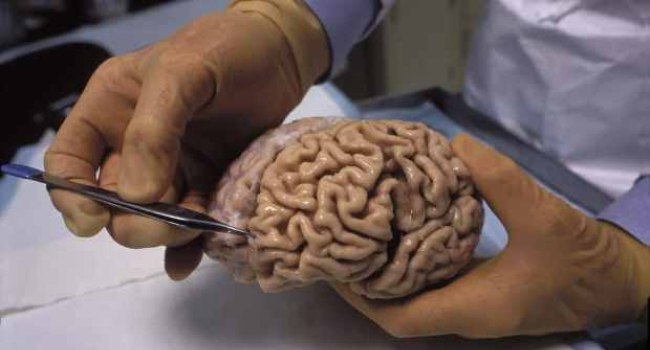
Scientists at the University of Cambridge have found that the human brain goes through several clearly defined phases throughout life, with key turning points occurring at ages 9, 32, 66, and 83. The authors of the study hope that understanding the brain’s condition at each of these stages will help shed light on the causes of mental disorders and dementia.
Around 4,000 people aged up to 90 took part in the study. The researchers scanned their brains to determine how connections between brain cells function.
The Cambridge team concluded that the brain remains in a “youth phase” until roughly age 30 — a period widely considered the peak of human physical and cognitive performance.
According to the scientists, the new findings may help explain why the risks of mental disorders and dementia vary at different stages of life.
The research findings were published in the journal Nature Communications.
While the brain continually changes as it acquires new knowledge and experience, the study shows that this is not one smooth process from birth to death.
Instead, there are five distinct phases of brain function:
-
Childhood — from birth to age 9
-
Youth — from 9 to 32
-
Adulthood — from 32 to 66
-
Early aging — from 66 to 83
-
Late aging — from 83 onward
“The brain reconfigures itself throughout life. It constantly strengthens some connections and weakens others, and this is not a steady, even process — there are fluctuations and phases of reorganization,” Dr. Alexa Mousley, one of the study’s authors, told the BBC.
These stages may begin earlier or later in some individuals, but the age thresholds above were the most common patterns observed in brain scans of the participants.
Childhood. During this initial period, the brain grows rapidly in size but simultaneously prunes excess synapses — the connections between nerve cells that were created early in life.
At this stage, the brain works less efficiently. It behaves like a child wandering aimlessly through a park, walking wherever they feel like going instead of moving directly from point A to point B.
Youth. Everything changes sharply around age nine, when the brain’s connections begin to reorganize for maximum efficiency. “It’s a huge shift,” says Dr. Mousley, calling the transition between these phases the most significant in a person’s life.
This is also when the risk of mental disorders is highest.
It is not surprising that the youth phase begins around puberty. But the new study suggests that it ends much later than previously thought.
It was once believed that youth ended with the teen years; later neuroscience extended it into the twenties — and now, into the early thirties.
This is the only phase in which the brain’s neural networks become more efficient. According to Mousley, brain performance peaks in the early years after turning 30 — at the very end of the 9-to-32 phase. She calls it “extremely interesting” that the brain remains in a single developmental phase for such a long period.
Adulthood. A period of stability follows — the longest phase of brain life, lasting around three decades.
Changes occur much more slowly than during the earlier, more turbulent years, but this is when the brain’s developmental processes begin to reverse.
According to the researchers, this is when we reach a kind of “plateau of intelligence and personality.”
Early aging. This stage begins around age 66, though it is not a sudden decline in brain efficiency. Instead, the patterns of neural connectivity begin to shift.
Rather than functioning as a single coordinated organ, the brain becomes increasingly divided into separate regions that still interact closely — like members of a band who start pursuing their own solo projects.
Although the study focused on healthy brains, this is typically the age at which dementia and high blood pressure — both of which affect brain function — begin to appear.
Late aging. Then, around age 83, we enter the final stage. Less data was available for this age group because it was harder to find enough healthy individuals for scanning.
Brain changes at this stage resemble those of early aging but are more pronounced.
Follow NEWS.am Medicine on Facebook and Twitter

- Related News
- What Happens to the Body After a Cup of Coffee: Seven Unexpected Effects One of the best-known unexpected effects of coffee is stimulation of the bowel...
- EJPC: Five Factors May Add 11 Years to Men’s Lives Men who met none of the five favorable criteria lived an average of 31.8 years after their first examination...
- Weight-Loss Drug May Affect Aging: Scientists Discover an Unexpected Effect of Semaglutide The study involved 20-month-old female mice that began receiving semaglutide at an advanced age...
- Rare gene variant linked to lower body fat, healthier livers and better blood sugar control The researchers used exome sequencing, a technique that focuses on the roughly 1% of DNA that contains instructions for making proteins...
- Study Identifies Three Midlife Factors That May Delay Dementia by Nearly 13 Years The researchers analyzed data from 12,409 adults with an average age of 56 years who had no signs of dementia at the beginning of the study...
- Video




- Event calendar
- Archive
- Most read
month
week
day
- International ACTS Research Project to Support Smoking Cessation Launched in Armenia 521
- Cardiologists Urge Inclusion of Physical Exercise in Heart Disease Prevention 488
- Molecular Cell: Bacteria Hide an Unusual Defense Mechanism That Activates When a Virus Attacks 485
- Stem Cell Reports: Nicotine Exposure During Pregnancy Permanently Weakens Offspring’s Immune Systems 471
- Frontiers: Poor Sleep May Increase the Risk of Breast Cancer by 30% 470
- Nature: Researchers Link Faster Wound Healing to Female Sex Hormones 433
- HealthAI: Artificial Intelligence Helps Healthcare Shift from Treatment to Prevention 407
- Chemical Senses: A Healthy Diet May Be Linked to a Better Sense of Smell 387
- eClinicalMedicine: More Than 40% of Women with Autoimmune Diseases Have Experienced a Misdiagnosis of a Psychiatric Condition 370
- Pancreatic Cancer Can Change Its “Genetic Strategy”: Study Identifies Key Mechanisms 365
- Science Corporation Implants Vision-Restoring Chip in First Patient With Stargardt Disease 357
- BJN: Asparagus extract helps improve sleep and reduce anxiety 355
- Study: Healthy Diet During Pregnancy Reduces the Risk of Colic and Eczema in Children 350
- JES: Longer Sleep May Increase the Risk of Kidney Damage in People with Diabetes 332
- It's Not Just Weight: Body Shape Is Linked to Heart Attack Risk 328
- Find us on Facebook
- Poll