


- Latest news▼
-
23:22, September 7 How Can a Fly’s Brain Help Us Understand Human Behavior?
-
21:18, September 7 How the Pursuit of Perfect Sleep Can Keep You Awake

-
08:37, September 7 Weight-Loss Drug May Affect Aging: Scientists Discover an Unexpected Effect of Semaglutide
-
20:53, September 5 npj Science of Food: A Spoonful of Vegetable Oil Before a Carb-Rich Meal May Blunt Blood Sugar Spikes

-
13:26, September 5 In the U.S., Prescriptions for Obesity Drugs for Children Under 12 Increased 310-Fold in Seven Years

-
23:20, September 4 TCTV: New Drug Doubles Survival in Lung Cancer
-
11:10, September 4 SB: The Rule of Drinking Eight Glasses of Water a Day Has No Scientific Basis

-
08:46, September 4 JID: Popular Weight-Loss Drugs May Increase the Risk of Male Pattern Hair Loss by 7%

-
22:46, September 3 At-Home Urine Test Could Detect Most Bladder Cancer Cases, Study Finds

-
20:38, September 3 Alcohol-Related Cancer Deaths Double in the U.S. as the Number of Such Deaths Rises Over 33 Years

-
18:29, September 3 An Unexpected Paradox: Both Very Low and Very High Testosterone Levels May Be Equally Dangerous for the Heart

-
16:11, September 3 The Independent: Aging Is the Main Risk Factor for Cancer

-
14:13, September 3 CC: Age-Related Changes in Memory May Begin as Early as 50

-
08:34, September 3 Scientists Find Who May Benefit More from Coffee in Terms of Parkinson’s Disease Risk

-
23:37, September 2 LDE: Popular Diabetes Drugs Linked to Risk of a Dangerous Complication in Certain Patients

All materials
Ebola Outbreak in Congo Becomes Deadliest in the Country’s History
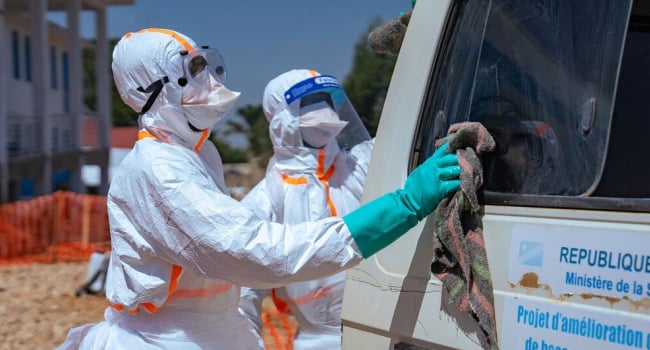
The Ebola outbreak in the Democratic Republic of Congo has become the deadliest in the country’s history, with 2,325 deaths recorded as of August 16, according to government data. The death toll has now surpassed the 2,299 fatalities reported during the previous record outbreak in 2018–2020.
Congo’s public health institute said confirmed cases have risen to 4,945, including 101 new cases recorded in a single 24-hour period.
The current outbreak, the country’s 17th, had already become its largest ever by number of cases in late July. It is now the second-deadliest Ebola outbreak in the world after the 2014–2016 epidemic in West Africa, which caused 28,616 cases and 11,310 deaths in Guinea, Liberia and Sierra Leone, according to the World Health Organization.
The rapid rise in deaths is particularly concerning. The West African outbreak took almost five months after it was declared to reach 1,000 deaths, while Congo’s current outbreak surpassed 2,000 deaths in less than three months.
No approved vaccines or treatments
The outbreak is caused by the Bundibugyo species of Ebola, for which there are currently no approved vaccines or treatments.
The outbreak was officially declared on May 15 and has continued to accelerate amid weak health infrastructure, community resistance and instability, all of which have made it more difficult to detect cases and respond quickly.
The case fatality ratio has risen sharply, from around 20% in early June to 46%, according to government figures. This means that nearly one in every two confirmed cases is now resulting in death.
However, experts say the increase does not necessarily mean that the virus itself has become more deadly. Instead, it likely reflects persistent problems with disease surveillance, case detection and access to medical care.
“Normally, as an outbreak progresses, the case fatality ratio should fall as contact tracing improves and patients are identified and treated earlier,” said Thomas Parisch, a public health specialist recently deployed to the Democratic Republic of Congo with Médecins Sans Frontières.
Instead, many patients are still being diagnosed at a very late stage, when treatment is less likely to be effective. Some cases are only discovered after patients have already died in their communities.
A limited number of experimental vaccines and treatments are currently being evaluated. Global health authorities are also investigating whether existing Ebola therapies could provide some protection against the Bundibugyo species. So far, however, available evidence is largely limited to animal studies.
The outbreak also spread to neighboring Uganda earlier this year. Authorities there managed to limit the outbreak to 20 confirmed cases and two deaths before declaring it over last month.
Ebola spreads through direct contact with bodily fluids from infected people, including those who have died from the disease. Symptoms can include fever, vomiting and diarrhea, while severe cases may involve internal and external bleeding.
Follow NEWS.am Medicine on Facebook and Twitter





- Most read
month
week
day
- An Unexpected Paradox: Both Very Low and Very High Testosterone Levels May Be Equally Dangerous for the Heart 955
- Alcohol-Related Cancer Deaths Double in the U.S. as the Number of Such Deaths Rises Over 33 Years 876
- The Independent: Aging Is the Main Risk Factor for Cancer 857
- CC: Age-Related Changes in Memory May Begin as Early as 50 848
- LDE: Popular Diabetes Drugs Linked to Risk of a Dangerous Complication in Certain Patients 846
- At-Home Urine Test Could Detect Most Bladder Cancer Cases, Study Finds 836
- Scientists Find Who May Benefit More from Coffee in Terms of Parkinson’s Disease Risk 715
- SB: The Rule of Drinking Eight Glasses of Water a Day Has No Scientific Basis 69
- JID: Popular Weight-Loss Drugs May Increase the Risk of Male Pattern Hair Loss by 7% 64
- TCTV: New Drug Doubles Survival in Lung Cancer 63
- Weight-Loss Drug May Affect Aging: Scientists Discover an Unexpected Effect of Semaglutide 62
- npj Science of Food: A Spoonful of Vegetable Oil Before a Carb-Rich Meal May Blunt Blood Sugar Spikes 61
- In the U.S., Prescriptions for Obesity Drugs for Children Under 12 Increased 310-Fold in Seven Years 57
- How the Pursuit of Perfect Sleep Can Keep You Awake 57
- How Can a Fly’s Brain Help Us Understand Human Behavior? 56
- Find us on Facebook
- Poll