


- Latest news▼
-
23:31, October 16 Cardiologists Urge Inclusion of Physical Exercise in Heart Disease Prevention

-
21:29, October 16 Stem Cell Reports: Nicotine Exposure During Pregnancy Permanently Weakens Offspring’s Immune Systems

-
19:15, October 16 Frontiers: Poor Sleep May Increase the Risk of Breast Cancer by 30%

-
17:26, October 16 Nature: Researchers Link Faster Wound Healing to Female Sex Hormones

-
15:05, October 16 BJN: Asparagus extract helps improve sleep and reduce anxiety

-
10:55, October 16 Science Corporation Implants Vision-Restoring Chip in First Patient With Stargardt Disease

-
08:41, October 16 Smartphone Habits Can Detect Stress With Up to 76% Accuracy, Scientists Find

-
21:36, October 15 Cardiologists Urge Inclusion of Physical Exercise in Heart Disease Prevention

-
19:41, October 15 RPTH: One to Two Cups of Coffee a Day Linked to a 51% Lower Risk of Recurrent Venous Thromboembolism

-
17:50, October 15 JACH: Eating Breakfast May Improve Psychological Flexibility

-
15:42, October 15 A Simple Way to Blunt Blood Sugar Spikes After Meals

-
12:33, October 15 Scientists Discover a Longevity Gene That Extends Lifespan by 14%

-
10:37, October 15 WHO: Lead Poisoning Claims More Than 3.5 Million Lives Every Year

-
08:47, October 15 Why It Can Sometimes Be Impossible to Stop Laughing: Neuroscientists Identify Two Mechanisms Behind Laughter

-
21:24, October 14 Molecular Cell: Bacteria Hide an Unusual Defense Mechanism That Activates When a Virus Attacks

All materials
Innovative Spray Developed to Treat Rhinitis Caused by Overuse of Nasal Decongestants
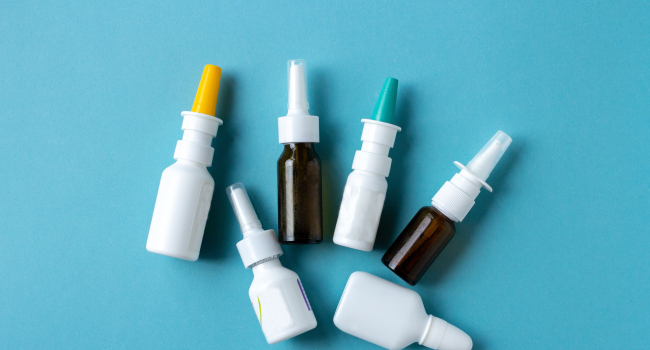
Scientists and clinicians at Sechenov University have developed an intranasal spray that could offer a new treatment option for people suffering from chronic nasal congestion caused by the excessive use of decongestant medications. The key difference between the new formulation and conventional nasal drops and sprays is the presence of a mucoadhesive component. This substance allows the medication to adhere firmly to the mucous membrane: instead of simply coating the surface, the active ingredient remains in place for longer, providing a prolonged therapeutic effect, Nauka Rossii reports.
Rhinitis medicamentosa, also known as rebound or drug-induced rhinitis, is a widespread condition. Experts estimate that it affects 6.7–8.5% of the population. The main cause is the prolonged and uncontrolled use of vasoconstrictor nasal drops and sprays.
“If these medications are used for more than ten days, changes characteristic of rhinitis medicamentosa begin to develop in the nasal mucosa,” explains Ksenia Eremeeva, PhD in Medicine and associate professor at Sechenov University’s Department of Ear, Nose and Throat Diseases. “People become trapped in a vicious cycle: they have to use the medication again in order to breathe normally. But as soon as its effect wears off, the congestion returns with even greater intensity. This is the classic rebound effect.”
People at increased risk include those who frequently suffer from acute respiratory viral infections, allergic rhinitis, sinusitis, a deviated nasal septum and other ENT conditions. However, the condition can develop in anyone who uses decongestant medications incorrectly or for longer than the period recommended in the instructions—generally no more than five to seven days.
An interdisciplinary team from the departments of pharmacology, pharmaceutical technology, and ear, nose and throat diseases at Sechenov University worked on the development of the innovative spray.
The resulting stable mucoadhesive formulation provides a prolonged therapeutic effect while minimizing the risk of systemic side effects. According to the developers, there are currently no equivalent products on either the Russian or international markets.
“Traditional intranasal solutions have a significant drawback: because of the natural self-cleaning mechanisms of the mucous membrane, they are quickly eliminated,” explains Zhanna Kozlova, PhD in Pharmaceutical Sciences and associate professor at the Department of Pharmaceutical Technology of the A.P. Nelubin Institute of Pharmacy. “When our formulation enters the nasal cavity, it transforms from a liquid into a gel. As a result, it remains at the site of absorption for much longer, providing a prolonged effect.”
Another advantage of the spray is its original combination of components, which targets all the key mechanisms involved in the development of rhinitis medicamentosa while also protecting the nasal mucosa from drying out. The developers have already filed an application with Rospatent to register the original pharmaceutical substance.
The technology has been adapted both for the preparation of individualized medicines in pharmacy compounding departments and for industrial-scale production by pharmaceutical companies.
“We created not just a new formulation, but a complete technological process that can easily be scaled up,” said Elena Smolyarchuk, PhD in Medicine and head of the Department of Pharmacology at the A.P. Nelubin Institute of Pharmacy at Sechenov University. “We are already seeing strong interest in our development from the professional community.”
The development has now entered the preclinical research stage. Pilot laboratory tests involving rats and rabbits have confirmed the safety and efficacy of the formulation.
Once all necessary studies are completed, the spray could be used by otolaryngologists and allergists-immunologists to treat difficult-to-manage forms of rhinitis and other chronic inflammatory diseases of the nasal cavity and paranasal sinuses.
Follow NEWS.am Medicine on Facebook and Twitter

- Video




- Event calendar
- Archive
- Most read
month
week
day
- International ACTS Research Project to Support Smoking Cessation Launched in Armenia 442
- Molecular Cell: Bacteria Hide an Unusual Defense Mechanism That Activates When a Virus Attacks 422
- Cardiologists Urge Inclusion of Physical Exercise in Heart Disease Prevention 407
- Frontiers: Poor Sleep May Increase the Risk of Breast Cancer by 30% 391
- Stem Cell Reports: Nicotine Exposure During Pregnancy Permanently Weakens Offspring’s Immune Systems 389
- Nature: Researchers Link Faster Wound Healing to Female Sex Hormones 362
- Chemical Senses: A Healthy Diet May Be Linked to a Better Sense of Smell 352
- HealthAI: Artificial Intelligence Helps Healthcare Shift from Treatment to Prevention 337
- eClinicalMedicine: More Than 40% of Women with Autoimmune Diseases Have Experienced a Misdiagnosis of a Psychiatric Condition 315
- Pancreatic Cancer Can Change Its “Genetic Strategy”: Study Identifies Key Mechanisms 312
- Study: Healthy Diet During Pregnancy Reduces the Risk of Colic and Eczema in Children 309
- Science Corporation Implants Vision-Restoring Chip in First Patient With Stargardt Disease 301
- BJN: Asparagus extract helps improve sleep and reduce anxiety 295
- JES: Longer Sleep May Increase the Risk of Kidney Damage in People with Diabetes 289
- It's Not Just Weight: Body Shape Is Linked to Heart Attack Risk 288
- Find us on Facebook
- Poll