


- Latest news▼
-
15:34, August 31 SciSign: Cancer-Associated Protein BRAF Identified as a Potential Driver of Chronic Pain

-
13:30, August 31 NanoH: Scientists Develop a 15-Minute Blood Test to Monitor Circadian Rhythms

-
11:29, August 31 Japan Becomes First Country in the World to Launch Viral Therapy for Esophageal Cancer

-
08:33, August 31 Scientific Reports: Sunlight Exposure Linked to Lower Blood Glucose Levels and Reduced Risk of Diabetes

-
22:36, August 30 Scientists Identify a Compound in Tomatoes That May Protect the Liver From Fatty Liver Disease

-
16:48, August 30 U.S. FDA Approves First Wearable Sensor Capable of Detecting a Dangerous Diabetes Complication Early

-
12:31, August 30 NEJM: Signs of Atherosclerosis Found in One in 13 Apparently Healthy Young Adults

-
21:56, August 29 Immunity: COVID-19 May Trigger a Mechanism Similar to the Development of Autoimmune Diseases

-
17:23, August 29 Scientists Identify Diet That Reduces Liver Fat and Prediabetes Risk More Effectively Than Others

-
15:39, August 29 Patient with Metastatic Pancreatic Cancer Remains Disease-Free for More Than Three Years After Experimental Treatment
-
13:47, August 29 European Dietitian Recommends Eating Whole-Grain Bread Several Times a Day

-
11:42, August 29 Global Number of People Living with Type 1 Diabetes Could Rise by 29% by 2049
-
23:57, August 28 AI Trained to Detect Four Lung Diseases Through Exhaled Breath

-
21:31, August 28 Scientists Identify Dozens of Overlooked Health Risks During Heatwaves

-
19:26, August 28 Study: Nicotine Vapes May Be More Effective Than Other Smoking Cessation Aids

All materials
NanoH: Scientists Develop a 15-Minute Blood Test to Monitor Circadian Rhythms
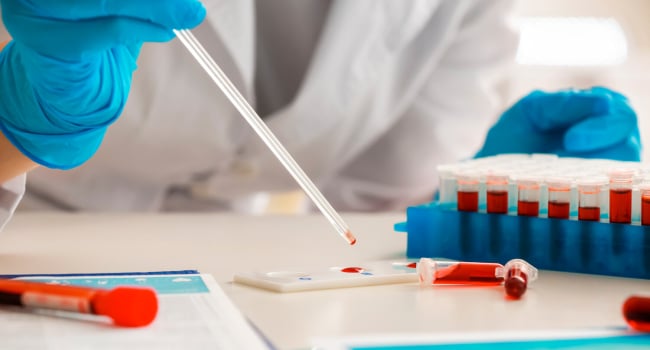
esearchers at Washington State University have developed a test that can assess the state of a person’s internal biological clock in about 15 minutes. The test requires only a drop of blood, a paper test strip and a smartphone equipped with a specially designed reader. The findings were published in Nanoscale Horizons (NanoH).
The researchers developed a system to measure melatonin, a hormone whose concentration changes throughout the day and serves as one of the key markers of circadian rhythms. Melatonin levels typically rise in the evening, signaling the onset of the body’s physiological night, and decline in the morning.
The test combines a paper strip with a 3D-printed fluorescent smartphone reader. To increase sensitivity, the researchers used europium nanoparticles capable of producing a strong fluorescent signal. The system can detect melatonin concentrations as low as 10 picograms per milliliter of blood, a level corresponding to the early onset of physiological night.
Unlike conventional laboratory methods, the new technology could potentially provide results directly at the point of testing, without requiring blood samples to be sent to a laboratory. In principle, it works similarly to rapid diagnostic tests, but instead of providing a simple “yes” or “no” result, it measures the hormone quantitatively.
According to lead author Annie Du, one of the main goals of the technology is to monitor astronauts’ circadian rhythms. During spaceflight, the natural day-night cycle can be disrupted, potentially affecting sleep, alertness and performance.
The technology could also be useful for people who work at night or on rotating shifts, as well as for studying sleep disorders. The researchers are currently testing the system using actual plasma samples from volunteers.
In the future, the team hopes to develop a system capable of continuously monitoring melatonin levels, similar to devices used for continuous glucose monitoring.
Follow NEWS.am Medicine on Facebook and Twitter





- Most read
month
week
day
- World’s First Patient Undergoes Live AI-Assisted Brain Surgery 635
- Two Unknown Ancestors Discovered in the Human Genome 631
- Immunity: COVID-19 May Trigger a Mechanism Similar to the Development of Autoimmune Diseases 531
- Innovative Spray Developed to Treat Rhinitis Caused by Overuse of Nasal Decongestants 523
- Biomolecules: Mulberries May Alter the Composition of the Gut Microbiota 522
- Calories Aren’t All the Same: Study Highlights the Benefits of the Mediterranean Diet 520
- Scientists Discover a New Property of Viruses 500
- A Hundred Years Is Not a Prescription: Scientists Explain Why a Healthy Lifestyle Does Not Guarantee a Long Life 496
- Scientists Identify Diet That Reduces Liver Fat and Prediabetes Risk More Effectively Than Others 490
- ERJ Open Research: Frequent Use of Rescue Inhalers Linked to Increased Risk of Heart Disease 489
- Study: The Amount of Nutrients Matters More Than Their Type for Intestinal Cell Turnover 484
- When Parents Live to 100: How Their Children Differ From Others 472
- Lung cancer patient remains tumor-free for 10 years after sodium selenite treatment 468
- Patient with Metastatic Pancreatic Cancer Remains Disease-Free for More Than Three Years After Experimental Treatment 457
- European Dietitian Recommends Eating Whole-Grain Bread Several Times a Day 451
- Find us on Facebook
- Poll