


- Latest news▼
-
22:41, September 1 Not Just APOE4: Scientists Identify 44 Genes That May Alter Alzheimer’s Risk

-
20:39, September 1 The Word “Diet” May Put Men Off: Study Suggests Easier Ways for Them to Lose Weight

-
18:44, September 1 “Morning Larks” and “Night Owls”: Who Struggles More to Balance Work and Life?

-
16:37, September 1 Adolescent Alcohol Use Disrupts Brain Cell Connections and Alters Adult Behavior

-
14:26, September 1 Missing Summer Already? Simple Ways to Beat the Back-to-Work Blues

-
12:23, September 1 GSK to Move mRNA Flu Vaccine into Late-Stage Clinical Trials

-
08:32, September 1 Climate Change Is Increasing Heat Stress for 560 Million Children Every Year

-
23:22, August 31 AI Assesses the Risk of Hypertension and Other Systemic Diseases From Eye Fundus Images
-
21:08, August 31 Researchers Say Cancer Warnings About Alcohol Can Be Made More Effective

-
16:44, August 31 Extreme Temperatures May Raise the Risk of Hospitalization for Heart Failure

-
15:34, August 31 SciSign: Cancer-Associated Protein BRAF Identified as a Potential Driver of Chronic Pain

-
13:30, August 31 NanoH: Scientists Develop a 15-Minute Blood Test to Monitor Circadian Rhythms

-
11:29, August 31 Japan Becomes First Country in the World to Launch Viral Therapy for Esophageal Cancer
-
08:33, August 31 Scientific Reports: Sunlight Exposure Linked to Lower Blood Glucose Levels and Reduced Risk of Diabetes
-
22:36, August 30 Scientists Identify a Compound in Tomatoes That May Protect the Liver From Fatty Liver Disease

All materials
“Morning Larks” and “Night Owls”: Who Struggles More to Balance Work and Life?
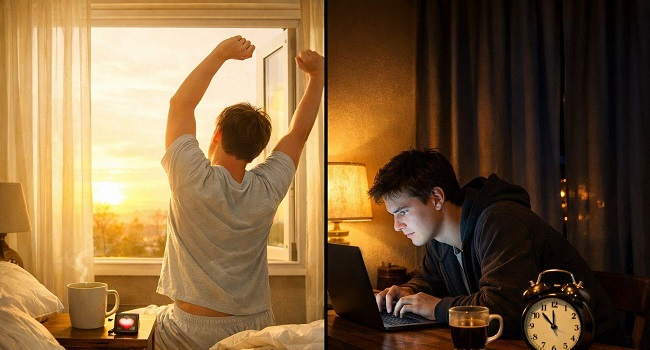
People with an evening chronotype, often referred to as “night owls,” may find it harder than “morning larks” to recover after work and maintain a healthy balance between their professional and personal lives. They are also more likely to experience symptoms of mental health problems, particularly anxiety, when their evening preference is especially pronounced. These are the findings of a study published in the journal Sleep Health.
Researchers analyzed data from 2,266 working residents of Finland and divided them into three groups based on their individual circadian rhythms: morning, evening and intermediate chronotypes.
Participants were asked about symptoms of anxiety and depression, the extent to which work continued to affect them after the end of the working day, and how effectively they were able to recover from work-related demands.
The most significant difficulties were observed among people with a strong evening chronotype. In this group, the link between being a “night owl” and anxiety disorders was largely explained by poorer recovery after work and greater difficulties separating professional responsibilities from personal life.
On average, night owls also followed less healthy lifestyles. However, health-related behaviors did not fully account for either their work-life balance difficulties or their increased risk of mental health problems.
The authors say the findings could help explain why some employees are more vulnerable to the negative effects of workplace demands than others. They suggest that measures aimed at improving work-life balance and supporting recovery after the working day could be made more effective by taking individual chronotypes into account.
Follow NEWS.am Medicine on Facebook and Twitter





- Most read
month
week
day
- World’s First Patient Undergoes Live AI-Assisted Brain Surgery 686
- Immunity: COVID-19 May Trigger a Mechanism Similar to the Development of Autoimmune Diseases 632
- Patient with Metastatic Pancreatic Cancer Remains Disease-Free for More Than Three Years After Experimental Treatment 586
- Scientists Identify Diet That Reduces Liver Fat and Prediabetes Risk More Effectively Than Others 582
- Calories Aren’t All the Same: Study Highlights the Benefits of the Mediterranean Diet 565
- Biomolecules: Mulberries May Alter the Composition of the Gut Microbiota 549
- A Hundred Years Is Not a Prescription: Scientists Explain Why a Healthy Lifestyle Does Not Guarantee a Long Life 518
- Caffeine vs. a Sleepy Morning: Experiment Produces an Unexpected Result 513
- ERJ Open Research: Frequent Use of Rescue Inhalers Linked to Increased Risk of Heart Disease 512
- Study: The Amount of Nutrients Matters More Than Their Type for Intestinal Cell Turnover 511
- European Dietitian Recommends Eating Whole-Grain Bread Several Times a Day 508
- When Parents Live to 100: How Their Children Differ From Others 503
- Global Number of People Living with Type 1 Diabetes Could Rise by 29% by 2049 489
- Scientists Develop 3D Model of Human Brain Tissue to Study Alzheimer’s Disease 456
- More Than Two Hours of Scrolling May Be a Warning Sign: Social Media Linked to Depression 442
- Find us on Facebook
- Poll