


- Latest news▼
-
23:53, October 6 Study: One in Eight Cancer Cases Worldwide Is Linked to Preventable Infections
-
21:39, October 6 Sugar Exposure During the First 1,000 Days of Life Increases the Risk of Anxiety in Adulthood

-
19:56, October 6 Nature: AI Effectively Motivates Patients to Get Vaccinated
-
17:41, October 6 Cell: Vitamin D May Reduce Intestinal Inflammation

-
15:24, October 6 Scientists Find a Way to Rejuvenate Old Cells — Without Rewriting DNA

-
13:12, October 6 More Than 1,600 New Breast Cancer Cases Are Diagnosed in Armenia Every Year

-
08:39, October 6 NatCom: Losing belly fat slowed brain aging and protected memory

-
23:58, October 5 Dreaming: The more difficult the day, the more fear and anxiety appear in dreams

-
22:09, October 5 The 2026 Nobel Prize in Physiology or Medicine Recognized a Sequence of Discoveries

-
18:46, October 5 CanRes: The rate at which mutations accumulate in cells may determine cancer risk
-
14:06, October 5 Nobel Prize in Physiology or Medicine Awarded for Optogenetics

-
12:42, October 5 PNAS: The right hemisphere of the brain ages faster than the left

-
10:41, October 5 NYP: US surgeons amputated a healthy leg of a woman with cancer

-
08:47, October 5 In the US, colorectal cancer in children and adolescents is increasingly diagnosed at advanced stages, researchers say

-
22:48, October 4 AJRCCM: Household exposure to vaping may increase the risk of asthma exacerbations in children

All materials
Study: One in Eight Cancer Cases Worldwide Is Linked to Preventable Infections
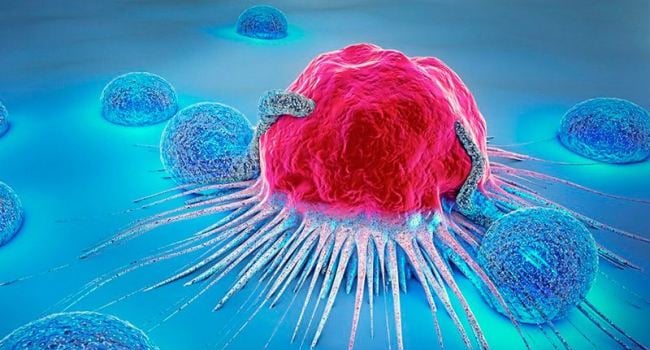
Around 2.3 million new cancer cases worldwide in 2024 were caused by infections from viruses, bacteria and parasites. This accounts for 12% of all new cancer cases, according to a new study by the International Agency for Research on Cancer (IARC), the cancer agency of the World Health Organization.
“Despite advances in vaccination and screening, infection-related cancers remain a major global challenge, with the greatest burden falling on populations in low- and middle-income countries,” said Harriet Rumgay, a researcher in the IARC Cancer Surveillance Branch and a co-author of the study.
“The findings highlight the important role that infection control can play in reducing the global burden of cancer,” she added.
The authors recommend a comprehensive set of measures covering primary prevention, screening, treatment, research and policy — from expanding existing vaccination programs and developing new vaccines to implementing targeted measures to control parasitic infections and expanding testing, Euronews reports.
Investing in new prevention tools could have the greatest impact, said Gary Clifford, the study’s senior co-author.
One promising avenue, he said, could be the development of a vaccine against Epstein-Barr virus (EBV), one of the most widespread viruses among humans, for which there is currently no approved vaccine. The infection can cause six different types of cancer, including cancers of the pharynx and stomach.
EBV is just one of 12 infectious agents recognized as carcinogenic to humans; the list includes several viruses, one bacterium and parasites.
The leading infectious cause of cancer is the bacterium Helicobacter pylori, which affects the stomach and often causes peptic ulcers. In 2024, it was responsible for 760,000 new cancer cases, or 4% of all diagnoses.
The bacterium is associated with three types of tumors: non-cardia and cardia gastric cancers, as well as a type of non-Hodgkin lymphoma that develops in the stomach.
Human papillomavirus (HPV) ranks second in terms of the number of cases, accounting for 750,000 new cancer cases, followed by hepatitis B virus (HBV).
HPV can cause eight types of cancer, ranging from cervical and penile cancer to cancers of the larynx. The authors note that all cases of cervical cancer are caused by HPV, making the virus a key target for screening and vaccination strategies.
Although infection-related cancers can occur in people anywhere in the world, their burden is highly unevenly distributed. The study indicates that low- and middle-income countries account for nearly three-quarters of all such cases.
The highest number of infection-related cancers in 2024 was recorded in Eastern Asia, with 990,000 cases, or 42% of the global total; the main factors were H. pylori and hepatitis B virus.
In sub-Saharan Africa, the proportion of such cancers is the highest: one-quarter of all cancer cases there are linked to infection, primarily due to the prevalence of HPV-associated tumors.
The lowest rates of infection-related cancers are recorded in Northern, Western and Southern Europe, North America and Oceania.
Geographical differences also reflect varying approaches to preventive measures and healthcare strategies.
In Eastern Asia, for example, Japan, South Korea and China have introduced large-scale population endoscopic screening programs aimed at tackling high rates of stomach cancer, which is largely caused by Helicobacter pylori.
Because endoscopic screening is an invasive and costly procedure, a number of European countries are testing “test-and-treat” programs for Helicobacter pylori, using non-invasive methods for diagnosis and targeted antibiotic therapy to eradicate the infection when it is detected.
Follow NEWS.am Medicine on Facebook and Twitter





- Most read
month
week
day
- Thailand’s Health Ministry Warns of Leptospirosis in Flood-Affected Areas 722
- The Lancet Oncology: Infections Account for One in Eight Cancer Diagnoses Worldwide 674
- Study: Suicidal Ideation Among US Teens Began Rising Sharply After Nearly Two Decades of Decline 667
- Neuron: Lymph Node Removal Associated With a 25% Rate of Cognitive Impairment 643
- ACS: Menthol Additive Significantly Prolongs and Intensifies the Effects of Nicotine 639
- Xinhua: Fatty Diet Leads to the Formation of 248 Gallstones in Man 628
- ABC News: 40% of the World’s Population Was Exposed to Dangerous Ozone Levels This Year 561
- Anti-Cancer Associations of China, Egypt and Kazakhstan Support Gevorg Tamamyan’s Candidacy 553
- PLOS Medicine: Brain Age Gap Was Largest in Dementia 549
- Scientists Discover New Mechanism Linking Biological Clocks, Cold, and Fat Metabolism 549
- WHO: Global Life Expectancy Has Almost Returned to Pre-Pandemic Levels 548
- Ophthalmology: Tooth Discovered Growing in Upper Orbit of 16-Year-Old Indian Teenager 516
- Biomolecules: Mulberries May Improve Gut Health and Metabolism 515
- CDN: Fruit Juice Does Not Lower Heart Disease Risk Like Whole Fruits 507
- MM: Excess Dietary Salt Raises the Risk of Fatty Liver Disease in Lean People 502
- Find us on Facebook
- Poll