


- Latest news▼
-
08:39, October 6 NatCom: Losing belly fat slowed brain aging and protected memory

-
23:58, October 5 Dreaming: The more difficult the day, the more fear and anxiety appear in dreams

-
22:09, October 5 The 2026 Nobel Prize in Physiology or Medicine Recognized a Sequence of Discoveries

-
18:46, October 5 CanRes: The rate at which mutations accumulate in cells may determine cancer risk
-
14:06, October 5 Nobel Prize in Physiology or Medicine Awarded for Optogenetics

-
12:42, October 5 PNAS: The right hemisphere of the brain ages faster than the left

-
10:41, October 5 NYP: US surgeons amputated a healthy leg of a woman with cancer

-
08:47, October 5 In the US, colorectal cancer in children and adolescents is increasingly diagnosed at advanced stages, researchers say
-
22:48, October 4 AJRCCM: Household exposure to vaping may increase the risk of asthma exacerbations in children

-
18:32, October 4 Alzheimer’s & Dementia: Chronic stress may have a stronger impact on women’s brains as they age

-
12:46, October 4 Current Developments in Nutrition: People with cardiovascular disease eat whole fruits less often

-
21:17, October 3 Scientists Discover New Mechanism Linking Biological Clocks, Cold, and Fat Metabolism

-
17:38, October 3 Study: Suicidal Ideation Among US Teens Began Rising Sharply After Nearly Two Decades of Decline

-
15:21, October 3 Food & Function: Daily Consumption of 40 Grams of Walnuts Linked to Improved Overall Mood

-
12:43, October 3 WHO: Global Life Expectancy Has Almost Returned to Pre-Pandemic Levels

All materials
Russia researchers propose new inexpensive way to produce radiopharmaceuticals
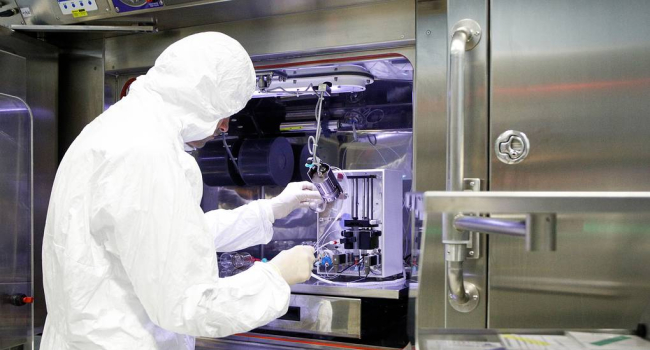
Russian scientists have developed a new method of obtaining isotopes for nuclear medicine, according to the Ministry of Science and Higher Education of Russia, TASS reports.
The new technology enables isotopes to be obtained directly in nuclear medicine centers, which reduces logistical costs and lowers the cost of proton cancer treatment.
Researchers from Tomsk State University (TSU) and the Lebedev Physical Institute (LPI) have proposed using the institute's Prometheus accelerator to produce molybdenum-99 isotopes, which in turn serves to produce technetium-99m, the main diagnostic radionuclide in modern nuclear medicine used not only for the production of molybdenum-99, but also for the production of other important isotopes—for example, lutetium-177 and rhenium-188, which are actively used in the treatment of cancer.
"We carried out a computer simulation of this process and showed that, taking into account the characteristics of the Prometheus accelerator, the efficiency of isotope production can be very high, especially for the molybdenum isotope. The simulation made it possible to determine the main parameters of the system. For example, it was found that the maximum efficiency is achieved with a target thickness of 1 millimeter, which enables to achieve high productivity with minimum material consumption," Vladimir Ivanchenko, a leading researcher at the High Energy Physics Data Analysis Laboratory of TSU, said in a statement.
The main advantage of this new technology is its versatility. Its installation enables the production of isotopes to be combined with the main functions of the accelerator; in particular, therapeutic use. This makes it possible to obtain the necessary isotopes directly in nuclear medicine treatment and diagnostic centers, reducing logistical costs and making high-tech medicine more affordable.
Follow NEWS.am Medicine on Facebook and Twitter





- Most read
month
week
day
- Thailand’s Health Ministry Warns of Leptospirosis in Flood-Affected Areas 693
- The Lancet Oncology: Infections Account for One in Eight Cancer Diagnoses Worldwide 655
- Neuron: Lymph Node Removal Associated With a 25% Rate of Cognitive Impairment 621
- ACS: Menthol Additive Significantly Prolongs and Intensifies the Effects of Nicotine 621
- Study: Suicidal Ideation Among US Teens Began Rising Sharply After Nearly Two Decades of Decline 617
- Xinhua: Fatty Diet Leads to the Formation of 248 Gallstones in Man 614
- Pomegranate compound may improve heart function by up to 80% in study 578
- ABC News: 40% of the World’s Population Was Exposed to Dangerous Ozone Levels This Year 541
- Anti-Cancer Associations of China, Egypt and Kazakhstan Support Gevorg Tamamyan’s Candidacy 534
- PLOS Medicine: Brain Age Gap Was Largest in Dementia 521
- WHO: Global Life Expectancy Has Almost Returned to Pre-Pandemic Levels 517
- Scientists Discover New Mechanism Linking Biological Clocks, Cold, and Fat Metabolism 507
- Biomolecules: Mulberries May Improve Gut Health and Metabolism 496
- CDN: Fruit Juice Does Not Lower Heart Disease Risk Like Whole Fruits 488
- MM: Excess Dietary Salt Raises the Risk of Fatty Liver Disease in Lean People 487
- Find us on Facebook
- Poll