


- Latest news▼
-
21:36, October 24 From Cancer to Alzheimer's Disease: Scientists Call for a Major International Human Microbiome Research Initiative

-
18:14, October 24 How Ultra-Processed Foods Affect Children's Brains: Study Links Brain Activity to Weight Gain

-
15:39, October 24 Scientists Create Immune Cell Atlas That Could Help Assess Cancer Risk and Premature Death

-
13:42, October 24 New mRNA Vaccine Reduces Risk of Melanoma Recurrence After Surgery by 42%

-
08:37, October 24 Mice Help Scientists Uncover the Cause of a Rare Disease
-
22:53, October 23 Scientists Use ChatGPT-Like Technology to Assess Stroke Risk From Human DNA
-
20:56, October 23 Nubar Afeyan’s Company Tests Skin Cancer Vaccine: Risk of Recurrence Falls by 42%
-
18:49, October 23 bioRxiv: Cholesterol May Interfere with the Brain’s Ability to Clear Toxic Proteins
-
16:56, October 23 PLOS One: A Short Strength-Training Routine Improved Balance and Strength in Adults Over 65

-
14:50, October 23 A Simple 15-Minute Procedure Helped Patients with Carpal Tunnel Syndrome Avoid Surgery

-
12:53, October 23 Scientists Rejuvenate Cells by More Than 60 Years for the First Time

-
10:47, October 23 WHO Comments on First Documented Human Death Linked to Shamonda Virus

-
08:24, October 23 A Single Tooth Can Reveal Six Types of Information About a Person, Including Their Health

-
20:34, October 22 Medical Xpress: Hypnosis and Psychotherapy May Help Relieve Chronic Abdominal Pain in Children

-
18:51, October 22 Nature: Cold Triggers Muscles to Produce Protective Metabolite BH2

All materials
How Can You Breathe If Your Lungs Fail? Scientists Are Testing an Innovative Method
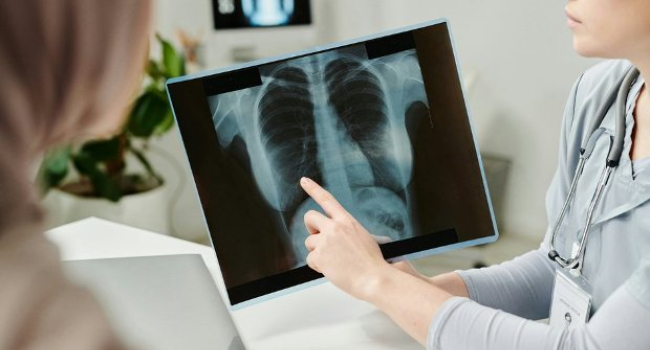
Takanori Takebe serves as Director of Commercial Innovation at the Center for Stem Cell and Organoid Medicine (CuSTOM) at Cincinnati Children’s Hospital.
As a physician and stem-cell biologist, he spends most of his time developing lab-grown livers to treat organ failure, Euronews reports.
Several years ago, his attention was drawn to fish from the Umbra family. When they end up in waters low in oxygen, they supplement their gill breathing by gulping air from the surface and sending it directly into their intestines.
“There are many diseases that can become life-threatening because they impair the lungs’ ability to transfer oxygen into the blood,” Takebe explains in the Cincinnati Children’s online magazine.
These include airway injuries or inflammation, pneumonia that fills the lungs with fluid, and more. During the COVID-19 pandemic, many patients died due to a shortage of ventilators.
According to Takebe, enteral breathing could represent an important alternative pathway for oxygen delivery.
“Further confirmation is needed, but our early studies show that our ventilation system can support patients with severe respiratory failure,” he notes.
The concept of “breathing through the rectum” involves introducing a liquid known as a perfluorocarbon, which contains far more oxygen than water normally carries. When administered through a rectal tube, the lower part of the intestine absorbs oxygen from the liquid and transfers it directly into the bloodstream.
In experiments with mice and pigs, enemas with highly oxygenated liquid allowed the animals to survive periods of severely reduced oxygen levels. In pigs, a 400-milliliter dose increased blood oxygen levels for about 19 minutes.
Further pig experiments published in 2023 showed that this method could raise blood oxygen saturation for up to half an hour.
Researchers are now studying the safety of “rectal breathing” in humans.
In Japan, 27 healthy male volunteers received doses of perfluorodecalin (not oxygen-enriched) via the rectum and retained the liquid for one hour. One group received 25 milliliters; the largest dose was 1.5 liters — the maximum allowable amount for contrast agents used in gastrointestinal X-ray imaging.
Four of the six men in the “1.5-liter group” had to stop the procedure early due to abdominal pain. However, most participants who received up to one liter tolerated the liquid fairly well, aside from bloating and mild discomfort, Takebe’s team reports.
Further research is needed to refine the “delivery system,” the scientists say. The goal is to determine how much oxygen can be delivered to the human body, for how long, and whether the method poses any unexpected risks.
Follow NEWS.am Medicine on Facebook and Twitter

- Related News
- When Diet and Exercise Aren’t Enough: Who Can Benefit from Weight-Loss Medications? If dietary changes and increased physical activity fail to produce at least 5% weight loss, patients can discuss medication options with their doctor...
- Tea May Benefit Heart Health — but Drinking It Scalding Hot Could Be Risky The study also found that moderate-strength tea was associated with a lower risk...
- A Simple Way to Blunt Blood Sugar Spikes After Meals In the experiments, mice were divided into groups after an overnight fast...
- Study: Healthy Diet During Pregnancy Reduces the Risk of Colic and Eczema in Children A higher MDS indicated a healthier diet rich in fruits, vegetables, whole grains, legumes, and healthy fats, with moderate amounts of dairy products and lean protein...
- F&F: Japanese Apricot May Help Fight Helicobacter pylori In experiments on mice, the extract reduced inflammation and promoted the restoration of the stomach lining...
- Video



- Event calendar
- Archive
- Most read
month
week
day
- Tea May Benefit Heart Health — but Drinking It Scalding Hot Could Be Risky 385
- Why Some People Avoid Alzheimer’s Despite Carrying a High-Risk Gene 348
- LSD does more than disrupt brain rhythms: It speeds them up and increases signal complexity 329
- Nine-year study links changing loneliness patterns to increased heart disease risk 321
- PLOS: Yogurt and Canned Beans May Help Reduce the Risk of Colorectal Cancer 295
- Scientists Rejuvenate Cells by More Than 60 Years for the First Time 292
- bioRxiv: Cholesterol May Interfere with the Brain’s Ability to Clear Toxic Proteins 272
- Nubar Afeyan’s Company Tests Skin Cancer Vaccine: Risk of Recurrence Falls by 42% 269
- Scientists Use ChatGPT-Like Technology to Assess Stroke Risk From Human DNA 262
- PLOS One: A Short Strength-Training Routine Improved Balance and Strength in Adults Over 65 254
- AJOG: Birth Weight Is Linked to Later Performance in Math and Reading 242
- SciRep: Walking More Than 8,000 Steps a Day Is Linked to Better Attention 233
- Noise-Canceling Headphones Reduced the Risk of Nausea After Gynecological Surgery by 32% 233
- WHO Comments on First Documented Human Death Linked to Shamonda Virus 223
- Scientists Unveil Scanner That Captures Whole-Body Images in Just 60 Seconds 219
- Find us on Facebook
- Poll