


- Latest news▼
-
22:53, October 23 Scientists Use ChatGPT-Like Technology to Assess Stroke Risk From Human DNA

-
20:56, October 23 Nubar Afeyan’s Company Tests Skin Cancer Vaccine: Risk of Recurrence Falls by 42%
-
18:49, October 23 bioRxiv: Cholesterol May Interfere with the Brain’s Ability to Clear Toxic Proteins

-
16:56, October 23 PLOS One: A Short Strength-Training Routine Improved Balance and Strength in Adults Over 65

-
14:50, October 23 A Simple 15-Minute Procedure Helped Patients with Carpal Tunnel Syndrome Avoid Surgery

-
12:53, October 23 Scientists Rejuvenate Cells by More Than 60 Years for the First Time

-
10:47, October 23 WHO Comments on First Documented Human Death Linked to Shamonda Virus

-
08:24, October 23 A Single Tooth Can Reveal Six Types of Information About a Person, Including Their Health

-
20:34, October 22 Medical Xpress: Hypnosis and Psychotherapy May Help Relieve Chronic Abdominal Pain in Children

-
18:51, October 22 Nature: Cold Triggers Muscles to Produce Protective Metabolite BH2

-
16:45, October 22 Nature: Hantavirus Enters Human Cells Through a Groove in a Receptor-Binding Protein
-
14:48, October 22 First Human Case of Shamonda Virus Infection Recorded in France

-
12:43, October 22 Chinese Scientists Develop a One-Gram Device for Monitoring Brain Activity

-
10:55, October 22 LSD does more than disrupt brain rhythms: It speeds them up and increases signal complexity
-
08:42, October 22 The Journal of Nutrition: Women Who Eat Oily Fish Have a 19% Lower Risk of Death from Stroke

All materials
Chinese Scientists Develop a One-Gram Device for Monitoring Brain Activity
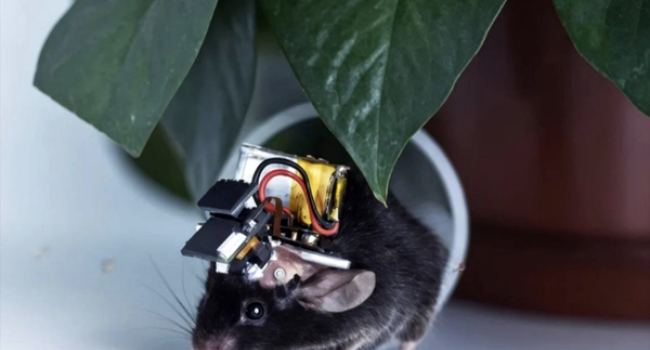
Scientists at Tsinghua University in China have developed Airscope, an ultralight wireless device that can simultaneously monitor the activity of thousands of neurons while an animal is moving freely. The technology could help researchers investigate how the brain works and, in the future, may find applications in the study of cancer and immune diseases, the South China Morning Post (SCMP) reports.
Airscope is a compact optical mesoscope, a device that occupies an intermediate position between a microscope and a macroscope. It allows researchers to observe the activity of individual cells across a relatively large area of biological tissue. Unlike conventional systems, it does not require an animal’s head to be immobilized or the use of bulky cables that restrict movement.
The developers managed to reduce the system’s volume by nearly 100,000 times compared with conventional benchtop microscopes while maintaining a comparable level of neuronal signal recording quality. The device incorporates a two-megapixel image sensor and a wireless data transmission system. Artificial intelligence helped optimize the lens design, while computer vision algorithms automatically identify and continuously track individual objects in video footage.
During the experiments, the researchers attached the device to mice and allowed them to move freely through a specially designed environment containing shelters, burrows and obstacles. Using Airscope, the scientists simultaneously recorded the activity of more than 8,500 individual neurons in the animals’ cerebral cortex as they explored their surroundings.
The data enabled the team to investigate the relationship between neural network activity and social behavior in mice. The researchers plan to study the neural mechanisms underlying emotions and social interactions, which could help advance research into conditions such as depression.
According to the researchers, the technology’s potential applications extend beyond neuroscience. In the future, similar imaging systems could be used to monitor disease progression in immunology and oncology.
Follow NEWS.am Medicine on Facebook and Twitter

- Video



- Event calendar
- Archive
- Most read
month
week
day
- Why Some People Avoid Alzheimer’s Despite Carrying a High-Risk Gene 321
- Tea May Benefit Heart Health — but Drinking It Scalding Hot Could Be Risky 320
- LSD does more than disrupt brain rhythms: It speeds them up and increases signal complexity 310
- Nine-year study links changing loneliness patterns to increased heart disease risk 307
- PLOS: Yogurt and Canned Beans May Help Reduce the Risk of Colorectal Cancer 276
- AJOG: Birth Weight Is Linked to Later Performance in Math and Reading 217
- Noise-Canceling Headphones Reduced the Risk of Nausea After Gynecological Surgery by 32% 210
- SciRep: Walking More Than 8,000 Steps a Day Is Linked to Better Attention 204
- Anesthesiology: Noise-Canceling Headphones Reduce the Risk of Nausea After Anesthesia 182
- Nature: AI Links Brown Fat to Heart, Vascular, and Mental Health 181
- Scientists Unveil Scanner That Captures Whole-Body Images in Just 60 Seconds 179
- Polyphenols in coffee and fruit linked to lower risk of telomere shortening 176
- Postoperative Monitoring Apps Reduced Hospital Readmissions by 15% 169
- bioRxiv: Cholesterol May Interfere with the Brain’s Ability to Clear Toxic Proteins 162
- HealthDay: Strength Training After 60 Helps Strengthen Bones and Maintain Brain Health 159
- Find us on Facebook
- Poll