


- Latest news▼
-
22:53, October 23 Scientists Use ChatGPT-Like Technology to Assess Stroke Risk From Human DNA
-
20:56, October 23 Nubar Afeyan’s Company Tests Skin Cancer Vaccine: Risk of Recurrence Falls by 42%

-
18:49, October 23 bioRxiv: Cholesterol May Interfere with the Brain’s Ability to Clear Toxic Proteins
-
16:56, October 23 PLOS One: A Short Strength-Training Routine Improved Balance and Strength in Adults Over 65

-
14:50, October 23 A Simple 15-Minute Procedure Helped Patients with Carpal Tunnel Syndrome Avoid Surgery

-
12:53, October 23 Scientists Rejuvenate Cells by More Than 60 Years for the First Time

-
10:47, October 23 WHO Comments on First Documented Human Death Linked to Shamonda Virus

-
08:24, October 23 A Single Tooth Can Reveal Six Types of Information About a Person, Including Their Health

-
20:34, October 22 Medical Xpress: Hypnosis and Psychotherapy May Help Relieve Chronic Abdominal Pain in Children

-
18:51, October 22 Nature: Cold Triggers Muscles to Produce Protective Metabolite BH2

-
16:45, October 22 Nature: Hantavirus Enters Human Cells Through a Groove in a Receptor-Binding Protein

-
14:48, October 22 First Human Case of Shamonda Virus Infection Recorded in France

-
12:43, October 22 Chinese Scientists Develop a One-Gram Device for Monitoring Brain Activity
-
10:55, October 22 LSD does more than disrupt brain rhythms: It speeds them up and increases signal complexity

-
08:42, October 22 The Journal of Nutrition: Women Who Eat Oily Fish Have a 19% Lower Risk of Death from Stroke

All materials
Nature: Hantavirus Enters Human Cells Through a Groove in a Receptor-Binding Protein
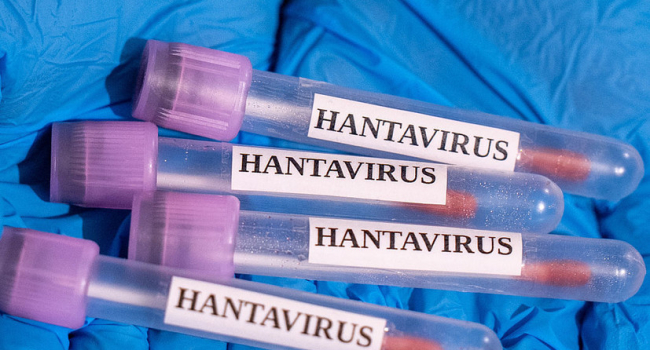
In 2026, an outbreak of Andes hantavirus aboard a cruise ship claimed the lives of three passengers and infected 13 people, highlighting the lack of approved vaccines and treatments. In a new study published in the journal Nature, researchers from Albert Einstein College of Medicine, the Institut Pasteur and LSU Health Shreveport have revealed how the virus recognizes its target on human cells.
Hantaviruses are a large family of viruses transmitted primarily by rodents. They can cause severe, sometimes fatal illnesses, including hantavirus pulmonary syndrome. Of the more than 20 hantaviruses known to infect humans, the Andes virus is the only one known to spread from person to person.
The discovery could pave the way for effective treatments against the Andes virus and other hantaviruses.
“Eight years ago, we discovered that the Andes virus infects human cells using a specific protein on the cell surface called a receptor, but we could not understand exactly how the virus recognizes it. Our latest work solves this mystery: we reveal a new way the virus can capture its receptor during infection and suggest how we might fight back with therapies designed to exploit this emerging viral vulnerability,” says study co-author Kartik Chandran.
The team previously showed that, to infect a cell, the spike protein on the surface of the Andes virus must attach to the PCDH1 receptor. However, exactly how this interaction occurs remained unclear.
In most viruses, including SARS-CoV-2, the spike protein consists of three identical units, each with its own receptor-binding site. The Andes virus spike protein, by contrast, consists of four units arranged in a square. Unlike the SARS-CoV-2 spike protein, a single unit cannot bind to the receptor: the entire four-unit structure is required to capture PCDH1.
To examine the structure in detail, the researchers used cryo-electron microscopy. They also had to develop new techniques, including an artificially designed AI-generated scaffold, to keep the square-shaped Andes virus spike protein intact in a test tube.
The researchers found that a single PCDH1 molecule fits into the very center of the spike protein, binding to a deep groove, or “pocket,” in its middle.
The pocket’s depth also helps explain how the virus limits antibody access. “PCDH1 has a long, slender shape that allows it to penetrate deep inside, but most antibodies are too bulky to follow it,” says Rohit Jangra of LSU Health Shreveport.
The researchers also examined antibodies isolated from patients infected with hantavirus. Some can bind close enough to the entrance of the pocket to prevent PCDH1 from entering, but they cannot penetrate as deeply as the receptor itself.
This points to a sophisticated way for the virus to evade antibodies, while also revealing a potential vulnerability. Although the structure of human antibodies limits how deeply they can reach, scientists could design “long and slender” molecules capable of blocking the pocket.
Follow NEWS.am Medicine on Facebook and Twitter

- Video




- Event calendar
- Archive
- Most read
month
week
day
- Why Some People Avoid Alzheimer’s Despite Carrying a High-Risk Gene 323
- Tea May Benefit Heart Health — but Drinking It Scalding Hot Could Be Risky 323
- LSD does more than disrupt brain rhythms: It speeds them up and increases signal complexity 311
- Nine-year study links changing loneliness patterns to increased heart disease risk 307
- PLOS: Yogurt and Canned Beans May Help Reduce the Risk of Colorectal Cancer 276
- AJOG: Birth Weight Is Linked to Later Performance in Math and Reading 217
- Noise-Canceling Headphones Reduced the Risk of Nausea After Gynecological Surgery by 32% 210
- SciRep: Walking More Than 8,000 Steps a Day Is Linked to Better Attention 205
- Anesthesiology: Noise-Canceling Headphones Reduce the Risk of Nausea After Anesthesia 182
- Nature: AI Links Brown Fat to Heart, Vascular, and Mental Health 182
- Scientists Unveil Scanner That Captures Whole-Body Images in Just 60 Seconds 181
- Polyphenols in coffee and fruit linked to lower risk of telomere shortening 177
- Postoperative Monitoring Apps Reduced Hospital Readmissions by 15% 170
- bioRxiv: Cholesterol May Interfere with the Brain’s Ability to Clear Toxic Proteins 166
- HealthDay: Strength Training After 60 Helps Strengthen Bones and Maintain Brain Health 162
- Find us on Facebook
- Poll