


- Latest news▼
-
19:53, November 9 Two New Ebola Vaccines Approved for Clinical Trials Amid Outbreak in Africa

-
17:46, November 9 RFI: Cholera Outbreak Reported in the Democratic Republic of the Congo

-
15:51, November 9 PNAS: Stress Related to COVID-19 Pandemic Accelerates Biological Aging

-
13:47, November 9 ARS: Broccoli Compound Sulforaphane Improves the Condition of Cell Models of Friedreich’s Ataxia

-
11:45, November 9 Nature Communications: Brain Networks Show Less Flexibility in Changing Connections Across Different Psychiatric Diagnoses

-
08:42, November 9 Scientists Discover Mechanism That Helps Prostate Cancer Become Resistant to Treatment
-
22:38, November 8 Scientists Create Detailed Genetic Map of Tuberculosis Bacterium That Could Help Develop New Antibiotics
-
20:45, November 8 Scientists Find Way to Provide Long-Term Relief from a Hormonal Cause of High Blood Pressure in Some Patients

-
18:43, November 8 Neuron: The Brain May Fail to Consolidate Memories During Sleep Even When Sleep Appears Normal

-
16:37, November 8 Scientists Evaluate Methods for Detecting Rare DNA Mutations Linked to Aging and Cancer

-
14:29, November 8 Why Mood Worsens in Autumn and Winter and When to Seek Medical Advice

-
12:36, November 8 Nature: Genetic Differences in Gut Bacteria Linked to Age and Human Health Indicators

-
10:42, November 8 European Journal of Nutrition: Breast Milk Composition May Be Linked to Early Nervous System Development

-
08:34, November 8 Scientists Identify Mechanism That Prevents the Immune System from Fighting Blood Disorders
-
22:41, November 7 More Than 80 Organizations Urge WHO to Reconsider Nitrate Limits in Drinking Water

All materials
Scientists Identify Mechanism That Prevents the Immune System from Fighting Blood Disorders
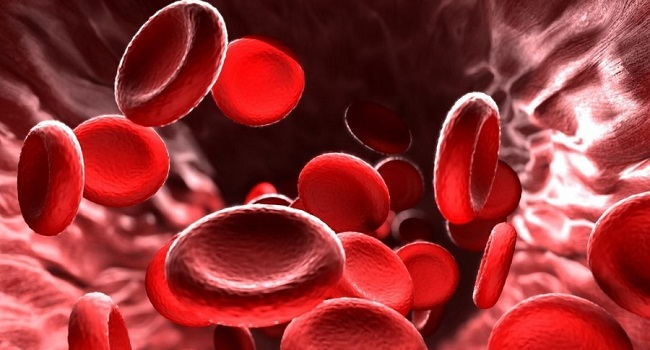
Scientists have discovered that immune cells retain their ability to fight certain chronic blood disorders, but their activity is suppressed by a specific molecular signal, News Medical Life Sciences reports.
Blocking this signal helped strengthen the immune response in laboratory experiments and showed promising results in an experimental disease model.
The discovery could pave the way for the development of new treatments for patients with certain genetic mutations.
The study, conducted by an international team led by Karl Landsteiner University of Health Sciences in Krems, Austria, focused on myeloproliferative neoplasms — chronic blood disorders in which the bone marrow produces excessive numbers of blood cells. These conditions can lead to blood clots, bone marrow scarring and the development of acute myeloid leukemia.
The researchers compared the activity of natural killer (NK) cells — immune cells that destroy abnormal and cancerous cells — in patients with CALR and JAK2 gene mutations. In patients with CALR mutations, these cells retained their ability to produce substances needed to eliminate abnormal cells. However, researchers found increased levels of the TIGIT receptor on their surface, which suppresses the immune response. At the same time, patients had elevated levels of a molecule called CD112, which can activate this receptor.
When the researchers blocked TIGIT using antibodies, natural killer cells became more effective at destroying abnormal cells under laboratory conditions. In an experimental disease model, the treatment also showed a trend toward reducing abnormally high platelet counts in the blood.
According to the authors, blocking TIGIT could become an additional treatment approach for patients with myeloproliferative neoplasms carrying CALR mutations. Unlike therapies that directly target mutated cells, this strategy is designed to help the body's own immune system control the disease more effectively.
The findings remain preliminary. Further research is needed to assess the method's effectiveness and safety before its potential for treating patients can be evaluated.
Follow NEWS.am Medicine on Facebook and Twitter

- Video




- Event calendar
- Archive
- Most read
month
week
day
- ABC News: Weight-Loss Drug Tested in the US Delivers More Than Twice the Results of Ozempic 1067
- Science Advances: Brain Activity May Predict Alzheimer's Disease Years Before Symptoms Appear 641
- Shockwave Therapy for Pain: Researchers Evaluate Treatments for Frozen Shoulder 614
- Banning Sweets Can Make Them More Tempting: How Parental Restrictions Shape Children's Eating Habits 580
- Dietitians Name a Heart-Healthy Alternative to Red Meat 545
- AJA: Tight Underwear Linked to Impaired Sperm Motility and Morphology 533
- The Number of People with Anorexia and Bulimia Could Reach 21.8 Million by 2050 526
- Nature Medicine: Cervical Cancer Deaths Projected to Rise by 39.3% by 2050 503
- Journal of Neurology: Long-Term High BMI Linked to Memory Decline 493
- WHO: One in Four Adolescents Worldwide Does Not Engage in Physical Activity Even One Hour a Week 488
- Frontiers: Crossed Brain Connections May Be an Evolutionary Legacy of Ancient Vision 480
- Child Dies of Measles in New York State for the First Time in 30 Years 476
- Why Do Different Mutations Lead to Autism? Scientists Identify a Common Mechanism 474
- One Pill Instead of Two Medications: New Approach Improves Diabetes Control 471
- Cannabis Use Linked to Higher Stroke Risk, Study Reveals Unexpected Pattern 449
- Find us on Facebook
- Poll