make preferable
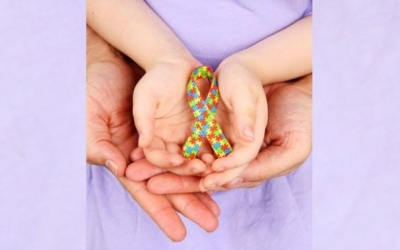
In a study published in the journal Proceedings of the National Academy of Sciences, children who received a single dose of an oxytocin-based nasal spray experienced enhanced activity in regions of the brain regulating social behavior, Fox News reports.
According to study author Kevin Pelphrey, previous research has indicated that children on the autism spectrum have lower blood levels of oxytocin – a hormone associated with emotional bonding, trust and social behavior. As a result, researchers began to wonder whether oxytocin-based treatments might be an effective therapy for autistic children.
In order to examine how oxytocin impacted the brains of autistic children, Pelphrey and his colleagues set up a double-blind, placebo-controlled study of 17 children and adolescents with autism spectrum disorders. The study participants, who were between the ages of 8 and 16, underwent functional magnetic resonance imaging (MRI) scans, to show how the children’s brains reacted to various stimuli after receiving both the oxytocin and placebo sprays.
After receiving oxytocin, the brain scans revealed that study participants experienced greater activation in the amygdala and the nucleus accumbens, compared to when they received a placebo.
“In autism, we know both of those regions fail to activate to faces. When you give a placebo, you see they are basically silent,” Pelphrey said. “But when you give oxytocin and show faces, those brain regions activate and come online.”
Notably, the study participants reacted similarly to the oxytocin spray regardless of age – indicating that oxytocin-based therapies might be effective even in older children.
Next, Pelphrey hopes to expand his research to analyze whether oxytocin nasal sprays, combined with intensive behavioral therapy, can help young children demonstrating signs of autism to develop more normally.