
 make preferable
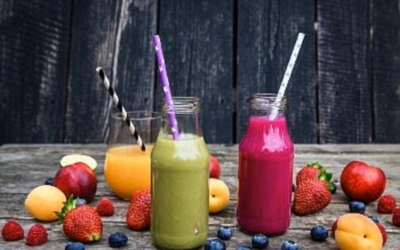
It's that time of the year where many of us begin hastily necking green smoothies in a bid to counteract December's excesses.
But the fruity drinks could actually be doing more harm than good, new research has warned.
Consuming a normal 360ml bottle can cause levels of antioxidants - chemicals thought to protect cells from damage - in the body to plummet for up to a day, according to a BBC experiment.
This is because we continually produces antioxidants, so ingesting a huge dose causes our bodies to stop their production to return us to normal levels.
Combined with the high sugar content - which sends blood sugar soaring and contributes to weight gain - experts verdict was that consumers should 'ignore the marketing hype' and 'not waste their money on fancy juices and smoothies'.
On this week's Trust Me I'm a Doctor programme, presenter Gabriel Watson sought to debunk myths about antioxidant claims made by smoothie manufacturers.
Antioxidants are chemicals which are thought to protect the body from damage caused by harmful molecules called free radicals.
Free radicals are by-products of normal chemical reactions that take place in the body, such as burning sugars for energy or digestive enzymes breaking down food.
They are thought to cause damage to our DNA and our cells, and may contribute to blood vessel disease, cancer and could possibly even shorten our lifespan.
Antioxidants are able to mop up free radicals, lowering their levels in the body.
Therefore, many smoothie manufacturers claim drinking smoothies will raise antioxidant levels, and protect our cells from damage.
But the programme discovered that smoothies marketed as being rich in antioxidants actually contained no more than bog standard orange juice.
Next, they set about testing the claim that drinking smoothies would raise antioxidant levels in the body.
In a experiment that has never been carried out before, they monitored 10 volunteers as they drank 360ml of smoothie.
They took blood samples before the volunteers consumed the drink, then continued to analyse their blood for 24 hours.
As was expected, soon after drinking the smoothie, antioxidant levels in the body rose.
But between four and five hours, they plummeted, and only just returned to normal after the 24 hour experiment was normal.
Dr Brandt explained that we continually produce their own antioxidants, when we take in a big dose ourselves, our bodies slow down their production so we get back to normal.
She said: ‘This balance where the body will keep the level constant, its called homeostasis. It’s the same for our temperature, for our sugar levels, for everything else I the body that should have a correct level.’
Therefore, while smoothie manufacturers claim their drinks will raise antioxidant levels in the body, this experiment found in fact they do the opposite.
And presumably, fewer antioxidants in the body means more free radicals.
But Dr Brandt warned against demonising these chemicals as wholly 'bad' for us.
They actually send vital signals within our cells to stimulate the body’s own repair and regeneration mechanisms.
She said: 'Most people have the exact level of free radicals they need.
'Free radicals are important, they are the signals that tell our bodies when to repair signal fibres.'
Miss Watson concluded: 'While there's excellent evidence fruit and vegetables are good for us, the benefit is not coming from antioxidants.
'Ignore the marketing hype and stop wasting your money on fancy smoothies and juices you don't need.'





