


- Latest news▼
-
22:53, October 23 Scientists Use ChatGPT-Like Technology to Assess Stroke Risk From Human DNA

-
20:56, October 23 Nubar Afeyan’s Company Tests Skin Cancer Vaccine: Risk of Recurrence Falls by 42%

-
18:49, October 23 bioRxiv: Cholesterol May Interfere with the Brain’s Ability to Clear Toxic Proteins
-
16:56, October 23 PLOS One: A Short Strength-Training Routine Improved Balance and Strength in Adults Over 65

-
14:50, October 23 A Simple 15-Minute Procedure Helped Patients with Carpal Tunnel Syndrome Avoid Surgery

-
12:53, October 23 Scientists Rejuvenate Cells by More Than 60 Years for the First Time

-
10:47, October 23 WHO Comments on First Documented Human Death Linked to Shamonda Virus

-
08:24, October 23 A Single Tooth Can Reveal Six Types of Information About a Person, Including Their Health

-
20:34, October 22 Medical Xpress: Hypnosis and Psychotherapy May Help Relieve Chronic Abdominal Pain in Children

-
18:51, October 22 Nature: Cold Triggers Muscles to Produce Protective Metabolite BH2

-
16:45, October 22 Nature: Hantavirus Enters Human Cells Through a Groove in a Receptor-Binding Protein

-
14:48, October 22 First Human Case of Shamonda Virus Infection Recorded in France

-
12:43, October 22 Chinese Scientists Develop a One-Gram Device for Monitoring Brain Activity

-
10:55, October 22 LSD does more than disrupt brain rhythms: It speeds them up and increases signal complexity

-
08:42, October 22 The Journal of Nutrition: Women Who Eat Oily Fish Have a 19% Lower Risk of Death from Stroke

All materials
Eating the Same Meals Repeatedly May Help You Lose Weight
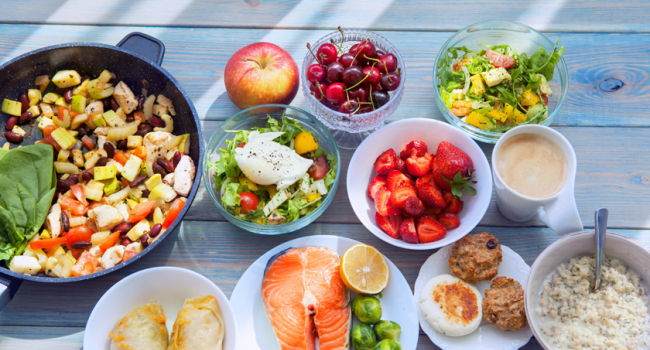
Despite the growing popularity of GLP‑1 medications for weight loss, many people prefer to stick to a healthy diet. A new study found that eating many of the same meals and consuming a consistent number of calories each day may support weight loss more effectively than eating a more varied diet.
Researchers also found that participants who logged more calories on weekends than on weekdays also tended to lose more weight.
“GLP‑1 medications are an amazing tool for weight loss, but not everyone wants to use them, and there are concerns about cost and side effects,” said Charlotte Hagerman, PhD, research scientist at the Oregon Research Institute, in an interview with Medical News Today. “Behavioral strategies to change eating habits are often still the preferred first approach for weight loss.”
Hagerman is the lead author of a new study published in *Health Psychology*, which showed that repeating the same meals and maintaining a consistent daily calorie intake helps with weight loss more effectively than a more varied diet.
Consistent Daily Calorie Intake Linked to Better Weight Loss
In the study, researchers analyzed food diaries from 112 adults with overweight or obesity (average age around 53) who were participating in a structured behavioral weight loss program.
All participants recorded everything they ate daily, as well as their weigh-ins, using a mobile app.
The data were analyzed in two ways: first, how much each participant’s daily calories varied, and second, how often they repeated the same meals.
At the end of the study, researchers found that participants with more consistent daily calorie intake achieved better weight loss. For every 100-calorie fluctuation, weight loss decreased by about 0.6% over the study period.
“This means that a person consuming the same number of calories every day (e.g., 1,800) would be expected to lose about 0.6% more body weight than a person whose intake fluctuates +/-100 calories (e.g., 1,700 some days and 1,900 other days). For a 200-pound person, that’s about a 1.2-pound difference,” Hagerman explained.
If fluctuations reach 500 calories (e.g., 1,500 on some days and 2,500 on others), the expected difference could be around 3%, or about 6 pounds for a 200-pound person.
Repeating More Than 50% of Foods Weekly Increases Weight Loss
Participants who kept more than 50% of their foods the same throughout the week lost an average of 5.9% of body weight, while those with a more varied diet lost only 4.3%. For a 200-pound person, this is a difference of about 11.8 pounds versus 8.6 pounds.
Researchers also noted that participants who consumed more calories on weekends than weekdays tended to lose more weight.
“Conventional diet wisdom suggests eating a wide variety of foods to avoid boredom and allowing indulgences on weekends. But research shows that consistency helps make behaviors more automatic. We wanted to test these ideas in people trying to lose weight,” Hagerman said.
How Keeping a Food Diary Can Help
Dr. David Cutler, a family physician at Providence Saint John’s Health Center in Santa Monica, California, noted that keeping a food diary, narrowing food choices, and maintaining consistent calorie intake can indeed improve weight loss.
“A food diary promotes mindfulness: you pause before eating, which helps reduce impulsive choices, cut junk food, and control portion sizes,” Cutler said.
“There’s also an ‘accountability effect’—knowing your habits are being recorded can positively influence behavior.”
Tips for Sustainable Eating Habits
Dietitian Monique Richard recommends creating a small set of “go-to” meals and maintaining a steady calorie intake while rotating foods within groups:
- Have two to four go-to options per meal (e.g., oatmeal, eggs, or yogurt for breakfast; salad, grain bowl, or leftovers for lunch; stir-fry, sheet-pan meal, or soup for dinner).
- Maintain stable calorie intake while rotating foods within a group.
- Support gut microbiome diversity by including a variety of plant foods.
- Reduce decision fatigue, but avoid complete monotony.
- Prioritize enjoyment and satisfaction.
“Find a registered dietitian nutritionist (RDN) to help personalize calorie needs, ensure nutrient adequacy, and build sustainable routines without restriction. Consistency is key, but variety is the spice of life!”
Conclusion: Repeating meals, maintaining a consistent calorie intake, and keeping a food diary can help people lose weight more effectively, especially when combined with moderate food rotation and a focus on enjoyment.
Follow NEWS.am Medicine on Facebook and Twitter

- Related News
- The Journal of Nutrition: Women Who Eat Oily Fish Have a 19% Lower Risk of Death from Stroke The researchers analyzed data from 90,944 residents of Japan who were followed for an average of 20.8 years. During this period, 26,976 participants died...
- When Diet and Exercise Aren’t Enough: Who Can Benefit from Weight-Loss Medications? If dietary changes and increased physical activity fail to produce at least 5% weight loss, patients can discuss medication options with their doctor...
- More Fruit, Fewer Sugary Drinks: Study Finds Links to Adolescent Mental Health The researchers assessed symptoms of anxiety and depression using validated questionnaires...
- PLOS: Yogurt and Canned Beans May Help Reduce the Risk of Colorectal Cancer The researchers followed participants for 18 years, during which 10,075 cases of colorectal cancer were diagnosed...
- Scientists Discover How Hot Peppers Could Help Develop Safer Painkillers Previously, scientists believed that the receptor adopted roughly the same open state regardless of which stimulus triggered its activation...
- Video




- Event calendar
- Archive
- Most read
month
week
day
- Tea May Benefit Heart Health — but Drinking It Scalding Hot Could Be Risky 332
- Why Some People Avoid Alzheimer’s Despite Carrying a High-Risk Gene 327
- LSD does more than disrupt brain rhythms: It speeds them up and increases signal complexity 314
- Nine-year study links changing loneliness patterns to increased heart disease risk 309
- PLOS: Yogurt and Canned Beans May Help Reduce the Risk of Colorectal Cancer 278
- AJOG: Birth Weight Is Linked to Later Performance in Math and Reading 219
- Noise-Canceling Headphones Reduced the Risk of Nausea After Gynecological Surgery by 32% 212
- SciRep: Walking More Than 8,000 Steps a Day Is Linked to Better Attention 208
- bioRxiv: Cholesterol May Interfere with the Brain’s Ability to Clear Toxic Proteins 188
- Anesthesiology: Noise-Canceling Headphones Reduce the Risk of Nausea After Anesthesia 185
- Nature: AI Links Brown Fat to Heart, Vascular, and Mental Health 185
- Scientists Unveil Scanner That Captures Whole-Body Images in Just 60 Seconds 183
- Polyphenols in coffee and fruit linked to lower risk of telomere shortening 180
- Nubar Afeyan’s Company Tests Skin Cancer Vaccine: Risk of Recurrence Falls by 42% 179
- Postoperative Monitoring Apps Reduced Hospital Readmissions by 15% 173
- Find us on Facebook
- Poll