


- Latest news▼
-
12:47, October 7 Nature: Why Does the Immune System Stop Killing Dangerous “Zombie Cells”?

-
10:50, October 7 Nature: Why Does the Immune System Stop Killing Dangerous “Zombie Cells”?

-
08:44, October 7 Study: The Way a Person Speaks May Reveal Early Signs of Brain Aging

-
23:53, October 6 Study: One in Eight Cancer Cases Worldwide Is Linked to Preventable Infections

-
21:39, October 6 Sugar Exposure During the First 1,000 Days of Life Increases the Risk of Anxiety in Adulthood

-
19:56, October 6 Nature: AI Effectively Motivates Patients to Get Vaccinated
-
17:41, October 6 Cell: Vitamin D May Reduce Intestinal Inflammation

-
15:24, October 6 Scientists Find a Way to Rejuvenate Old Cells — Without Rewriting DNA

-
13:12, October 6 More Than 1,600 New Breast Cancer Cases Are Diagnosed in Armenia Every Year

-
08:39, October 6 NatCom: Losing belly fat slowed brain aging and protected memory

-
23:58, October 5 Dreaming: The more difficult the day, the more fear and anxiety appear in dreams

-
22:09, October 5 The 2026 Nobel Prize in Physiology or Medicine Recognized a Sequence of Discoveries

-
18:46, October 5 CanRes: The rate at which mutations accumulate in cells may determine cancer risk
-
14:06, October 5 Nobel Prize in Physiology or Medicine Awarded for Optogenetics

-
12:42, October 5 PNAS: The right hemisphere of the brain ages faster than the left

All materials
New Experimental Treatment Burns Fat While Preserving Muscle in Obesity and Diabetes Study
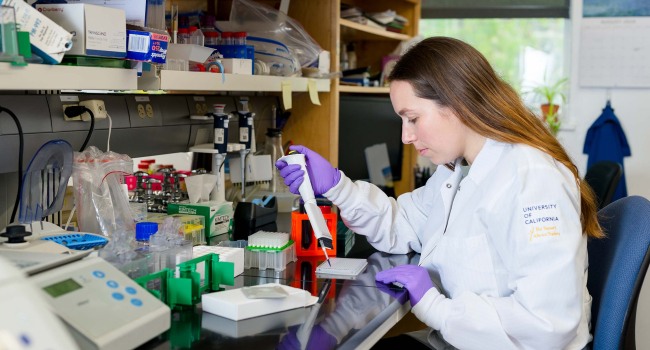
Scientists at the University of California, Berkeley have identified a potential new approach to treating obesity and diabetes that could help the body burn more energy without causing the muscle loss sometimes associated with weight-loss medications.
The experimental compound, known as 5-tetradecyloxy-2-furoic acid (TOFA), works differently from widely used GLP-1 medications. Rather than primarily reducing appetite and food intake, it appears to increase the amount of energy the body uses by stimulating metabolic activity.
In a study published in Science Advances, researchers found that TOFA can suppress the production of lipids such as cholesterol and triglycerides while simultaneously activating genes involved in fat burning and energy production.
In experiments involving mice, treatment with TOFA improved insulin sensitivity and blood glucose control, reduced triglyceride levels and alleviated several features associated with fatty liver disease. Obese mice treated with the compound lost primarily fat, while their lean muscle mass remained largely unchanged.
“Body weight responds to two levers: taking in fewer calories, or spending more energy,” said senior study author Anders Näär, a professor of metabolic biology and nutrition at UC Berkeley. While GLP-1 drugs mainly affect the first mechanism, the researchers sought to target the second.
TOFA belongs to a group of compounds known as ACC inhibitors, which interfere with lipid production. Earlier drugs in this class reached clinical trials, but none has been approved for treating metabolic diseases, partly because some of them can increase triglyceride levels and potentially raise cardiovascular risks.
The Berkeley team found that TOFA appears to have an additional mechanism of action. Along with inhibiting lipid synthesis, it activates PPARα and PPARδ, receptors that regulate genes involved in the uptake and burning of fat for energy.
In mice, this dual effect increased energy expenditure by as much as 18%, without making the animals more physically active or raising their body temperature. Unlike some other ACC inhibitors, TOFA also did not cause triglyceride levels to rise.
The researchers described the compound as producing a coordinated metabolic response that both limits lipid production and activates pathways involved in energy expenditure.
The team also tested TOFA in combination with GLP-1 drugs, including semaglutide, marketed as Ozempic and Wegovy, and tirzepatide, sold as Mounjaro and Zepbound. In mice, the combination produced greater improvements in body weight, blood glucose, insulin levels and triglycerides than either treatment alone.
The researchers believe TOFA could potentially complement existing GLP-1 therapies rather than replace them.
However, the compound has so far been tested only in animals. Its safety and effectiveness in humans remain unknown, and clinical trials will be necessary before it can be considered as a treatment for patients.
To advance development of the approach, the researchers have established a company called ReRx Therapeutics.
Follow NEWS.am Medicine on Facebook and Twitter





- Most read
month
week
day
- Thailand’s Health Ministry Warns of Leptospirosis in Flood-Affected Areas 742
- The Lancet Oncology: Infections Account for One in Eight Cancer Diagnoses Worldwide 692
- Study: Suicidal Ideation Among US Teens Began Rising Sharply After Nearly Two Decades of Decline 686
- ACS: Menthol Additive Significantly Prolongs and Intensifies the Effects of Nicotine 650
- Neuron: Lymph Node Removal Associated With a 25% Rate of Cognitive Impairment 650
- Xinhua: Fatty Diet Leads to the Formation of 248 Gallstones in Man 649
- Scientists Discover New Mechanism Linking Biological Clocks, Cold, and Fat Metabolism 573
- ABC News: 40% of the World’s Population Was Exposed to Dangerous Ozone Levels This Year 571
- Anti-Cancer Associations of China, Egypt and Kazakhstan Support Gevorg Tamamyan’s Candidacy 570
- PLOS Medicine: Brain Age Gap Was Largest in Dementia 567
- WHO: Global Life Expectancy Has Almost Returned to Pre-Pandemic Levels 562
- The 2026 Nobel Prize in Physiology or Medicine Recognized a Sequence of Discoveries 554
- Ophthalmology: Tooth Discovered Growing in Upper Orbit of 16-Year-Old Indian Teenager 532
- Biomolecules: Mulberries May Improve Gut Health and Metabolism 528
- CDN: Fruit Juice Does Not Lower Heart Disease Risk Like Whole Fruits 521
- Find us on Facebook
- Poll