


- Latest news▼
-
12:47, October 7 Nature: Why Does the Immune System Stop Killing Dangerous “Zombie Cells”?

-
10:50, October 7 Nature: Why Does the Immune System Stop Killing Dangerous “Zombie Cells”?

-
08:44, October 7 Study: The Way a Person Speaks May Reveal Early Signs of Brain Aging

-
23:53, October 6 Study: One in Eight Cancer Cases Worldwide Is Linked to Preventable Infections

-
21:39, October 6 Sugar Exposure During the First 1,000 Days of Life Increases the Risk of Anxiety in Adulthood

-
19:56, October 6 Nature: AI Effectively Motivates Patients to Get Vaccinated

-
17:41, October 6 Cell: Vitamin D May Reduce Intestinal Inflammation

-
15:24, October 6 Scientists Find a Way to Rejuvenate Old Cells — Without Rewriting DNA

-
13:12, October 6 More Than 1,600 New Breast Cancer Cases Are Diagnosed in Armenia Every Year

-
08:39, October 6 NatCom: Losing belly fat slowed brain aging and protected memory

-
23:58, October 5 Dreaming: The more difficult the day, the more fear and anxiety appear in dreams

-
22:09, October 5 The 2026 Nobel Prize in Physiology or Medicine Recognized a Sequence of Discoveries

-
18:46, October 5 CanRes: The rate at which mutations accumulate in cells may determine cancer risk

-
14:06, October 5 Nobel Prize in Physiology or Medicine Awarded for Optogenetics

-
12:42, October 5 PNAS: The right hemisphere of the brain ages faster than the left

All materials
The mysteries of dreaming
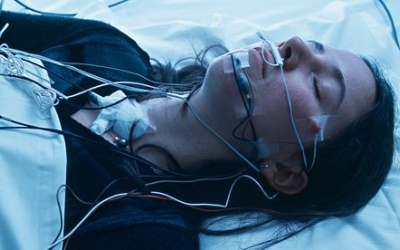
One of our most mysterious and intriguing states of consciousness is the dream. We lose consciousness when we enter the deep waters of sleep, only to regain it as we emerge into a series of uncanny private realities. The rabbit hole between these worlds of consciousness turns out to be the lucid dream, where people become aware that they are dreaming and can influence what happens within their self-generated world. Studies suggest that the majority of people have had a lucid dream at some point in their life but that the experience is not common, The Guardian reported.
Using a procedure first verified by sleep researcher Stephen LaBerge, the sleeper can signal to researchers when they have begun their lucid dream by using pre-arranged eye movements. The person moves their eyes in the agreed way in the dream, which occur as genuine eye movements, which are recorded and verified by electrodes that are placed around the eye sockets.
This simple but ingenious technique has allowed a series of experiments on the properties of the dream world and how they are reflected in brain function. Studies led by neuropsychologists Ursula Voss and Martin Dresler have shown that the brain activity during lucid dreaming bears the core features of REM sleep but is distinct from both non-lucid dreaming and the awake state.
Some of the most interesting studies involve in-dream experiments, where participants are asked to complete pre-arranged actions in their lucid dreams while using eye movements to signal the beginning and end of their behavioural sequences. A recent study by neuroscientist Daniel Erlacher and his colleagues at the University of Bern compared how long it took to complete different tasks while lucid dreaming and while awake. These included counting, walking a specified number of steps, and a simple gymnastics-like routine. They found that the "mental action" of counting happened at the same speed regardless of whether volunteers were dreaming or awake, but the "physical actions" took longer in dreams than in real life. The research team suggested that this might be due to not having the normal sensory feedback from the body to help the brain work out the most efficient way of coordinating itself.
There is also an amateur community of lucid dream enthusiasts keen to explore this unique form of virtual reality.
Follow NEWS.am Medicine on Facebook and Twitter

- Read also








- Event calendar
- Archive
- Most read
month
week
day
- Thailand’s Health Ministry Warns of Leptospirosis in Flood-Affected Areas 756
- Study: Suicidal Ideation Among US Teens Began Rising Sharply After Nearly Two Decades of Decline 706
- The 2026 Nobel Prize in Physiology or Medicine Recognized a Sequence of Discoveries 691
- PLOS Medicine: Brain Age Gap Was Largest in Dementia 591
- Scientists Discover New Mechanism Linking Biological Clocks, Cold, and Fat Metabolism 591
- WHO: Global Life Expectancy Has Almost Returned to Pre-Pandemic Levels 589
- ABC News: 40% of the World’s Population Was Exposed to Dangerous Ozone Levels This Year 588
- Anti-Cancer Associations of China, Egypt and Kazakhstan Support Gevorg Tamamyan’s Candidacy 585
- Ophthalmology: Tooth Discovered Growing in Upper Orbit of 16-Year-Old Indian Teenager 543
- Biomolecules: Mulberries May Improve Gut Health and Metabolism 542
- CDN: Fruit Juice Does Not Lower Heart Disease Risk Like Whole Fruits 535
- Food & Function: Daily Consumption of 40 Grams of Walnuts Linked to Improved Overall Mood 524
- CanRes: The rate at which mutations accumulate in cells may determine cancer risk 480
- Food & Function: Peanuts Increase Brain Insulin Sensitivity in Older Adults 464
- Radiology: Low Spine Bone Density Linked to Cognitive Decline 455
- Find us on Facebook
- Poll