


- Latest news▼
-
22:53, October 23 Scientists Use ChatGPT-Like Technology to Assess Stroke Risk From Human DNA

-
20:56, October 23 Nubar Afeyan’s Company Tests Skin Cancer Vaccine: Risk of Recurrence Falls by 42%

-
18:49, October 23 bioRxiv: Cholesterol May Interfere with the Brain’s Ability to Clear Toxic Proteins
-
16:56, October 23 PLOS One: A Short Strength-Training Routine Improved Balance and Strength in Adults Over 65

-
14:50, October 23 A Simple 15-Minute Procedure Helped Patients with Carpal Tunnel Syndrome Avoid Surgery

-
12:53, October 23 Scientists Rejuvenate Cells by More Than 60 Years for the First Time

-
10:47, October 23 WHO Comments on First Documented Human Death Linked to Shamonda Virus

-
08:24, October 23 A Single Tooth Can Reveal Six Types of Information About a Person, Including Their Health

-
20:34, October 22 Medical Xpress: Hypnosis and Psychotherapy May Help Relieve Chronic Abdominal Pain in Children

-
18:51, October 22 Nature: Cold Triggers Muscles to Produce Protective Metabolite BH2

-
16:45, October 22 Nature: Hantavirus Enters Human Cells Through a Groove in a Receptor-Binding Protein

-
14:48, October 22 First Human Case of Shamonda Virus Infection Recorded in France

-
12:43, October 22 Chinese Scientists Develop a One-Gram Device for Monitoring Brain Activity

-
10:55, October 22 LSD does more than disrupt brain rhythms: It speeds them up and increases signal complexity

-
08:42, October 22 The Journal of Nutrition: Women Who Eat Oily Fish Have a 19% Lower Risk of Death from Stroke

All materials
The Hidden Benefits of Hummus: How This Tasty Dish Can Lower Cholesterol and Aid Weight Loss
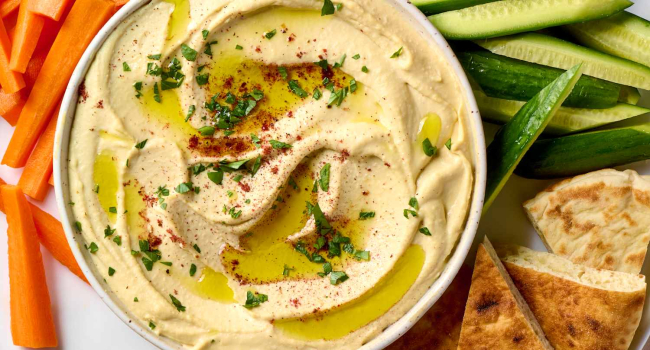
It is a good source of protein, fiber, and iron, especially thanks to tahini.
No one knows for sure who invented hummus. From Lebanon to Egypt, from Syria to Turkey, many Middle Eastern countries claim the dish, with references dating back to the 13th century, writes the Daily Mail.
Despite its reputation as a healthy food, some dieters avoid it because of its calorie and fat content.
How healthy is hummus?
“In general, I would say it is a healthy food,” said nutritionist and author Jenna Hope. “It’s a good source of protein, fiber, and iron, particularly thanks to the tahini.”
According to her, the healthy fats help keep you full for longer, and the fiber is important for gut health—a topic currently widely discussed.
What is in hummus?
A classic hummus recipe contains just five main ingredients: chickpeas, garlic, lemon, tahini, and olive oil.
A 100 g serving contains about 170 calories:
-
8–10 g of fat
-
11–14 g of carbohydrates
-
around 6 g of fiber
-
6–8 g of protein
Saturated fat is less than 2 g per 100 g.
According to NHS guidelines (up to 70 g of fat per day for women and up to 95 g for men), this serving fits well into a balanced diet.
The fats in hummus are mostly mono- and polyunsaturated, which are associated with better heart health and support cognitive function.
Is hummus healthy?
Each ingredient provides its own benefits:
-
Chickpeas are rich in plant protein.
-
Tahini contains antioxidants linked to reduced risk of cancer and Alzheimer’s disease.
-
Garlic may help lower blood pressure and cholesterol.
-
Lemon is high in vitamin C, which is beneficial for skin.
-
Olive oil is a key part of the Mediterranean diet and is linked to improved heart health.
Additionally, the vitamin C in lemon juice improves the body’s absorption of iron from tahini.
However, experts warn that store-bought hummus may contain preservatives and additives, so it’s better to choose products with a simple, basic ingredient list.
Is hummus high in protein?
While hummus is not extremely high in protein, it remains a good plant-based source—around 6–9 g per 100 g.
This makes it especially popular among vegetarians and vegans.
Is hummus high in fat?
Hummus contains about 20% fat, so it is not a low-fat food. However, most of the fat comes from “good” sources like olive oil and tahini, which can help lower cholesterol.
Can hummus lower cholesterol?
A study showed that eating about 160 g of cooked chickpeas daily may help reduce cholesterol levels.
Additionally, the British Heart Foundation lists hummus among foods that may help reduce dependence on high-cholesterol foods.
Is hummus suitable for people with irritable bowel syndrome (IBS)?
Chickpeas are considered high-FODMAP foods—carbohydrates that can trigger bloating, gas, and diarrhea.
People with IBS are advised to limit servings to 1–2 tablespoons or prepare hummus at home with fewer chickpeas and added ingredients like carrots to reduce FODMAP content.
Garlic can also cause discomfort, so sometimes garlic oil is used instead of whole cloves.
Is hummus gluten-free?
In its classic form, yes. However, store-bought hummus should always be checked for additives that might contain gluten.
Follow NEWS.am Medicine on Facebook and Twitter

- Related News
- The Journal of Nutrition: Women Who Eat Oily Fish Have a 19% Lower Risk of Death from Stroke The researchers analyzed data from 90,944 residents of Japan who were followed for an average of 20.8 years. During this period, 26,976 participants died...
- When Diet and Exercise Aren’t Enough: Who Can Benefit from Weight-Loss Medications? If dietary changes and increased physical activity fail to produce at least 5% weight loss, patients can discuss medication options with their doctor...
- More Fruit, Fewer Sugary Drinks: Study Finds Links to Adolescent Mental Health The researchers assessed symptoms of anxiety and depression using validated questionnaires...
- PLOS: Yogurt and Canned Beans May Help Reduce the Risk of Colorectal Cancer The researchers followed participants for 18 years, during which 10,075 cases of colorectal cancer were diagnosed...
- Scientists Discover How Hot Peppers Could Help Develop Safer Painkillers Previously, scientists believed that the receptor adopted roughly the same open state regardless of which stimulus triggered its activation...
- Video




- Event calendar
- Archive
- Most read
month
week
day
- Tea May Benefit Heart Health — but Drinking It Scalding Hot Could Be Risky 332
- Why Some People Avoid Alzheimer’s Despite Carrying a High-Risk Gene 327
- LSD does more than disrupt brain rhythms: It speeds them up and increases signal complexity 314
- Nine-year study links changing loneliness patterns to increased heart disease risk 309
- PLOS: Yogurt and Canned Beans May Help Reduce the Risk of Colorectal Cancer 278
- AJOG: Birth Weight Is Linked to Later Performance in Math and Reading 219
- Noise-Canceling Headphones Reduced the Risk of Nausea After Gynecological Surgery by 32% 212
- SciRep: Walking More Than 8,000 Steps a Day Is Linked to Better Attention 208
- bioRxiv: Cholesterol May Interfere with the Brain’s Ability to Clear Toxic Proteins 189
- Anesthesiology: Noise-Canceling Headphones Reduce the Risk of Nausea After Anesthesia 185
- Nature: AI Links Brown Fat to Heart, Vascular, and Mental Health 185
- Scientists Unveil Scanner That Captures Whole-Body Images in Just 60 Seconds 183
- Polyphenols in coffee and fruit linked to lower risk of telomere shortening 180
- Nubar Afeyan’s Company Tests Skin Cancer Vaccine: Risk of Recurrence Falls by 42% 179
- Postoperative Monitoring Apps Reduced Hospital Readmissions by 15% 173
- Find us on Facebook
- Poll