


- Latest news▼
-
23:31, October 16 Cardiologists Urge Inclusion of Physical Exercise in Heart Disease Prevention

-
21:29, October 16 Stem Cell Reports: Nicotine Exposure During Pregnancy Permanently Weakens Offspring’s Immune Systems

-
19:15, October 16 Frontiers: Poor Sleep May Increase the Risk of Breast Cancer by 30%

-
17:26, October 16 Nature: Researchers Link Faster Wound Healing to Female Sex Hormones

-
15:05, October 16 BJN: Asparagus extract helps improve sleep and reduce anxiety

-
10:55, October 16 Science Corporation Implants Vision-Restoring Chip in First Patient With Stargardt Disease

-
08:41, October 16 Smartphone Habits Can Detect Stress With Up to 76% Accuracy, Scientists Find

-
21:36, October 15 Cardiologists Urge Inclusion of Physical Exercise in Heart Disease Prevention

-
19:41, October 15 RPTH: One to Two Cups of Coffee a Day Linked to a 51% Lower Risk of Recurrent Venous Thromboembolism

-
17:50, October 15 JACH: Eating Breakfast May Improve Psychological Flexibility

-
15:42, October 15 A Simple Way to Blunt Blood Sugar Spikes After Meals
-
12:33, October 15 Scientists Discover a Longevity Gene That Extends Lifespan by 14%

-
10:37, October 15 WHO: Lead Poisoning Claims More Than 3.5 Million Lives Every Year
-
08:47, October 15 Why It Can Sometimes Be Impossible to Stop Laughing: Neuroscientists Identify Two Mechanisms Behind Laughter

-
21:24, October 14 Molecular Cell: Bacteria Hide an Unusual Defense Mechanism That Activates When a Virus Attacks

All materials
What is hantavirus and how does it spread?
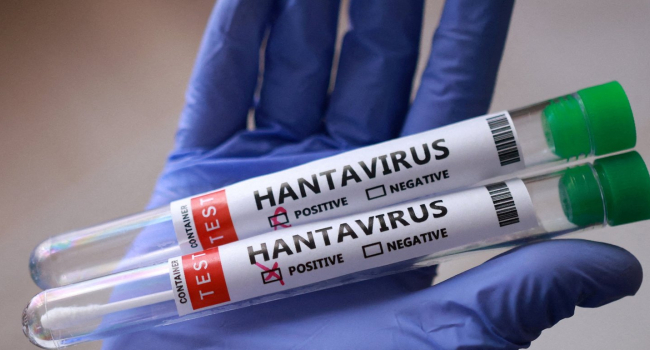
A cruise ship affected by a hantavirus outbreak has arrived in the Canary Islands, the BBC reports. Three confirmed hantavirus cases and five suspected cases have been linked to the MV Hondius cruise ship.
The confirmed cases include a Dutch woman who died, a British passenger in intensive care in South Africa, and a Swiss passenger receiving treatment at a hospital in Zurich.
Among the suspected cases are a British man, a Dutch crew member, and a German national. Two have arrived in the Netherlands for treatment, while a third, who is in stable condition, remains aboard a delayed evacuation flight.
None of them have tested positive for hantavirus so far, although two have developed symptoms.
Two other British passengers are self-isolating at home after possible exposure to the virus.
According to the UK Health Security Agency, they left the ship earlier during its voyage from Argentina across the Atlantic to Cape Verde and have shown no symptoms.
Authorities in the US states of Arizona and Georgia told the BBC they are monitoring three passengers who returned to the United States after disembarking the cruise ship before it reached Cape Verde. None are showing symptoms.
The remaining passengers are undergoing medical assessment and are leaving the MV Hondius in phases depending on their nationality. Some Spanish and French passengers have already been flown home, while other countries, including the UK, have arranged charter flights for their citizens.
What is the Andes strain of hantavirus?
Hantaviruses, named after a river in South Korea, are a family of viruses rather than a single disease.
According to the World Health Organization (WHO), there are more than 20 different hantavirus species, almost all of them linked to infection from rodents, typically rats and mice, through dried urine and droppings.
However, one strain known as the Andes virus is believed to be capable of human-to-human transmission, although this is extremely rare. South Africa’s health minister said the strain has been confirmed in two passengers — the British man hospitalized in Johannesburg and the Dutch woman who died.
The Andes virus is mainly found in Argentina and Chile.
In late 2018, an outbreak in Argentina was traced to people who attended a party. One infected individual is believed to have unintentionally spread the virus to 34 confirmed cases, resulting in 11 deaths.
How does this affect what happens next?
The WHO had been operating on the assumption that the virus could be spreading aboard the ship through very close human contact as well as through contact with rodents.
Now that the Andes virus has been confirmed, it has become even more important for passengers and crew to follow the kind of social distancing measures familiar from the COVID-19 pandemic.
Passengers still aboard the ship have been instructed to remain in their cabins to limit contact, and British nationals will be asked to self-isolate upon returning home. A WHO doctor aboard the MV Hondius reported on Saturday that no additional passengers had developed symptoms.
Experts say measures such as isolating infected patients, regular handwashing, tracing and monitoring close contacts, and applying infection-control procedures will be essential to stopping the spread of the disease.
It remains unclear how the outbreak began. The WHO previously said the first two cases had “travelled through Argentina, Chile and Uruguay on a bird-watching trip which included visits to areas inhabited by rat species known to carry the virus”.
Experts believe the risk of infection for the global population remains very low. So far, there is no evidence that the virus has spread beyond the ship.
How does hantavirus spread?
Hantavirus is usually spread through close contact with rodent droppings, urine, and saliva.
In most cases, infection occurs when people inhale virus particles, for example when dried rodent urine and droppings containing hantavirus become airborne.
The virus can also be transmitted through rodent bites, such as bites from rats.
An infographic explaining hantavirus transmission shows that rodents are the main carriers of the virus. Virus particles can become airborne from rodent urine and droppings and infect humans when inhaled. The virus may cause two severe illnesses affecting the lungs or kidneys, and infection can also occur through cuts, the eyes, or rodent bites.
Only one strain — the Andes strain — is known to spread from person to person, and even then, only very rarely.
When human-to-human transmission occurs, it usually involves very close and prolonged contact with a symptomatic person.
Hantavirus spreads differently from influenza, which is transmitted through respiratory droplets produced when people cough or sneeze.
“We are not talking about casual contact between people who are far apart,” WHO official Dr. Maria van Kerkhove told the BBC.
What are the symptoms and how dangerous is hantavirus?
The virus can cause two severe diseases. The first is Hantavirus Pulmonary Syndrome (HPS), which often begins with fatigue, fever, and muscle pain, followed by headaches, dizziness, chills, and abdominal problems.
Respiratory symptoms may later develop, including severe breathing difficulties, at which point urgent medical care is required.
This is one of the primary illnesses associated with the Andes strain and carries a mortality rate of 20% to 40%.
The incubation period further complicates the disease, as symptoms may appear anywhere from one to eight weeks after infection.
The second disease is Hemorrhagic Fever with Renal Syndrome (HFRS), which initially resembles the flu but can later affect the kidneys and lead to low blood pressure, internal bleeding, and acute kidney failure.
Is there a vaccine or treatment for hantavirus?
There is no specific treatment for hantavirus infection, but early medical care can improve survival chances.
Recommended supportive care may include oxygen therapy, mechanical ventilation, and even dialysis.
Patients with severe symptoms may require hospitalization and treatment in intensive care units.
New treatments are currently being tested.
At present, there are no widely available vaccines against hantavirus. However, some vaccines are used in China and South Korea against strains common in those countries.
How many hantavirus cases are reported globally?
According to a report by the US National Institutes of Health, approximately 150,000 cases of Hemorrhagic Fever with Renal Syndrome are reported worldwide each year, mainly in Europe and Asia. More than half of the reported cases typically occur in China.
The latest US data show that 890 hantavirus cases were recorded in the country between 1993 and 2023.
Have there been recent hantavirus cases?
In February 2025, Betsy Arakawa, the wife of Oscar-winning actor Gene Hackman, died from a respiratory illness linked to hantavirus.
Medical investigators believe Arakawa contracted HPS, the most common hantavirus strain in the United States, which ultimately led to her death.
Nests and dead rodents were found in outbuildings near the home where she was discovered.
Follow NEWS.am Medicine on Facebook and Twitter

- Related News
- Pancreatic Cancer Can Change Its “Genetic Strategy”: Study Identifies Key Mechanisms According to the authors, nearly 85% of patients with this disease die within five years of diagnosis...
- eClinicalMedicine: More Than 40% of Women with Autoimmune Diseases Have Experienced a Misdiagnosis of a Psychiatric Condition Among women, 43% reported that their symptoms had previously been incorrectly attributed to psychiatric causes...
- LGH: The effect of aspirin on colorectal cancer may depend on the stage of the disease After treatment, participants took either aspirin or a placebo daily for up to three years...
- Scientists Discover Unexpected Gene That May Increase the Risk of Anorexia One particularly interesting finding was where the gene is active...
- Nighttime Heat Increases Anxiety and Alters Body Functions: Scientists Identify Possible Mechanisms Daytime heat exposure lasted from 9 a.m. to 5 p.m. at 32°C, while nighttime exposure took place from 10 p.m. to 6 a.m. at 30°C...
- Video




- Event calendar
- Archive
- Most read
month
week
day
- International ACTS Research Project to Support Smoking Cessation Launched in Armenia 443
- Molecular Cell: Bacteria Hide an Unusual Defense Mechanism That Activates When a Virus Attacks 423
- Cardiologists Urge Inclusion of Physical Exercise in Heart Disease Prevention 410
- Frontiers: Poor Sleep May Increase the Risk of Breast Cancer by 30% 395
- Stem Cell Reports: Nicotine Exposure During Pregnancy Permanently Weakens Offspring’s Immune Systems 395
- Nature: Researchers Link Faster Wound Healing to Female Sex Hormones 366
- Chemical Senses: A Healthy Diet May Be Linked to a Better Sense of Smell 352
- HealthAI: Artificial Intelligence Helps Healthcare Shift from Treatment to Prevention 338
- eClinicalMedicine: More Than 40% of Women with Autoimmune Diseases Have Experienced a Misdiagnosis of a Psychiatric Condition 317
- Pancreatic Cancer Can Change Its “Genetic Strategy”: Study Identifies Key Mechanisms 314
- Study: Healthy Diet During Pregnancy Reduces the Risk of Colic and Eczema in Children 309
- Science Corporation Implants Vision-Restoring Chip in First Patient With Stargardt Disease 302
- BJN: Asparagus extract helps improve sleep and reduce anxiety 296
- JES: Longer Sleep May Increase the Risk of Kidney Damage in People with Diabetes 294
- It's Not Just Weight: Body Shape Is Linked to Heart Attack Risk 291
- Find us on Facebook
- Poll