


- Latest news▼
-
10:55, October 22 LSD does more than disrupt brain rhythms: It speeds them up and increases signal complexity

-
23:27, October 21 Nine-year study links changing loneliness patterns to increased heart disease risk

-
15:23, October 21 Tea May Benefit Heart Health — but Drinking It Scalding Hot Could Be Risky

-
13:25, October 21 Why Some People Avoid Alzheimer’s Despite Carrying a High-Risk Gene

-
10:47, October 20 SciRep: Walking More Than 8,000 Steps a Day Is Linked to Better Attention

-
08:32, October 20 Nature: AI Links Brown Fat to Heart, Vascular, and Mental Health

-
18:51, October 19 Oxytocin May Make Childhood Memories More Negative in People with Relationship Anxiety

-
16:48, October 19 Polyphenols in coffee and fruit linked to lower risk of telomere shortening

-
14:50, October 19 Anesthesiology: Noise-Canceling Headphones Reduce the Risk of Nausea After Anesthesia

-
12:44, October 19 PLOS: Yogurt and Canned Beans May Help Reduce the Risk of Colorectal Cancer
-
10:39, October 19 AJOG: Birth Weight Is Linked to Later Performance in Math and Reading

-
08:41, October 19 Postoperative Monitoring Apps Reduced Hospital Readmissions by 15%

-
23:12, October 18 Noise-Canceling Headphones Reduced the Risk of Nausea After Gynecological Surgery by 32%

-
18:17, October 18 HealthDay: Strength Training After 60 Helps Strengthen Bones and Maintain Brain Health

-
12:43, October 18 Scientists Unveil Scanner That Captures Whole-Body Images in Just 60 Seconds
All materials
New Treatment Pathway for Rheumatoid Arthritis Could Transform Disease Management
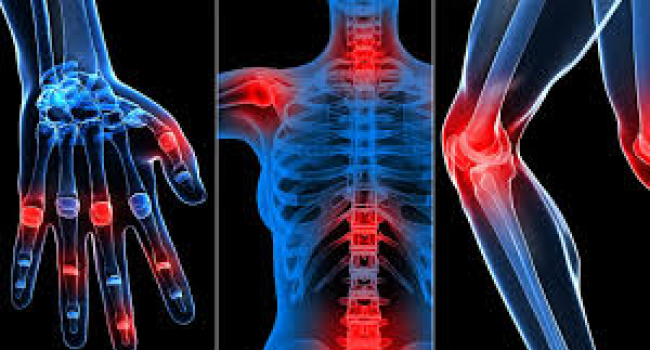
Researchers from Aarhus University and Aarhus University Hospital have reported a promising new approach to reducing joint inflammation in rheumatoid arthritis. The findings were published in the journal EULAR Rheumatology Open.
Rheumatoid arthritis is an autoimmune disease in which the immune system mistakenly attacks the body’s own tissues, leading to chronic inflammation, pain, swelling, and progressive joint damage. For a substantial number of patients, existing treatments fail to provide adequate disease control, highlighting the need for new therapeutic strategies.
The focus of the study was 4-octyl itaconate (4-OI), a compound that has demonstrated potent anti-inflammatory effects in preclinical research.
The scientists found that 4-OI acts not primarily on immune cells, but rather on synoviocytes—connective tissue cells that line the synovial membrane of joints and play a central role in sustaining chronic inflammation.
The proposed mechanism works as follows:
-
the compound activates the body’s natural antioxidant and anti-inflammatory pathways;
-
this reduces the activation of synoviocytes;
-
as a result, inflammatory processes within the joint are diminished.
Experiments using cell cultures and animal models showed a reduction in both joint inflammation and swelling.
According to the researchers, this represents a fundamentally different therapeutic strategy. Most current rheumatoid arthritis treatments primarily target immune cells, whereas 4-OI acts on another critical component of the disease process—the tissue cells within the joint itself.
However, the investigators emphasize that the findings are currently limited to preclinical studies. Before the compound can be tested in patients, several key questions must be addressed, including:
-
evaluating its safety profile;
-
determining optimal dosing and methods of administration;
-
assessing compatibility with existing rheumatoid arthritis therapies;
-
conducting clinical trials in humans.
Despite these limitations, the researchers describe the findings as an important step toward more personalized and potentially more effective treatments for patients with severe or treatment-resistant rheumatoid arthritis.
Follow NEWS.am Medicine on Facebook and Twitter

- Related News
- DNA changes shape after injury: scientists identify a mechanism essential for tissue regeneration The scientists identified three DNA loops and experimentally demonstrated that they are necessary for effective regeneration...
- Why Do Some People Develop PTSD After a Brain Injury While Others Do Not? Scientists May Have Found a Possible Reason Researchers at the University of California, San Diego, and the San Diego Veterans Affairs Healthcare System have identified an antibody that may be associated with resilience to some of the consequences of brain injury...
- Calories Aren’t All the Same: Study Highlights the Benefits of the Mediterranean Diet The authors stress that there is still insufficient evidence to determine precisely how differences in diet quality affect the long-term health consequences of obesity...
- A “Bypass Route” for the Spinal Cord: Scientists Develop New Way to Restore Movement and Sensation According to the researchers, more than 2.5 million people worldwide are living with spinal cord injuries...
- Chinese doctors report world-first successful replantation of both legs severed at the thighs The hospital says the procedure represents the world's first documented case of successful replantation after both thighs were completely severed simultaneously...
- Video



- Event calendar
- Archive
- Most read
month
week
day
- Cardiologists Urge Inclusion of Physical Exercise in Heart Disease Prevention 551
- Frontiers: Poor Sleep May Increase the Risk of Breast Cancer by 30% 537
- Stem Cell Reports: Nicotine Exposure During Pregnancy Permanently Weakens Offspring’s Immune Systems 533
- Nature: Researchers Link Faster Wound Healing to Female Sex Hormones 512
- BJN: Asparagus extract helps improve sleep and reduce anxiety 475
- Why Some People Avoid Alzheimer’s Despite Carrying a High-Risk Gene 299
- Nine-year study links changing loneliness patterns to increased heart disease risk 297
- LSD does more than disrupt brain rhythms: It speeds them up and increases signal complexity 288
- Tea May Benefit Heart Health — but Drinking It Scalding Hot Could Be Risky 276
- PLOS: Yogurt and Canned Beans May Help Reduce the Risk of Colorectal Cancer 259
- Noise-Canceling Headphones Reduced the Risk of Nausea After Gynecological Surgery by 32% 194
- AJOG: Birth Weight Is Linked to Later Performance in Math and Reading 186
- SciRep: Walking More Than 8,000 Steps a Day Is Linked to Better Attention 171
- Anesthesiology: Noise-Canceling Headphones Reduce the Risk of Nausea After Anesthesia 168
- Nature: AI Links Brown Fat to Heart, Vascular, and Mental Health 151
- Find us on Facebook
- Poll