


- Latest news▼
-
12:47, October 7 Nature: Why Does the Immune System Stop Killing Dangerous “Zombie Cells”?

-
10:50, October 7 Nature: Why Does the Immune System Stop Killing Dangerous “Zombie Cells”?
-
08:44, October 7 Study: The Way a Person Speaks May Reveal Early Signs of Brain Aging

-
23:53, October 6 Study: One in Eight Cancer Cases Worldwide Is Linked to Preventable Infections

-
21:39, October 6 Sugar Exposure During the First 1,000 Days of Life Increases the Risk of Anxiety in Adulthood

-
19:56, October 6 Nature: AI Effectively Motivates Patients to Get Vaccinated
-
17:41, October 6 Cell: Vitamin D May Reduce Intestinal Inflammation

-
15:24, October 6 Scientists Find a Way to Rejuvenate Old Cells — Without Rewriting DNA

-
13:12, October 6 More Than 1,600 New Breast Cancer Cases Are Diagnosed in Armenia Every Year

-
08:39, October 6 NatCom: Losing belly fat slowed brain aging and protected memory

-
23:58, October 5 Dreaming: The more difficult the day, the more fear and anxiety appear in dreams

-
22:09, October 5 The 2026 Nobel Prize in Physiology or Medicine Recognized a Sequence of Discoveries

-
18:46, October 5 CanRes: The rate at which mutations accumulate in cells may determine cancer risk
-
14:06, October 5 Nobel Prize in Physiology or Medicine Awarded for Optogenetics

-
12:42, October 5 PNAS: The right hemisphere of the brain ages faster than the left

All materials
How Pomegranates May Help the Gut Repair Itself After Injury
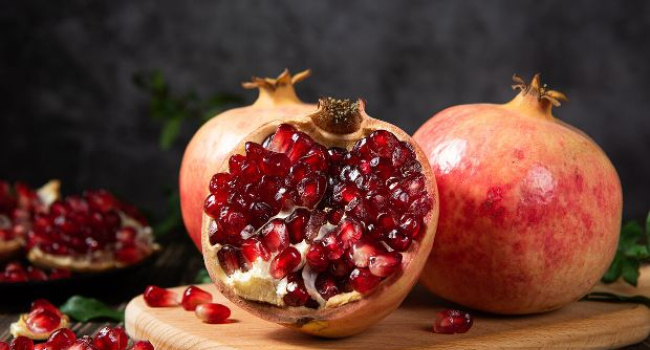
Researchers from the University of Louisville have uncovered how a natural compound produced by gut bacteria after digesting certain foods helps protect the intestine from damage. The findings, published in the journal Nature Communications, could pave the way for new treatments for inflammatory bowel diseases.
Inflammatory bowel diseases (IBD), including Crohn's Disease and Ulcerative Colitis, affect millions of people worldwide. These conditions are characterized by chronic inflammation and damage to the intestinal lining. As a result, the intestinal barrier—which normally prevents harmful microorganisms and toxins from entering the body—becomes compromised.
The researchers focused on a compound called urolithin A. This molecule is produced by gut bacteria when they break down compounds found in pomegranates, walnuts, berries, and certain other plant-based foods.
The team discovered that urolithin A activates a specialized protein known as the aryl hydrocarbon receptor (AHR), which functions as a sensor for signals originating from the environment, diet, and the gut microbiome.
Scientists already knew that activation of this receptor could produce either beneficial or harmful effects, but the mechanism determining the outcome had remained unclear.
The new study revealed that the key factor is the type of cell in which the receptor is activated. Urolithin A selectively targets intestinal epithelial cells—the cells that form the protective lining of the gut.
Within these cells, activation of AHR triggers the NLRP6 inflammasome, a molecular complex traditionally associated with inflammatory responses. However, the researchers found that in this context the system behaves quite differently.
Under the influence of urolithin A, the inflammasome promotes the release of molecules that help repair damaged intestinal tissue, strengthen the gut barrier, stimulate the production of protective mucus, and enhance antimicrobial defenses. Rather than driving inflammation, the pathway activates mechanisms involved in tissue healing and restoration.
According to lead author Sweta Ghosh, the findings demonstrate that not all inflammatory signaling pathways are harmful.
“Under the right conditions and in the right cells, these mechanisms can play a critical role in maintaining gut health and repairing tissue,” the researcher noted.
The scientists confirmed their results not only in cell models and organoids but also in intestinal tissue samples obtained from patients with inflammatory bowel disease. In each case, urolithin A activated the same protective biological pathway.
The authors believe the discovery could reshape approaches to treating inflammatory bowel diseases. Most current therapies work by broadly suppressing the immune system, often leading to significant side effects. The newly identified strategy focuses instead on activating specific protective mechanisms within particular cell types while preserving normal immune function.
Study leader Venkatakrishna Rao Jala emphasized that the findings highlight the importance of the interaction between diet, gut bacteria, and human physiology.
According to the researchers, further investigation of urolithin A and its associated signaling pathways may lead to more precise and safer treatments for inflammatory bowel diseases—therapies aimed not at suppressing immune responses but at restoring the gut’s natural balance and protective functions.
Follow NEWS.am Medicine on Facebook and Twitter

- Related News
- Current Developments in Nutrition: People with cardiovascular disease eat whole fruits less often
- Food & Function: Daily Consumption of 40 Grams of Walnuts Linked to Improved Overall Mood For eight weeks, participants either consumed 40 grams of walnuts daily with dinner or completely excluded walnuts and walnut-derived products.․․
- Food & Function: Peanuts Increase Brain Insulin Sensitivity in Older Adults The study's authors view these observed changes as potentially beneficial.․․
- Diabetes, Obesity and Metabolism: Feijoa Improved Blood Pressure in People with Prediabetes Over a six-month period, alongside a weight-loss program, participants received approximately one gram of feijoa powder per day or a placebo.․․
- CDN: Fruit Juice Does Not Lower Heart Disease Risk Like Whole Fruits The researchers suggest that the benefits of whole fruits may be related to their content of dietary fiber and polyphenols...
- Video




- Event calendar
- Archive
- Most read
month
week
day
- The 2026 Nobel Prize in Physiology or Medicine Recognized a Sequence of Discoveries 1290
- Study: Suicidal Ideation Among US Teens Began Rising Sharply After Nearly Two Decades of Decline 790
- WHO: Global Life Expectancy Has Almost Returned to Pre-Pandemic Levels 674
- Scientists Discover New Mechanism Linking Biological Clocks, Cold, and Fat Metabolism 669
- More Than 1,600 New Breast Cancer Cases Are Diagnosed in Armenia Every Year 649
- Sugar Exposure During the First 1,000 Days of Life Increases the Risk of Anxiety in Adulthood 635
- Dreaming: The more difficult the day, the more fear and anxiety appear in dreams 621
- Study: The Way a Person Speaks May Reveal Early Signs of Brain Aging 618
- Food & Function: Daily Consumption of 40 Grams of Walnuts Linked to Improved Overall Mood 596
- NatCom: Losing belly fat slowed brain aging and protected memory 570
- Study: One in Eight Cancer Cases Worldwide Is Linked to Preventable Infections 564
- CanRes: The rate at which mutations accumulate in cells may determine cancer risk 554
- Cell: Vitamin D May Reduce Intestinal Inflammation 544
- Nobel Prize in Physiology or Medicine Awarded for Optogenetics 542
- Nature: AI Effectively Motivates Patients to Get Vaccinated 530
- Find us on Facebook
- Poll