


- Latest news▼
-
21:24, October 14 Molecular Cell: Bacteria Hide an Unusual Defense Mechanism That Activates When a Virus Attacks

-
19:47, October 14 Chemical Senses: A Healthy Diet May Be Linked to a Better Sense of Smell

-
17:39, October 14 It's Not Just Weight: Body Shape Is Linked to Heart Attack Risk

-
15:42, October 14 Study: Humanity Is Losing Gut Microbes Passed Down Through Generations

-
13:48, October 14 International ACTS Research Project to Support Smoking Cessation Launched in Armenia

-
12:33, October 14 Study: Healthy Diet During Pregnancy Reduces the Risk of Colic and Eczema in Children

-
10:30, October 14 HealthAI: Artificial Intelligence Helps Healthcare Shift from Treatment to Prevention

-
08:36, October 14 Pancreatic Cancer Can Change Its “Genetic Strategy”: Study Identifies Key Mechanisms

-
23:37, October 13 eClinicalMedicine: More Than 40% of Women with Autoimmune Diseases Have Experienced a Misdiagnosis of a Psychiatric Condition

-
21:42, October 13 JES: Longer Sleep May Increase the Risk of Kidney Damage in People with Diabetes

-
19:40, October 13 CB: Kefir, Yogurt, and Cottage Cheese May Support Muscle Growth and Repair

-
17:38, October 13 F&F: Japanese Apricot May Help Fight Helicobacter pylori

-
14:29, October 13 107 Epigenetic Markers Linked to Alzheimer’s Disease Identified

-
12:35, October 13 AJHG: X-Chromosome Features May Increase Autism Risk in Men Fourfold

-
10:34, October 13 AJCN: Regular Peanut Consumption May Reduce the Risk of Type 2 Diabetes
All materials
Pancreatic Cancer Can Change Its “Genetic Strategy”: Study Identifies Key Mechanisms
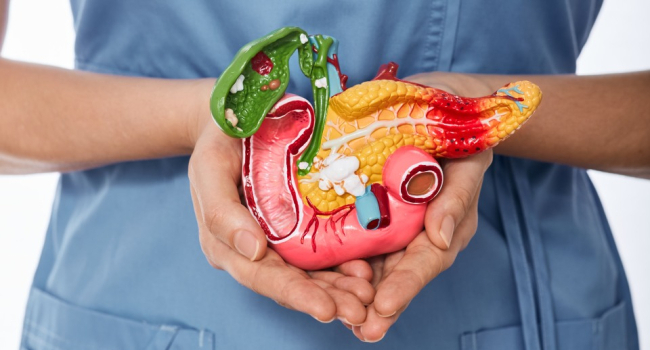
Pancreatic cancer cells can alter their genetic programs as a tumor develops, becoming more aggressive, spreading throughout the body, and acquiring resistance to treatment. An analysis of nearly 450,000 individual cells has enabled researchers to trace this evolution and identify genes that could become targets for future therapies.
Researchers at NYU Langone Health and the Perlmutter Cancer Center in the United States studied pancreatic ductal adenocarcinoma, one of the most difficult forms of cancer to treat. According to the authors, nearly 85% of patients with this disease die within five years of diagnosis. The findings were published in the journal Nature Genetics.
The scientists examined gene activity in 443,451 individual cells collected from 62 tumors in 56 patients. For six patients, samples were taken both before and after chemotherapy, allowing the researchers to compare the characteristics of tumor cells at different stages of treatment.
Previously, researchers generally divided the cells of this tumor type into two main subtypes: classical, which is typically less aggressive, and basal, which is associated with a poorer disease course. However, it remained unclear how cells transition from one state to the other.
The new analysis showed that a single tumor can contain several genetically distinct groups of cells, known as clones. On average, the tumors examined contained between two and 11 combinations of classical and basal cell clones. These groups behaved differently: some acquired characteristics associated with treatment resistance, while others developed traits linked to faster spread.
One of the key factors identified was the MYC gene, whose activity increased in more aggressive groups of tumor cells. In additional experiments, blocking MYC in basal cells caused them to shift toward the less aggressive classical state. At the same time, these cells became more accessible to immune cells that could potentially attack the tumor.
The researchers also detected increased activity of the TIGIT gene in some clones. This gene is associated with mechanisms that help tumor cells evade detection by the immune system. At the same time, PD1 gene activity was reduced in the same cell groups. This may partly explain why certain types of immunotherapy targeting the PD-1 pathway are often ineffective against pancreatic cancer.
According to the authors, the findings indicate that a tumor should not be viewed as a uniform mass of cells: different cell populations may use distinct mechanisms to survive and resist treatment.
Follow NEWS.am Medicine on Facebook and Twitter

- Related News
- eClinicalMedicine: More Than 40% of Women with Autoimmune Diseases Have Experienced a Misdiagnosis of a Psychiatric Condition Among women, 43% reported that their symptoms had previously been incorrectly attributed to psychiatric causes...
- LGH: The effect of aspirin on colorectal cancer may depend on the stage of the disease After treatment, participants took either aspirin or a placebo daily for up to three years...
- Scientists Discover Unexpected Gene That May Increase the Risk of Anorexia One particularly interesting finding was where the gene is active...
- Nighttime Heat Increases Anxiety and Alters Body Functions: Scientists Identify Possible Mechanisms Daytime heat exposure lasted from 9 a.m. to 5 p.m. at 32°C, while nighttime exposure took place from 10 p.m. to 6 a.m. at 30°C...
- Chewing Tobacco Killed 251 Thousand People in 2023: 84% of Deaths Occurred in South Asia Prevalence among men was more than twice as high as among women...
- Video




- Event calendar
- Archive
- Most read
month
week
day
- Can a Healthy Diet Help Preserve Memory? Study Reveals Limitations of Popular Diets 769
- EU Countries to Discuss Possible Plague Outbreak in Russia 728
- Blood Markers May Reveal Signs of Accelerated Immune Aging 716
- Scientists Discover How Horseback Riding Affects Behavior in Children with Autism 685
- Study: Even Short-Term E-Cigarette Use Damages the Lungs 676
- Study: Memory Decline Between Ages 60 and 69 Is Linked to an Increased Risk of Stroke 668
- Diabetes: Olive Oil Before Carbohydrates Reduced the Rise in Blood Glucose 657
- Frontiers in Psychology: Scientists Find That Nature Walks Can Help Lonely People 656
- WHO Reports 8,700 Confirmed Ebola Cases in the Democratic Republic of the Congo 652
- Cannabis Does Not Improve Sleep: Study Reveals an Unexpected Effect 651
- Nature: Sugar During Antibiotic Treatment Disrupts the Gut Microbiome More Severely 551
- Nature Metabolism: Ultra-Processed Food Makes the Body Use Energy Differently 537
- Scientists Discover Unexpected Gene That May Increase the Risk of Anorexia 251
- Signal Transduction: Nerves Help Tumors Evade the Immune System 191
- Science: Blocking an Aging Enzyme Restores Cartilage in Elderly Mice 180
- Find us on Facebook
- Poll