make preferable
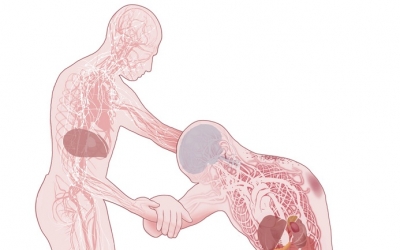
What does Ebola do to the victim’s body? Washingtonpost.com explains and illustrates this.
Exposure
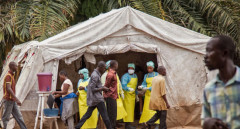
Ebola virus particles occupy an infected person’s blood and other bodily fluids, which can enter another person through the eyes,mucous membranes, scratches on the skin or from a hypodermic needle — not from from the air or from insects. The bodies of people who have died of the disease are highly infectious. Without protective equipment, shaking hands with an Ebola patient or being within three feet of a patient for long periods of time is less risky, but not advisable. In small West African villages, the close personal attention given to sick or dead family members can easily spread the disease.
Incubation
Lasts two to 21 days, but most often four to 10 days before symptoms suddenly appear.
Cell invasion stategy
- Ebola is a filovirus, a tiny filament of proteins covering a single strand of genetic material, RNA, which carries only seven genes that code for viral reproduction and defense against the host’s immune system.
- The virus binds to a cell’s surface, where it enters, surrounded by cell membrane.
- Proteins coating the virus spring open the membrane, allowing virus RNA to enter the cell and begin replicating.
- Exit from the cell isn’t fully understood, but virus particles seem to collect at the cell surface and protrude, exiting with perhaps a host envelope.
Early symptoms
Usually, a little over a week after exposure to the Ebola virus, people begin having symptoms: fever, chills, muscle pain, sore throat, weakness and general discomfort. In its early stages, Ebola can resemble malaria, typhoid fever or bacterial respiratory infections.
Staging the attack
The virus attacks immune cells in the bloodstream, which carry the infection to the liver, spleen and lymph nodes. Ebola blocks the release of interferon, a protein made by immune cells to fight viruses.
Infected immune cells migrate out of the spleen and lymph nodes, through the bloodstream or lymph ducts to other tissues and organs.
Trouble in the bloodstream
- Proteins released by immune cells create widespread inflammation, which can damage the tissue lining blood vessels, causing them to leak.
- When immune cells known as macrophages are attacked by Ebola, they release proteins that cause coagulation in the bloodstream, blocking blood flow to organs such as the liver, brain and kidneys.
- Red blood cells break apart when moving through small vessels filled with clots. The spleen becomes overwhelmed with broken blood vessels.
- As cells in the liver are destroyed, the blood loses its normal ability to clot, exacerbating any internal or external hemorrhaging. Massive blood loss is not a frequent result of Ebola, but when it does happen, it is usually in the intestines.
Advanced symptoms
After five or more days, patients often develop signature signs of an Ebola infection:
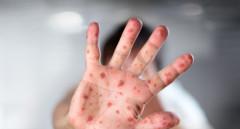
- Bumpy red rash on the face, neck, torso and arms; skin can flake off
- Severe diarrhea, nausea and vomiting
- Chest pain, shortness of breath, headache, confusion, bloodshot eyes, hiccups or seizures
- Spontaneous bruising, skin hemorrhages
- Bleeding from the eyes, ears, nose, mouth, mucus membranes and rectum
- Spontaneous miscarriage
Multi-system collapse
Ebola damages many kinds of tissue in the body, either by the virus infecting cells or by the body’s extreme inflammatory response.
- A breakdown of the adrenal glands leads to dangerously low blood pressure and a decreased ability to produce steroid hormones.
- The body’s connective tissues are attacked, as are the cells that line body cavities and surfaces.
- Liver failure and kidney failure often occur.
- An infected pancreas can cause severe abdominal pain.
- Intestinal damage causes diarrhea and dehydration.
Multi-system collapse
Fluid accumulates in the brain. Convulsions can cause patients to spread infectious blood and other bodily fluids.
Death
People who die from the disease usually develop severe symptoms early on and die between days six and 16, succumbing to extreme low blood pressure, multi-organ failure and the shock of severe infection. The death rate can be as high as 90 percent.
In non-fatal cases, patients might have a fever for several days and maybe even a few advanced symptoms before improving, usually between days six and 11, but full recovery can be a long process involving inflamed nerves, recurrent hepatitis, bloodshot eyes and psychosis.
Those who survive tend to have an early, strong and temporary inflammation response. Many survivors seem to have red blood cells that are able to release proteins that can fix damaged blood vessels.