make preferable
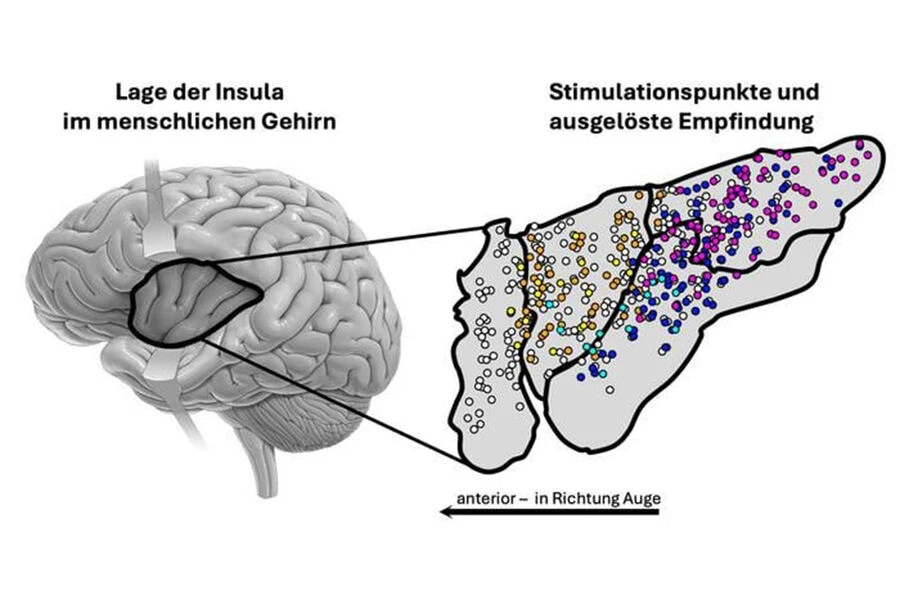
Scientists have identified a brain region where pain and anxiety converge. It is the insular lobe, or insula, a part of the cortex hidden deep beneath other lobes. The discovery was published in the scientific journal Nature.
In a new study, a team from Heinrich Heine University Düsseldorf (Germany) showed for the first time that the insula consists of four distinct but interacting regions.
The scientists used data from 87 patients with drug-resistant epilepsy, collected over approximately 15 years. As part of the diagnostic process, electrodes were temporarily implanted in the patients’ brains to pinpoint the source of their seizures. With the patients’ consent, this gave researchers a rare opportunity to stimulate the insula directly and measure its activity and connections with other brain regions.
This allowed them to identify four distinct regions, which the team mapped into a functional atlas of the human insula.
Pain and temperature sensations arise mainly in the upper posterior (dorsal) region, where they are organized by body part: sensations in the legs, for example, were elicited in the rearmost part of this region, followed by the arms and hands, with the oral cavity represented at the front. The lower (ventral) region conveys diffuse sensations affecting several body parts at once. Stimulation of the middle anterior region mainly elicited visceral sensations—for example, in the chest or abdomen—as well as feelings of anxiety.
The frontmost part of the insula, the pole, plays a special role: stimulating it elicited almost no sensations, but it becomes active when the brain decides which stimuli to pay attention to. It is also closely connected to the frontal lobe, which is responsible for thinking and planning, and exerts a much stronger influence on other insular regions than they do on it.
“Our findings show that the insula is more than a relay station for bodily signals. It appears to actively shape how we experience pain and our own bodies,” said Dr. Juliana Quabs, who led the study.
According to fellow researcher Dr. Svenja Caspers, this points to a possible neural mechanism through which emotions and expectations can alter the perception of pain and other physical sensations.