make preferable
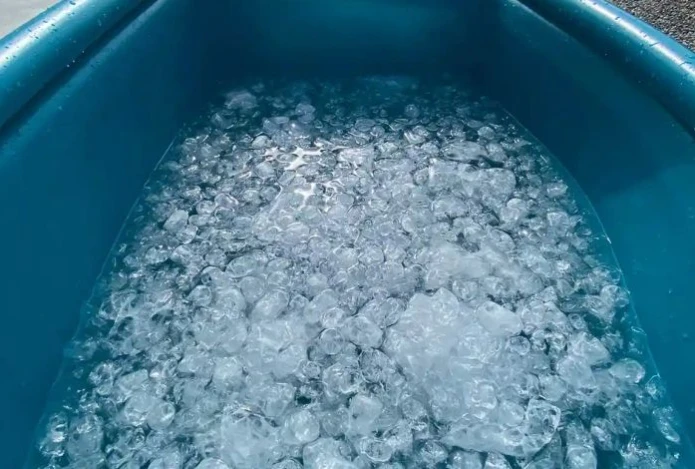
Findings from a study conducted by Edith Cowan University's (ECU) School of Medical and Health Sciences suggest that athletes, coaches, and fitness enthusiasts should approach ice baths with caution.
“Cold-water immersion is not a one-size-fits-all recovery tool,” says lead author and PhD candidate Erfan Berjisian. “Its benefits depend largely on the athlete's goals, the type of exercise performed, and when the next training session is scheduled.”
According to the review, ice baths are particularly effective at reducing muscle soreness and markers of muscle damage. They help athletes recover faster. Following an ice bath, muscle soreness is reduced for up to four days after exercise, while markers of muscle damage decrease 24–72 hours after immersion.
For athletes who need to return to training as soon as possible, the results were even better. “Cold-water immersion is particularly useful when recovery time is limited, such as during tournaments, congested competition schedules, or repeated high-intensity training sessions,” Berjisian said.
The researchers found that endurance improves within the first hour after an ice bath, while strength and jump performance often improve after 24–72 hours.
There is a caveat, however. Explosive power decreases for several hours after an ice bath because of the temporary cooling effect on the muscles. “If athletes need to perform fast or explosive movements soon after cooling, cold-water immersion may be counterproductive unless they allow enough time to warm back up,” says senior lecturer Dr. Kristina Kendall.
Perhaps the most important finding concerned the effect of regular ice baths on long-term training progress.
Athletes who consistently immersed themselves in cold water after strength training saw smaller gains in strength, muscle size, and power than those who did not, according to Scientific Russia. The findings suggest that regular cold-water immersion may slow the body's natural muscle-building processes.
The picture was different for endurance athletes. The review found no evidence that regular cold-water immersion negatively affects aerobic endurance or training adaptations.
The study also identified an “optimal protocol” for recovery. The most effective approaches typically involve immersing the body in water at 10–15 °C for 10–15 minutes. Slightly colder water, at 5–10 °C, for the same duration may offer additional benefits for restoring jump performance and reducing muscle damage.
So, what's the bottom line? Ice baths remain an effective recovery tool when rapid recovery is the priority, but the scientific evidence suggests that athletes should stop treating them as a cure-all and be more cautious if their goal is to build strength and muscle mass.