make preferable
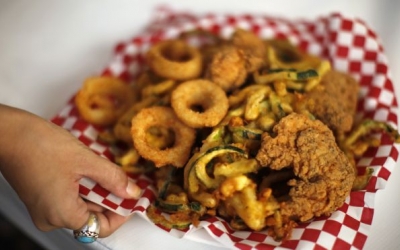
French fries may have a more significant impact on your weight if you have certain genetic risk factors for obesity, Fox News reports.
In a new study published in the British Medical Journal, researchers analyzed the interactions between fried food consumption and genetic risk associated with obesity, using data from over 37,000 men and women taking part in three large health trials.
They identified 32 genes related to obesity and body mass index (BMI) to create a genetic risk score to evaluate a person’s overall genetic risk for obesity. A higher score indicated that an individual carried more risk genotypes and had a higher risk of obesity. A low score meant the individual had a lower risk of obesity.
Using food frequency questionnaires, researchers assessed participants’ fried food consumption as categorized into three groups: less than once a week, one to three times a week, and four or more times a week. They found that among people with the highest genetic risk score for obesity, those who consumed fried foods the most frequently had a higher BMI than those who consumed the least amount of fried food.
Researchers carefully controlled for lifestyle factors including physical activity and sugar-sweetened beverage intake.
This was the first study supporting the theory that fried food may impact genetic factors in determining obesity..
“The reason is important is that this is the first step in a complex disease like obesity,” Alexandra Blakemore, a professor of human molecular genetics in the division of diabetes, endocrinology and metabolism at the Imperial College London, told FoxNews.com. “It’s really one of the early proofs of gene and environment interaction. [It was] known to exist but difficult to prove on a human scale.”
Blakemore, who wrote an editorial accompanying the study, points out that there are an increasing number of single gene inherited forms of obesity that are passed from generation to generation similarly to diseases like cystic fibrosis or Huntington’s disease. These rare gene variants have a much stronger effect, compared to than the 32 genetic markers used in the study, on a person’s obesity risk and should be studied.
Moving forward, Qi plans to further the team’s analysis by looking at the impact of healthy foods, like whole grains, vegetables, nuts and fruits on genetic risk factors for obesity.