
 make preferable
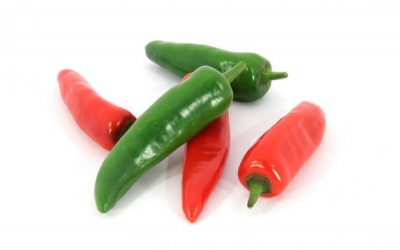
Good news for spicy food lovers; the active ingredient found in chili peppers - capsaicin - could reduce the risk of colorectal cancer, according to a new study published in The Journal of Clinical Investigation.
The research team, including senior author Dr. Eyal Raz, professor of medicine at the University of California-San Diego School of Medicine, found that capsaicin activated a pain receptor called TRPV1 in mice, which reduced tumor development in their gut, Medical News Today says.
TRPV1 was first discovered in sensory neurons, the researchers say, where it protects the cells against potential damage from heat, acidity and spicy chemicals in the environment.
"Thus," says Dr. Raz. "TRPV1 was quickly described as a molecular 'pain receptor.' This can be considered to be its conventional function, which all takes place in the nervous system."
But in this latest study, Dr. Raz and colleagues found that epithelial cells in the intestines also express TRPV1 when stimulated by the epidermal growth factor receptor (EGFR) - a receptor crucial to cell growth in the intestines.
The researchers note that if EGFR signaling is impaired, this causes cell growth to become out of control, increasing the risk of tumor development.
The researchers genetically modified mice to be TRPV1-deficient, and found that they experienced a much higher rate of intestinal tumor growth, compared with mice who had an active form of TRPV1. This indicates, the team says, that TRPV1 usually works to suppress tumors in the intestines.
They found that the component reduced tumor development in the mice by activating TRPV1 and extended their lifespan by more than 30%.





