make preferable
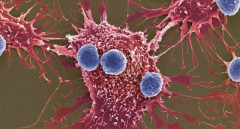
The immune system’s effectiveness in fighting cancer depends not only on the ability of individual cells to destroy a tumor, but also on how they interact. Australian scientists reviewed research on natural killer cells, or NK cells, and examined their role in initiating and sustaining the immune response against tumors. The review was published in the journal Nature Cancer.
NK cells are part of the first line of immune defense. Unlike some other immune cells, they do not require prior training to recognize a specific tumor: they can detect and destroy malignant cells on their own. However, their function is not limited to direct attacks. NK cells also release signaling molecules that recruit and activate other components of the immune system.
As Nicholas Huntington of Monash University and his colleagues at the University of Melbourne note, the interaction between NK cells and dendritic cells is particularly important. The latter capture fragments of tumor cells—antigens—and present them to T lymphocytes, helping to initiate a more precise and targeted immune response.
Interleukin-12 (IL-12), produced by activated dendritic cells, plays an important role in this process. It stimulates NK cells to release interferon-gamma. This molecule, in turn, boosts dendritic cell activity, improves the presentation of tumor antigens, and helps recruit additional immune cells into the tumor. This creates a feedback loop that helps sustain the inflammatory response and intensify the attack on malignant cells.
However, this system is often disrupted in established solid tumors. A tumor can suppress the signals that attract NK cells, weaken dendritic cell activity, and release substances that interfere with immune cell function. In addition, the tumor microenvironment is often short of oxygen and glucose and accumulates metabolic waste products. This disrupts energy metabolism in NK cells and reduces their ability to destroy cancer cells.
The researchers highlight a paradox: malignant cells may be successfully destroyed while circulating in the blood, yet become capable of evading the immune response after entering tissues and forming a tumor. This may be due not only to a reduced ability of NK cells to kill tumor cells, but also to disrupted interactions with dendritic cells.
Scientists are investigating ways to restore this coordination. One approach involves IL-12, but its systemic use is limited by the risk of serious side effects. In a clinical trial involving patients with advanced melanoma, local administration of IL-12-based gene therapy combined with an immune checkpoint inhibitor produced a treatment response in 41% of participants, with 36% achieving a complete response. According to the researchers, the combination therapy was well tolerated.
Other areas of research include the use of FLT3 ligand, which supports the development and survival of dendritic cells, as well as ways to enhance the ability of NK cells to recruit these cells into the tumor.
According to the review’s authors, future immunotherapies may be more effective if they target several components of the immune system simultaneously—NK cells, dendritic cells, and T lymphocytes. Restoring interactions between them could help the immune system sustain its attack on a tumor and overcome resistance to existing treatments.