make preferable
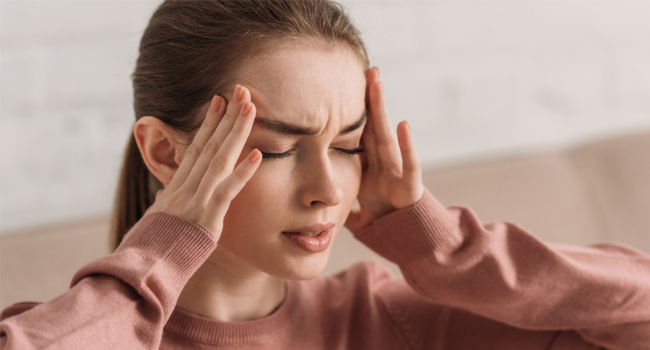
Middle-aged and older adults who experience headaches are more likely to report hearing problems. Researchers from China reached this conclusion after analyzing more than 91,000 health observations from residents of China and South Korea. The findings were published in the journal BMC Public Health.
The researchers examined data from two long-term health studies of people aged 45 and older: the China Health and Retirement Longitudinal Study for 2011–2018 and the Korean Longitudinal Study of Aging for 2012–2018. In total, the analysis covered 61,795 observations in China and 29,853 in South Korea. The same participants could be counted multiple times across different years.
Information on headaches and hearing was based on participants' own responses. Respondents rated their hearing on a five-point scale, after which the researchers divided them into two groups: those with good or excellent hearing and those with fair or poor hearing.
After accounting for age, education, smoking, alcohol consumption, shoulder pain, and arthritis, the researchers found that people who reported headaches had 69% higher odds of reporting hearing impairment in China and 75% higher odds in South Korea. This is a statistical association, not evidence that headaches cause hearing loss.
In the Chinese sample, the researchers also tracked changes in hearing among 7,042 participants across four waves of follow-up. Having headaches was associated with an average hearing score 0.17 points lower on the five-point scale. The difference was small and unlikely to be noticeable to an individual, although it may be relevant when studying population health.
The researchers note that there may be several explanations for the link between headaches and hearing. Previous studies have suggested that migraine may affect the blood supply to the inner ear and may also involve inflammation and increased sensitivity in auditory nerve pathways. Tension-type headaches could potentially be linked to hearing impairment through muscle tension and increased sensitivity of the trigeminal nerve. However, these mechanisms were not directly tested in the new study.
The authors believe that asking about headaches during routine medical examinations could potentially help identify people who should have their hearing checked. However, the study cannot establish a cause-and-effect relationship, and its findings are based on participants' subjective assessments rather than objective audiological tests.
Further prospective studies using objective hearing measurements and accounting for additional factors, including noise exposure and the use of medications that can damage hearing, are needed to confirm the findings. Only then will it be possible to assess how useful it is to take headaches into account when screening for hearing impairment.